
Why the Humvee-to-Bobcat Parts Question Keeps Appearing
Off-road builders and fleet mechanics sometimes look at a HMMWV and a Bobcat compact excavator side by side and notice similar hydraulic quick couplings, SAE hose ends, or common wear hardware. That visual similarity can trigger a simple question: can Bobcat excavation parts fit a Humvee?
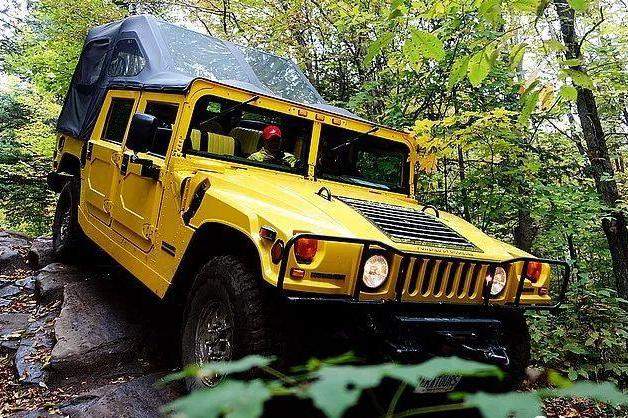
The useful answer is not a brand-level yes or no. It is a component-level check. A HMMWV is a wheeled light tactical truck designed around a payload-oriented frame and vehicle systems [1]. A Bobcat compact excavator is a tracked construction machine built around high-pressure auxiliary hydraulics and digging loads [2]. Because the base designs follow different performance requirements, major structural and powertrain components rarely interchange.
What can cross-reference is a narrow group of standards-based parts: hydraulic adapters, selected seals, filter elements, pins and bushings when dimensions align, and some attachment mounting hardware. The question is not whether a part is “Bobcat.” It is whether the part’s pressure rating, thread form, material, and load path match the HMMWV application.
Where a Direct Fit Usually Stops
Structural and Undercarriage Parts
Bobcat excavator undercarriage parts — track chains, sprockets, idlers, track rollers, and track frames — are designed for tracked machine loads and pitch values that do not correspond to a wheeled HMMWV chassis. Attempting to adapt these parts would introduce an unvalidated load path and is not a practical cross-reference.
Hydraulic Pumps and Drive Components
Bobcat excavator hydraulic pumps and final drives are integrated around specific engine power, flow, pressure, and mounting interfaces. The HMMWV’s auxiliary hydraulic needs, where present, are far smaller and follow different control behavior. A direct pump or motor swap is therefore not a realistic fit.
Engine and Powertrain Components
Engine mounts, cooling packages, transmission parts, and driveline components are OEM-specific. Even if a thread or flange appears close, dimensional closeness is not a substitute for the original engineering validation.
The Few Categories That Can Cross-Reference Safely
The practical cross-reference space sits mainly in fluid power and common wear items.
| Component group | Cross-reference potential | What has to match |
|---|---|---|
| Hydraulic adapters and hose ends | Yes | Thread form, cone or O-ring seal style, pressure class |
| Hydraulic hose assemblies | Yes | SAE/ISO standard, working pressure, end fitting |
| Filter elements | Sometimes | Thread, gasket, bypass pressure, micron rating |
| Seals and O-rings | Yes | Inner diameter, cross-section, material, hardness |
| Pins and bushings | Sometimes | Outer diameter, length, hardness, grease path |
| Hydraulic pumps and motors | Rarely | Mounting flange, shaft, displacement, flow, pressure |
| Structural and undercarriage parts | No practical cross-reference | OEM load-path design |
Hydraulic connections that follow SAE J517 or ISO 6149-1 form the most common workable cross-reference, because the interface is controlled by the standard rather than the vehicle brand [3], [4]. Even then, the pressure rating of the HMMWV circuit must be lower than or equal to the component rating, and the end fitting must be confirmed by thread identification tools rather than by eye.
Because hydraulic components are matched by pressure and fitting standards rather than brand, the part number is not enough. > The coupling must be rated for the driven load, not just the machine model. <How to Choose the Right Hydraulic Pump Coupling for Your System> covers how to check coupling torque, pilot bore, and service conditions before you order.
A Simple 4-Step Check Before You Buy
Step 1: Stop Searching by Vehicle Name
Searching “Humvee Bobcat excavator parts” returns many near-fit results. Replace that with the manufacturer part number or the actual measured specification.
Step 2: Record the Existing Part Number and Dimensions
For a hose, measure thread size, seat angle, and overall length. For a pin, measure outside diameter, length, and grease hole spacing. For a seal, measure inner diameter, cross-section, and material.
Step 3: Confirm Working Pressure and Flow
For any hydraulic component, identify the maximum system pressure and flow of the HMMWV application. Do not assume a Bobcat-rated part will operate safely at a different pressure just because the connection fits.
Step 4: Ask the Supplier for Drawing Verification
Request a dimensional drawing, material certificate where relevant, and written confirmation that the part is not an OEM-marketed interchange unless the supplier can validate it. A serious supplier will check the data plate or drawing before quoting cross-brand use.
Need a Cross-Reference Check?
If you are working on a mixed-platform build, do not buy by visual similarity. Send the manufacturer part number, a photo of the data plate, and the required working pressure to [email protected]. Our parts team checks the original drawing, confirms aftermarket availability, and returns a quote with shipping and lead time.
Sourcing Cross-Compatible Hydraulic and Wear Parts
When a hydraulic adapter or seal is confirmed as a safe cross-reference, source it the same way you would source a production replacement part. Check lead time, packaging, country of origin, and whether the supplier can provide batch-level documentation. For fasteners, pins, and hydraulic adapters, small savings from an unverified source are not worth a field failure.
If the project involves bucket pins, bushings, or wear edges, the same dimensional discipline applies. > Most bucket wear is concentrated in a small set of replacement items, but the critical dimensions are model-specific. <Common Mini Excavator Bucket Parts and Replacement Choices> covers the replacement items that most often wear and the measurements to confirm before buying.
For undercarriage and structural items, cross-brand substitution is rarely safe. > Pitch, track gauge, and roller dimensions leave very little room for a near-fit component. <How to Choose Excavator Undercarriage Parts for Your Machine> explains the key dimensions and the risks of forcing a close match.
Get a Verified Quotation for Cross-Compatible Parts
If the 4-step check confirms a viable standard or dimensional match, send the shortlist to our parts team. Include the part numbers, required quantities, machine application, and target delivery port.
Shanghai Yanli Construction Machinery Co., Ltd. supplies hydraulic components, seals, filters, pins, bushings, and replacement parts for excavators and related construction equipment. For a quotation or a compatibility check, contact:
- Email: [email protected]
- Phone: +86-21-55800172
Frequently Asked Questions
Can I use Bobcat excavator hydraulic pumps on a Humvee?
A direct pump swap is not a realistic fit. The mounting flange, shaft, flow, pressure, and control behavior differ between a compact excavator and a wheeled tactical truck. Hydraulic adapters and hose ends are the more practical cross-reference area.
Which Bobcat excavator parts are most likely to cross-reference to a HMMWV?
Standards-based items such as hydraulic adapters, hose assemblies with matching SAE/ISO ends, selected seals and O-rings, and dimensionally confirmed pins and bushings are the most likely candidates. Major structural, engine, and drive components are not.
Why do some parts look the same but not fit?
Visual similarity can be misleading. Thread pitch, seat angle, O-ring squeeze, material hardness, and load path may differ even when the outside dimensions appear close. Fit must be confirmed by measurement and drawing, not by appearance.
How do I avoid buying the wrong cross-brand part?
Work from the existing manufacturer part number or measured specification. Confirm pressure rating, fluid compatibility, and end fitting. Ask the supplier for dimensional verification and a written interchange statement before ordering.
References
[1] AM General, “HMMWV,” AMGeneral.com. [Online]. Available: https://www.amgeneral.com/what-we-do/vehicles/hmmwv/
[2] Bobcat Company, “Bobcat compact excavators,” Bobcat.com. [Online]. Available: https://www.bobcat.com/na/en/equipment/excavators
[3] SAE International, “Hydraulic hose fittings,” SAE J517.
[4] International Organization for Standardization, “Connections for fluid power and general use — Ports and stud ends with ISO 261 threads and O-ring sealing,” ISO 6149-1.
If you’re interested, check out these related articles:
Finding Quality 220 Excavator Parts: A Sourcing Strategy
Locating an Excavator Hydraulic Pump: A Sourcing Guide
Excavator Hydraulic Pumps Near Me: 5 Expert Sourcing Tips
Sourcing Quality Kubota Mini Excavator Parts Step by Step