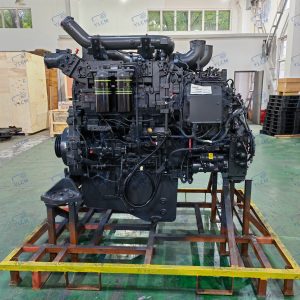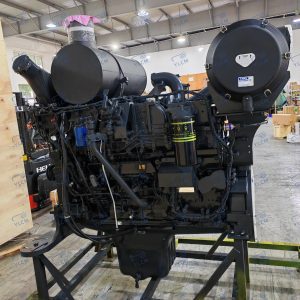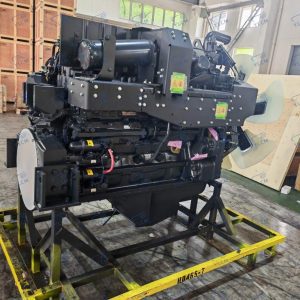

Excavator travel motor parts are the components that convert hydraulic oil flow into the rotary force needed to move the track. They work together with the final drive to control travel speed, direction, and stopping. When one of these parts fails, the excavator may track slowly, pull to one side, or lose holding force on a slope. Understanding the main parts and the failure signs helps a buyer specify the right replacement kit instead of replacing the complete assembly by default.
What Are Excavator Travel Motor Parts
An excavator travel motor is a hydraulic motor mounted at the track frame and connected to the final drive. The term travel motor parts usually covers the hydraulic rotating group, valve plate, brake components, output shaft, bearings, and seals inside the motor housing. Some service manuals also include the case drain line, relief valves, and brake release line as part of the travel drive repair scope because they affect the same failure symptoms.
The final drive is the gear reduction side. It sits between the travel motor and the sprocket. Buyers should keep this boundary clear: a leak at the motor housing and a gear noise from the final drive are different repair jobs. Matching the travel motor part number alone does not always identify the correct rotating group if the excavator has been updated or uses an aftermarket assembly.
Key Components of a Travel Motor Assembly
| Component | Primary Function | What to Check |
|---|---|---|
| Rotating group or piston motor | Converts hydraulic pressure into shaft rotation | Piston wear, barrel scoring, port plate contact |
| Valve plate or port plate | Directs oil into and out of the piston chambers | Scoring, uneven wear, erosion at the slots |
| Brake piston and friction plates | Holds the excavator when travel is not commanded | Warpage, seal leakage, incomplete release |
| Output shaft and bearings | Transfers torque to the final drive and supports load | Pitting, radial play, seal groove wear |
| Seals and O-rings | Keep pressure inside and contamination out | Hardening, cuts, internal bypass marks |
| Relief and check valves | Limit pressure spikes and protect the circuit | Sticking, incorrect setting, seat damage |
How an Excavator Travel Motor Works
Travel is controlled by a closed hydraulic loop on most modern excavators. The sequence follows:
- The main pump sends pressurized oil to the travel motor inlet port.
- The valve plate directs oil into piston chambers in the rotating group. The pistons press against the swash plate and rotate the barrel and output shaft.
- Pilot pressure releases the parking brake, allowing the motor shaft to turn.
- Return oil exits through the outlet port and returns to the pump or tank, depending on the circuit design.
Direction changes when the control valve reverses flow. Speed changes when pump flow or motor displacement changes. On variable displacement motors, the swash plate angle shifts to provide higher speed with lower torque or lower speed with higher torque. This matters for diagnosis because a motor that works at high speed but cannot climb a slope may have a control or displacement problem, not a complete motor failure.
Common Failure Signs and Causes
Several travel motor symptoms overlap with main pump and final drive faults, so a correct diagnosis usually needs pressure and case drain testing.
- One track is slower or weaker: internal leakage across the pistons or valve plate, a worn rotating group, or low charge pressure.
- The machine drifts on a slope: brake piston seal leakage or worn friction plates.
- Oil overheats during travel: internal bypass, a restricted case drain, or an incorrect relief setting.
- Oil leaks from the motor: shaft seal damage, O-ring failure, or a poor housing face seal.
- The motor is noisy during travel: cavitation, air in the system, bearing wear, or metal contact from failed pistons.
- Travel jerks or hesitates: sticking relief or check valves, air in the pilot circuit, or uneven swash plate movement.
How to Evaluate Travel Motor Parts Before Buying
You can limit sourcing risk with a small set of checks. First, confirm the OEM part number against the machine serial number. Second, ask whether the supplier has measured piston clearance, valve plate flatness, and case drain leakage. A paint-only reman motor does not prove that internal clearance was restored. Third, confirm the brake release pressure and relief settings match the carrier model. Finally, compare the warranty as a repair commitment rather than a generic parts replacement promise.
Travel motor parts demand a sourcing check beyond part number matching, and the same rule applies to other critical excavator systems. <What Really Matters When Sourcing Excavator Parts: A Breakdown of Critical Components> covers how to prioritize component quality and documentation when buying replacement parts.
Sourcing and Replacement Considerations
New, remanufactured, and aftermarket travel motor parts each have a useful place. A new OEM motor is the most predictable when the machine is under warranty or works in a remote site with high downtime cost. A quality reman motor can be suitable for an older excavator if the rotating group, port plate, bearings, and seals were replaced and the test data is provided. An aftermarket kit may make sense for common travel motor seal replacements when the part numbers and material specifications match. The decision should change with operating conditions, not price alone. In abrasive or high-temperature conditions, cheap seals and unhardened shafts may fail sooner.
Model-specific choices still benefit from a broader sourcing discipline, especially when price pressure tempts buyers to skip inspection records. <Finding Quality 220 Excavator Parts: A Sourcing Strategy> covers a practical approach to evaluating supplier quality and matching parts to machine requirements.
Plan Your Next Travel Motor Parts Order
If you are replacing travel motor components or need help matching the correct rotating group, brake seal kit, or complete travel motor to your excavator model, send the machine model, part number, and failure symptoms to Shanghai Yanli Construction Machinery Co., Ltd. at [email protected] or call +86-21-55800172 for a specification check and sourcing option.
FAQ
What is the difference between a travel motor and a final drive?
The travel motor is the hydraulic motor that converts oil flow into rotation. The final drive is the gear reduction unit that reduces speed and transfers torque to the sprocket. Weak travel can come from either side, so oil flow and pressure testing helps separate a hydraulic motor problem from a gear or bearing problem.
Can I replace only the seals in a travel motor?
Yes, if the rotating group and bearing surfaces are still within acceptable condition. First check the pistons, barrel, valve plate, and shaft surface. A seal kit may fix an external leak, but it will not repair internal bypass caused by a worn rotating group.
How do I know if the travel motor or the hydraulic pump is causing weak travel?
Compare both travel circuits and check case drain flow. If only one track is weak, the travel motor on that side is the more likely suspect. If both tracks are weak and the pump cannot maintain flow or pressure, the main pump or charge circuit may be the issue. A pressure and flow test is the clearest way to separate the two.
Should I choose a new, remanufactured, or aftermarket travel motor?
It depends on machine value, operating conditions, and downtime risk. New OEM parts are usually the lowest risk for warranty-sensitive machines. A reman motor can work well when it includes verified machining or replacement of the rotating group, valve plate, bearings, and seals. Aftermarket parts are most suitable when the part number, material, and test data match the application.
If you’re interested, check out these related articles:
Universal Excavator Keys: How They Work & Sourcing Tips
Link-Belt Excavator Parts Lookup: Your 2026 Sourcing Guide
How to Buy Doosan Excavator Parts Online: A Smart Procurement Guide