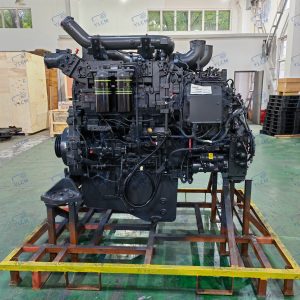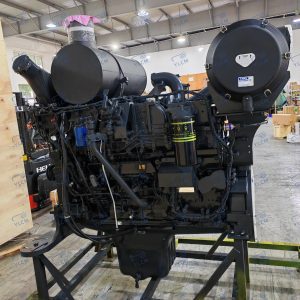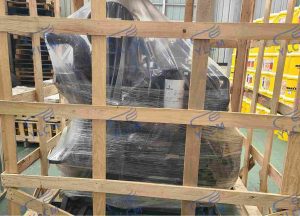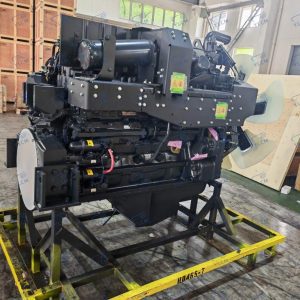

Choosing an excavator parts supplier is not the same as finding the cheapest quote. A wrong hydraulic pump, a mislabeled undercarriage component, or a supplier that cannot trace serial-number breaks can stop a machine for days and erase project margin. For procurement teams, repair shops, and fleet owners, supplier evaluation should work as a repeatable process: verify compatibility, confirm quality systems, inspect documentation, test logistics, and compare total cost before committing to a large order.
This guide breaks the evaluation into seven practical checks. It covers OEM and aftermarket sourcing, the documents worth requesting, common red flags, and how to structure a first trial order so that the first shipment is evidence, not an expensive assumption.
What a Reliable Excavator Parts Supplier Looks Like
A reliable supplier is not just a seller. It is a sourcing partner that can explain what it is supplying, where the part comes from, and how the part will perform in your machine.
Look for five capabilities in any candidate supplier:
- Technical fit: the supplier can read model codes, serial prefixes, superseded part numbers, and interchange options.
- Supply-chain transparency: the supplier can disclose the manufacturer, plant location, and whether the part is OEM, OEM-equivalent, or aftermarket.
- Documentation discipline: every quotation should be supported by part numbers, specifications, packing lists, commercial invoices, and inspection records.
- Logistics competence: the supplier understands export crating, heavy-part handling, customs documentation, and transit protection.
- After-sales accountability: warranty terms, replacement procedures, and response times are written down instead of promised over the phone.
The goal is not to find a supplier that says yes to everything. The goal is to find one that can prove what it says.
Define Your Machine and Part Requirements First
Many supplier failures begin with an incomplete request. If a buyer sends only a short part number and a target price, the quote may be technically correct in the supplier system and practically wrong on the machine.
Before contacting suppliers, build a requirement file that includes:
- exact machine model and serial number prefix
- current part number, previous part number, and known supersession history
- operating conditions such as soil type, climate, working hours, and attachment load
- target quantity and expected consumption rhythm
- destination port, required delivery date, and preferred Incoterms
- warranty expectation and inspection authority
- acceptable total cost, not just unit price
The serial-number prefix matters because manufacturers often change fitting dimensions, pressure settings, or mounting patterns without changing the marketing model name. A part that fits one production range may not fit another. Good suppliers ask for this information before quoting.
Undercarriage selections also depend on machine class and ground conditions. <How to Choose Excavator Undercarriage Parts for Your Machine> covers the key selection criteria by application and wear environment.
This requirement file also becomes the basis for a comparable RFQ. When every supplier responds to the same structure, you can compare like for like instead of comparing vague offers.
Verify Quality Systems and Supplier Credentials
Quality claims are easy to make and harder to verify. A dependable supplier should be able to support its quality position with records, not adjectives.
Begin with the basics:
- request a business license, export registration, and physical address
- request the manufacturer’s quality-management certificate and registrar details
- ask whether the supplier holds or works under a certified quality-management system
- confirm that inspection is performed before shipment, not after a return claim
ISO 9001:2015 remains the most common reference point for a basic quality-management system [1]. A certificate is useful only when it is current, within scope, and verifiable through the issuing registrar. If a supplier cannot provide the certificate number or the registrar name, treat the claim as unverified.
For hydraulic parts, contamination control deserves special attention. A supplier should be able to define the cleanliness target for pumps, valves, and cylinders and explain how it is measured. ISO 4406:2021 provides a coding system for solid-particle contamination in hydraulic fluids, which is a useful shared language between buyer and supplier [2].
The table below summarizes what to request and what a passing signal looks like.
| Evaluation area | What to request | Passing signal |
|---|---|---|
| Business registration | Export license, company address, operating history | Public records match the quote |
| Quality system | ISO 9001 certificate, registrar, scope | Current, verifiable, relevant to supplied parts |
| Product origin | Manufacturer name and plant location | Source is disclosed before order |
| Inspection records | Dimensional checks, material certificates, batch photos | Records match the part number |
| Hydraulic cleanliness | Cleanliness target and test method | Report references ISO 4406 [2] |
| Packaging | Export crate, bracing, anti-corrosion plan | Method is defined before shipment |
| Customs documents | HS code, Incoterms, packing list | Documents align across the order |
| After-sales | Warranty terms, replacement path, response time | Warranty is written and process is clear |
The strongest suppliers do not treat these requests as obstacles. They treat them as a normal part of industrial sourcing.
Evaluate Product Categories: Hydraulic, Engine, and Undercarriage
Excavator parts are not one product category. They have different failure modes, different inspection priorities, and different compatibility risks.
For hydraulic components, confirm flow, pressure, mounting configuration, port orientation, and contamination sensitivity. A pump or valve that is dimensionally similar can still create heat, noise, or premature wear if the control characteristics do not match the machine. Hydraulic hose assemblies should be specified by thread type, working pressure, and an applicable standard such as SAE J1927 [5]. Review hydraulic components as a category, not as isolated part numbers.
For engine components, verify material grade, gasket type, bearing clearance, and filter compatibility. Engine components such as pistons, rings, bearings, and gaskets may look identical in a photograph while differing in heat treatment, surface finish, or dimensional tolerance. Request the manufacturer’s part-number cross-reference and ask whether the supplier has supplied the same component into similar operating conditions.
For undercarriage parts, pay attention to track group match, roller and idler hardness, seal type, and pin-and-bushing wear life. A mixed undercarriage system can wear faster than the individual price saving. Undercarriage parts should be evaluated as a system, especially when the machine works in abrasive soil or long-shift applications. Seals and filters may be low unit cost, but they directly influence the life of the larger component around them.
Sourcing decisions need to start from the component that actually drives downtime. <What Really Matters When Sourcing Excavator Parts: A Breakdown of Critical Components> covers critical components and how to prioritize them by failure risk.
Compare Price, Total Cost, and Logistics
Unit price is only one line in the total cost. A lower unit price can produce a higher landed cost if the supplier cannot handle packaging, shipping, documentation, or import compliance.
When comparing quotes, include:
- unit price and any minimum order quantity
- export packaging and crating cost
- inland freight, ocean or air freight, and destination charges
- import duty and applicable HS classification
- inventory carrying cost if the supplier requires bulk purchase
- estimated downtime cost if the part fails early or arrives late
For cross-border shipments, excavator parts generally fall under machinery parts classifications. Buyers should confirm the applicable HS code before the order, because the code affects duty rate, documentation, and import compliance. Heading 8431.49 in the Harmonized System is commonly used for parts suitable for machinery such as excavators, but the exact classification depends on the component and destination country rules [3].
The Incoterms selected in the quotation are also part of the cost comparison. Incoterms 2020 rules define who arranges carriage, who carries risk, and where delivery responsibility transfers [4]. A supplier that quotes EXW, FOB, CIF, or DAP without explanation may be transferring cost and control in a way the buyer does not yet understand. Buyers should select the term that gives the right balance between freight control and responsibility, especially for heavy parts that are expensive to re-handle.
Damage during transit can erase a lower unit price quickly. <Safe Shipping Excavator Parts: Protecting Your Heavy Machinery Investment> covers packaging and transport safeguards for heavy components.
Steel components require corrosion protection, blocked and braced crating, and clear handling labels. Packaging programs that follow an environmental-management framework such as ISO 14001:2015 can also reduce non-compliance risk with destination-country packaging rules [6]. The buyer should ask for packaging photos from a similar previous shipment, not a generic warehouse image.
For a direct supplier check, send your part numbers, machine serial prefixes, target quantity, and destination port to [email protected] or call +86-21-55800172. A sourcing specialist can verify compatibility, availability, and lead time before you commit to a trial order.
Run a Structured Trial Order
A trial order is the most reliable evaluation tool. It turns written claims into observable performance.
A well-designed trial order should be small enough to limit risk and specific enough to reveal problems. Start with high-priority SKUs that are easy to inspect, such as filters, seals, track shoes, pins, bushings, or hose assemblies. Avoid testing a supplier on a large hydraulic pump or final drive if there is no previous experience.
Before shipping, agree on inspection points:
- part number, manufacturer, and country of origin marking
- dimensional checking against the machine serial prefix
- material certification for metal wear parts
- surface finish, hardness, and coating where applicable
- packaging protection and shipment weight
- digital photos or video before crate closure
- order accuracy and packing-list alignment
The supplier ability to follow this process is itself a result. A supplier that pushes back on simple pre-shipment verification is likely to be more difficult when a real failure occurs.
Red Flags That Should Stop a Purchase
Some signals are strong enough to stop an order, regardless of price.
Treat these as high-risk:
- no fixed business address or verifiable export record
- a certificate that exists only as a logo on a website
- part origin changes between questions without a clear explanation
- refusal to disclose the manufacturer or plant location
- inability to explain serial-number breaks or supersession
- prices far below the range of multiple comparable quotes
- pressure to pay the full amount through a personal or unrelated account
- no defined warranty, return procedure, or after-sales contact
- no packing list, commercial invoice, or inspection record before shipment
An experienced supplier welcomes verification. A weak supplier treats verification as an inconvenience. The difference is usually visible before the first payment is sent.
Request an Excavator Parts Supplier Review
The same evaluation process can be applied to Shanghai Yanli Construction Machinery Co., Ltd. Send the machine model, serial prefix, part numbers, and destination port to [email protected] or call +86-21-55800172. The team can confirm product origin, compatibility, lead time, packaging approach, and required export documents before quotation.
Frequently Asked Questions
What documents should I request from an excavator parts supplier?
Request a business registration, quality-management certificate, product specification or cross-reference, dimensional or material inspection records, packing list, commercial invoice, and warranty terms. For export orders, also confirm the HS code and Incoterms.
How do I verify an aftermarket part is compatible with my machine?
Provide the exact model, serial number prefix, and current part number. Ask the supplier to confirm the serial break and any supersession history. For critical components, request dimensional checks against the machine specification before shipment.
What is the difference between OEM, OEM-equivalent, and aftermarket parts?
OEM parts come from the original manufacturer or its authorized supply chain. OEM-equivalent parts are produced to comparable specifications but without the original brand. Aftermarket parts may fit the same machine but can vary in material, tolerance, and service life. The supplier should be able to explain which category is being quoted.
How can I check a supplier’s quality before placing a large order?
Start with a small trial order of easy-to-inspect parts. Request batch photos, dimensional reports, material certifications, and pre-shipment inspection records. A supplier that can handle a small order with repeatable documentation is more likely to handle a large order correctly.
What shipping terms should I use for cross-border excavator parts?
The right Incoterm depends on your freight experience and risk preference. FOB and CIF are common for ocean shipments, while DAP gives the supplier more delivery responsibility. Confirm which Incoterm is quoted and what costs and risks transfer at each point.
How do I compare quotes when part numbers differ?
Ask every supplier to quote against the same machine serial prefix and original part number. If a supplier proposes an interchange, require the manufacturer cross-reference or dimensional verification. Without a common reference, the quotes are not comparable.
What is the safest payment method for a first order?
Use a traceable payment method and avoid personal or unrelated accounts. Many buyers start with a documented purchase order, a small trial order, and a payment instrument that allows verification. Do not send full payment to an unknown entity without a written order and defined shipping terms.
References
[1] ISO 9001:2015, Quality management systems — Requirements, International Organization for Standardization, Geneva, 2015.
[2] ISO 4406:2021, Hydraulic fluid power — Fluids — Method for coding the level of contamination by solid particles, International Organization for Standardization, Geneva, 2021.
[3] World Customs Organization, Harmonized System Nomenclature 2022 Edition, Heading 8431.49: parts suitable for use solely or principally with machinery of headings 8426, 8429 or 8430.
[4] International Chamber of Commerce, Incoterms® 2020, ICC Publication No. 723E, Paris, 2019.
[5] SAE J1927, Hydraulic Hose Fittings, SAE International, Warrendale, PA.
[6] ISO 14001:2015, Environmental management systems — Requirements with guidance for use, International Organization for Standardization, Geneva, 2015.
If you’re interested, check out these related articles:
China Excavator Parts Canada: Your Practical Import Guide
What Really Matters When Sourcing Excavator Parts: A Breakdown of Critical Components
Choosing Excavator Undercarriage: Performance & Durability for 2026
Cat 215 Aftermarket Parts Guide: Top Choices for 2026