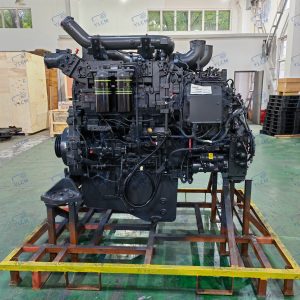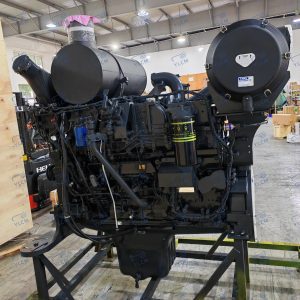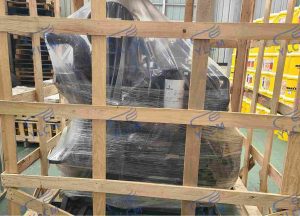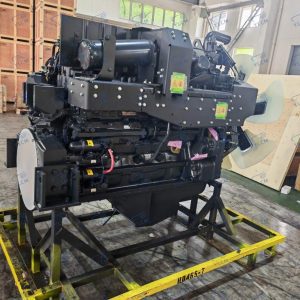

Yanmar’s century of innovation is not a story about a single product line. It is the story of a company that kept moving from one practical problem to the next, starting with engine work and expanding into diesel power, agricultural machinery, marine systems, and compact construction equipment. The connecting thread is a preference for small, efficient, serviceable machines. For parts managers and equipment buyers, that history matters. It helps explain why Yanmar machines are often best maintained as integrated systems rather than treated as a loose collection of components. It also shapes the questions to ask when sourcing replacements for older units or mixed fleets.
An Industrial Foundation Built on Practical Engines
Yanmar began in Osaka, Japan, in 1912. Early operations centered on engine repair and production, and founder Magokichi Yamaoka focused on making engines that smaller farms, fishing boats, and workshops could operate and maintain. That emphasis on usable power was different from chasing the largest machine. It created a pattern that still appears in Yanmar compact excavators and utility equipment.
The same mindset shaped how the company later approached diesel technology. Instead of treating diesel as a large-scale industrial solution, Yanmar worked to make it smaller, cleaner, and easier to fit into equipment that had previously relied on gasoline or manual power. This direction influenced both product design and the service expectations around Yanmar machines.
The Diesel Breakthrough That Set the Pattern
In 1933, Yanmar introduced a compact diesel engine that helped bring diesel power to smaller agricultural and fishing applications. At the time, diesel offered better fuel efficiency and durability than many gasoline alternatives, but diesel engines were often too large and complex for small operations. Yanmar focused on reducing that barrier.
The technical lesson still applies today. A smaller engine that is correctly matched to the machine can reduce fuel cost and heat stress, but it needs proper cooling, filtration, and maintenance. Yanmar’s later move into construction equipment followed the same logic: compact machines with enough engine and hydraulic performance to work hard without being overbuilt for the job.
From Farm and Sea to Construction Equipment
By the 1960s and 1970s, Yanmar had used its engine experience to expand into agricultural machinery, marine power systems, and compact construction equipment. The move into construction was not a sudden break from the past. It drew on existing diesel engineering and, over time, added hydraulic system development, structural design, and global distribution.
That background is one reason Yanmar construction machines are often evaluated as integrated systems. Engine, hydraulics, cooling, and controls are designed to work together in a compact package. For a buyer, that can mean lower fuel consumption and easier service access. It also means that changing a major component without checking the original specification can create a mismatch. The strongest approach is to identify the machine’s exact model, serial number, and engine designation before ordering parts.
| Innovation focus | What it meant | Current buyer consideration |
|---|---|---|
| Compact diesel engines | Smaller machines gained diesel efficiency | Match engine model and application when replacing parts |
| Agriculture and marine power | Engine reliability tested in continuous duty | Expect high-hour units to need cooling and fuel system care |
| Compact construction equipment | Hydraulic and engine systems packaged tightly | Verify system-level compatibility before major component replacement |
| Global production and support | Parts and service structures outside Japan | Use serial and part numbers to confirm regional availability |
What a Century of Innovation Means for Equipment Buyers
Yanmar’s long product history creates both advantages and practical considerations. Many Yanmar engines and compact machines have been produced in large numbers, which can make service information and replacement parts easier to find across markets. At the same time, the same engine platform can appear in agricultural, marine, and construction applications, so a part that fits one Yanmar unit may not be correct for another without confirmation.
Buyers should look beyond the brand name. The age of the machine, the emission tier of the engine, and the original market specification can all affect compatibility. A used excavator that has been repowered or modified may no longer match its original parts book. For that reason, a clear photo of the machine identification plate and the part or engine number is often more useful than a general description such as “Yanmar excavator hydraulic pump.”
Sourcing and Service Support in a Global Supply Chain
Yanmar equipment is supported through authorized distribution, independent parts suppliers, and aftermarket manufacturers. This is normal for a company with such a long history across multiple industries, but it also means buyers should separate genuine parts, OEM-supplier parts, and aftermarket replacements. Each may have a place depending on the machine’s age, working conditions, and cost targets.
When evaluating aftermarket options, the useful question is not simply whether a part is “Yanmar” or not. The better question is whether the supplier can confirm the reference number, material or performance specification, and the Yanmar models where the part is approved to fit. A supplier that asks for the serial number and application data is usually more reliable than one that promises a universal fit from a photograph alone.
Yanmar’s long product history means many machines now run on a blend of OEM and aftermarket support, and choosing the right channel matters. <How Aftermarket Excavator Parts Factories Operate: A Deep Dive> covers how factory capabilities and quality controls affect the parts you receive.
This is the same approach Shanghai Yanli Construction Machinery Co., Ltd. uses when supporting contractors and mining operations: confirm the reference, check the application, and compare the aftermarket option against the original specification rather than guessing from a catalog image.
Plan Yanmar Parts Support Around the Machine
Yanmar equipment built over a century is rarely a one-part problem. When you need a replacement for an engine, hydraulic pump, swing motor, or undercarriage part, start with the machine model, serial number, and part or engine number. That information helps a supplier confirm compatibility instead of guessing.
Shanghai Yanli Construction Machinery Co., Ltd. supports equipment owners and repair workshops sourcing OEM and aftermarket parts for excavators and other heavy equipment. Share your Yanmar machine details, part numbers, and working conditions by email at [email protected] or call +86-21-55800172. We can help you compare availability, lead time, and cost before you commit.
FAQ
Is Yanmar mainly a marine engine company?
No. Yanmar produces engines, agricultural equipment, marine systems, and construction machinery. Its compact diesel and hydraulic engineering runs through those product lines. This broad base is why Yanmar engines can also appear in equipment built by other manufacturers.
Does Yanmar build construction equipment or only engines?
Yanmar builds compact construction equipment including excavators, tracked carriers, and wheel loaders, and it also supplies engines to other manufacturers. That dual role means buyers should confirm whether the machine is a Yanmar-built unit or equipment powered by a Yanmar engine.
Are Yanmar parts difficult to source outside Japan?
Not necessarily. Yanmar has global distribution and a large installed base. Older models or unusual regional specifications may require more checking, but a serial number and part number can usually identify the correct source and compatibility.
What should I check before ordering a replacement part for an old Yanmar?
Provide the machine model, serial number, engine designation, part number if available, and photos of the existing component or identification plate. Check whether the machine has been repowered or modified, and clarify whether you need genuine, OEM-supplier, or aftermarket quality.
If you’re interested, check out these related articles:
DAEWOO Throttle Motor 523-00006: Function, Faults, and Replacement
Using Caterpillar Excavator Parts Catalogs: Maximize Uptime
How to Choose Excavator Undercarriage Parts for Your Machine
Understanding Excavator Undercarriage Parts and Their Roles
What Really Matters When Sourcing Excavator Parts: A Breakdown of Critical Components