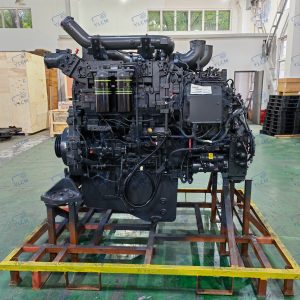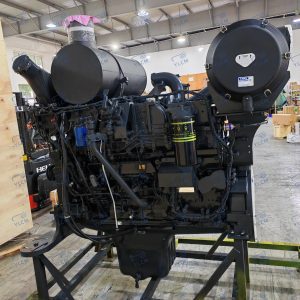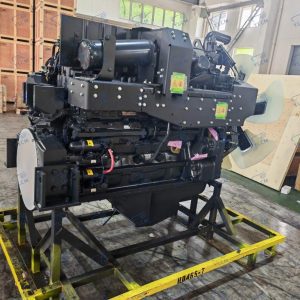

The DAEWOO Throttle Motor 523-00006 governs engine speed in Daewoo excavators by translating operator throttle inputs into precise fuel injection adjustments. When this component fails, the machine loses the ability to hold stable RPMs under load, a condition that cascades into productivity losses and potential safety incidents. For maintenance managers and fleet owners running Daewoo equipment, understanding how this motor works, what failure looks like, and where to source reliable replacements directly affects uptime and repair budgets.
How the DAEWOO 523-00006 Throttle Motor Controls Engine Speed
The DAEWOO 523-00006 throttle motor functions as an electromechanical actuator positioned between the operator’s throttle input and the fuel injection pump. When the operator adjusts the throttle setting in the cab, the excavator’s control system sends an electrical signal to this motor. The motor responds by physically repositioning the fuel rack or throttle plate, which determines how much fuel enters the combustion chamber and, consequently, the engine’s RPM.
This electronic control loop replaced older mechanical linkage systems because it delivers faster response times and more consistent speed regulation. The motor continuously adjusts position to maintain target RPMs even as load conditions change, such as when the bucket encounters harder material or the swing motor engages. A functioning 523-00006 prevents over-speeding during light-load conditions and compensates for increased fuel demand during heavy digging cycles.
The practical effect is measurable: stable RPMs under varying loads reduce fuel consumption by preventing the engine from hunting between speeds, and consistent power delivery allows operators to execute precise movements during grading or positioning work. When the motor degrades, these benefits disappear. The engine may surge unpredictably or fail to reach full power, conditions that make fine control difficult and increase fuel burn as the system compensates for erratic output.
Recognizing Throttle Motor Failure Before It Stops the Machine
Throttle motor failures rarely happen without warning. The symptoms typically progress from minor annoyances to operational problems over weeks or months, giving maintenance teams an opportunity to schedule repairs before the excavator becomes inoperable.
The earliest sign is usually a slight hesitation or lag when the operator moves the throttle. The engine takes a fraction of a second longer to respond than it should. This delay often goes unnoticed initially because operators compensate unconsciously. As internal wear progresses, the symptoms become more obvious: engine speed fluctuates without any change in throttle position, or the engine refuses to idle smoothly and stalls when the operator releases the throttle.
I have seen a situation where a fleet manager dismissed early throttle response complaints as operator error. Three weeks later, the excavator lost power mid-lift during a pipe installation, forcing an emergency stop that delayed the project by two days while the crew sourced a replacement motor. The diagnostic system had been logging intermittent fault codes for the throttle actuator circuit, but no one checked until the machine was already down.
| Symptom | What Is Happening Internally | Operational Consequence |
|---|---|---|
| Delayed throttle response | Worn motor gears or sticky internal mechanism | Operator frustration, slower cycle times |
| Erratic RPM fluctuation | Potentiometer feedback signal degraded | Unstable power, difficult precision work |
| Engine stalls at idle | Motor cannot hold minimum position accurately | Repeated restarts, lost productivity |
| No response to throttle input | Electrical circuit failure or motor burnout | Machine inoperable until repaired |
| Diagnostic fault codes | Control system detects out-of-range signals | Requires immediate diagnosis |
The diagnostic system in most Daewoo excavators will flag throttle-related issues with specific codes. Checking stored codes during routine maintenance catches problems before they escalate. A code indicating intermittent throttle actuator signal, even if the machine seems to run normally, warrants inspection.

Testing the 523-00006 Before Condemning It
Not every throttle-related symptom originates in the motor itself. Wiring faults, corroded connectors, and linkage binding can produce identical symptoms. Testing the motor before ordering a replacement avoids unnecessary parts expense and confirms the diagnosis.
Start by measuring voltage at the motor connector with the ignition on and the throttle at various positions. The control system should send a varying voltage signal corresponding to throttle position. If voltage is absent or does not change with throttle movement, the problem lies upstream in the wiring or control module, not the motor.
With voltage confirmed, check the motor’s internal resistance using a multimeter. Compare readings to the specifications in the service manual. Resistance outside the acceptable range indicates internal winding damage. If the motor includes a feedback potentiometer, measure its resistance across the full range of motion. A potentiometer that shows dead spots or erratic resistance changes has failed and will cause position feedback errors.
Physical inspection matters too. Disconnect the motor and move its output shaft by hand. It should rotate smoothly through its full range without binding or grinding. Any mechanical resistance suggests internal gear wear or contamination. Reconnect the motor and observe its movement while an assistant operates the throttle. The motor should respond immediately and move smoothly to each commanded position.
Why Part Quality Determines Repair Longevity
A replacement throttle motor that fails after six months costs more than a quality part that lasts three years, even if the initial purchase price was lower. The hidden costs include repeat labor for removal and installation, additional diagnostic time, and the productivity lost during each repair cycle.
Genuine OEM parts from Daewoo carry the manufacturer’s specifications and warranty, but they also carry premium pricing that strains maintenance budgets, particularly for older machines where the cost of a single repair approaches a significant percentage of the equipment’s remaining value. High-quality aftermarket alternatives exist that match OEM specifications at lower cost, but identifying them requires evaluating the manufacturer’s quality control practices rather than simply comparing prices.
The manufacturers we work with at Shanghai Yanli Construction Machinery Co., Ltd. produce throttle motors using the same materials and tolerances as OEM components. We verify this through direct factory relationships and by tracking field performance of the parts we supply. A throttle motor that meets specifications on paper but uses inferior bearings or lower-grade potentiometer components will fail earlier than one built to genuine OEM standards.
| Consideration | OEM Parts | Quality Aftermarket | Budget Aftermarket |
|---|---|---|---|
| Initial cost | Highest | Moderate | Lowest |
| Expected service life | Longest | Comparable to OEM | Unpredictable |
| Warranty coverage | Manufacturer standard | Supplier warranty | Often none |
| Fit and calibration | Exact match | Tested compatibility | May require adjustment |
| Total cost of ownership | High upfront, low repeat | Balanced | Low upfront, high repeat |
Installing and Calibrating the Replacement Motor Correctly
A quality replacement part installed incorrectly will fail just as quickly as a cheap part. The installation procedure for the DAEWOO 523-00006 requires attention to mechanical alignment, electrical connections, and post-installation calibration.
Disconnect the battery before beginning work. This prevents accidental short circuits and protects the control system from voltage spikes during connector manipulation.
Document the existing motor’s orientation and linkage positions before removal. Photographs help during reassembly, particularly for linkage geometry that affects the motor’s effective range of motion. Remove the wiring harness connector first, then the mechanical linkages, then the mounting fasteners.
Inspect the throttle linkages while the motor is removed. Worn pivot points, bent rods, or sticky joints will cause the new motor to work harder than necessary and may prevent proper calibration. Replace any linkage components that show wear.
Mount the new motor in the same orientation as the original. Torque mounting fasteners to specification rather than simply tightening until they feel snug. Connect the mechanical linkages and verify the motor can move through its full range without binding against any obstruction.
Reconnect the wiring harness and verify connector seating. A partially seated connector can cause intermittent faults that are difficult to diagnose later.
Calibration is mandatory after installation. The procedure varies by excavator model but typically involves a sequence of ignition cycles and throttle movements that allow the control system to learn the new motor’s position feedback range. Some models require diagnostic software to initiate calibration mode. Skipping calibration leaves the control system using the old motor’s learned parameters, which may not match the new motor’s actual position feedback, resulting in hunting, stalling, or incorrect speed response.
After calibration, test the throttle response across its full range. The engine should accelerate and decelerate smoothly without hesitation or overshoot. Check for new diagnostic codes and clear any that were stored during the repair.
Finding a Supplier That Stands Behind the Parts
The difference between a parts supplier and a parts partner shows up when something goes wrong. A supplier that disappears after the sale leaves maintenance teams absorbing the cost of defective parts. A partner that provides warranty support, technical guidance, and consistent availability reduces the risk of each purchase.
We source DAEWOO 523-00006 throttle motors through direct relationships with manufacturers whose production quality we have verified over years of supplying construction and mining equipment parts. This direct channel eliminates middlemen who add cost without adding value, allowing us to offer competitive pricing on parts that meet the performance standards your equipment requires.
For fleet managers running multiple Daewoo excavators, we can discuss stocking arrangements that ensure replacement motors are available when needed rather than when shipping schedules allow. For workshop owners handling varied equipment, our catalog extends beyond throttle motors to cover the full range of engine, hydraulic, and undercarriage components.
Frequently Asked Questions
What are the common signs of a failing Daewoo throttle motor?
The most reliable early indicator is a change in throttle response time. If the engine takes noticeably longer to reach commanded speed than it did previously, the motor’s internal mechanism is likely wearing. More advanced failure produces erratic RPM behavior where the engine speed fluctuates without operator input, or the engine stalls repeatedly at idle because the motor cannot hold its minimum position. The diagnostic system will often store fault codes related to the throttle actuator circuit before symptoms become severe enough to notice during normal operation.
How do I test a 523-00006 throttle motor for proper function?
Begin with electrical testing at the motor connector. Verify that the control system sends appropriate voltage signals when the throttle position changes. Measure the motor’s winding resistance and potentiometer resistance, comparing values to service manual specifications. Physically disconnect the motor and rotate its output shaft by hand to check for smooth movement without binding. Observe the motor’s response to throttle commands with the engine running, watching for hesitation, overshoot, or failure to reach commanded positions. Diagnostic software can provide real-time position feedback data that reveals problems not visible through external observation.
Where can I find reliable replacement parts for Daewoo excavators?
Authorized Daewoo dealers stock genuine OEM parts with manufacturer warranty coverage, though at premium prices. Independent suppliers like Shanghai Yanli Construction Machinery Co., Ltd. offer high-quality aftermarket alternatives sourced from manufacturers whose production standards we have verified directly. When evaluating any supplier, ask about warranty terms, return policies for defective parts, and their ability to provide technical support if installation questions arise. A supplier’s willingness to stand behind their products indicates confidence in the quality they are selling. For inquiries about the DAEWOO 523-00006 or other excavator components, contact us at [email protected] or +86-21-55800172.
If you’re interested, check out these related articles:
Shanghai Yanli Participated in Mining & Construction Vietnam 2026 in Hanoi
Fluid Coupling: Principles and Industrial Applications in 2026