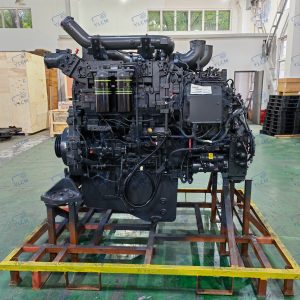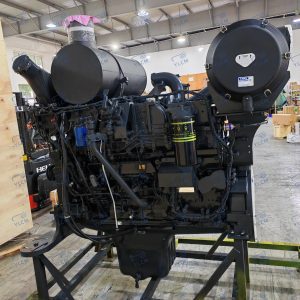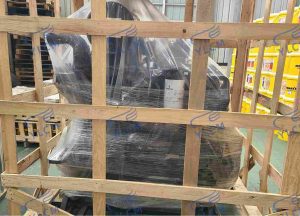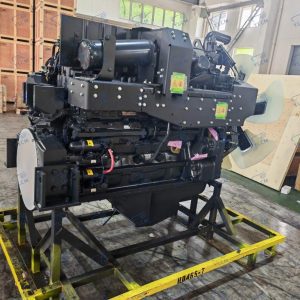

Excavator hydraulic parts from China represent a cost-effective sourcing opportunity for mining companies, repair workshops, and fleet operators worldwide. Yet the gap between a good deal and a costly mistake often comes down to how you qualify suppliers and verify component quality before committing to an order. Drawing on over twenty years in the heavy equipment supply chain, including more than a decade at Komatsu China, I have seen firsthand where the process breaks down and where it delivers genuine value. This article outlines the concrete steps to evaluate manufacturers, choose between OEM and aftermarket options, and manage logistics so that your procurement reduces downtime rather than adding to it.
The Growth of China’s Excavator Hydraulic Parts Industry
China has become the world’s largest producer of construction machinery components, including the hydraulic pumps, motors, cylinders, and control valves that keep excavators working. Hundreds of factories, clustered mainly in Shandong, Jiangsu, and Zhejiang provinces, supply both OEM assembly lines and the global aftermarket.

The cost advantage is real: direct sourcing can reduce component expenditure by 30 to 50 percent compared to buying through local dealers, particularly for high-wear items like seal kits, gear pumps, and swing motors.
But cost alone is not enough. The difference between a factory that consistently meets specifications and one that ships a batch of out-of-tolerance parts is often invisible from a website photo. During my years managing supply chains, I found that the best Chinese manufacturers invest in advanced testing equipment, maintain ISO 9001 certification, and can produce full dimensional inspection reports. These factories treat export compliance seriously, while lower-tier shops may struggle with material consistency. Recognizing this split before you place an order is the core skill that determines whether sourcing from China becomes a competitive edge or a liability.
Evaluating OEM, Aftermarket, and Remanufactured Excavator Hydraulic Parts
When you request a quotation, one of the first questions a supplier will ask is which quality tier you need. The three common tiers in China’s hydraulic parts market break down as follows:
| Quality Tier | Typical Source | Quality Indicators | Suitable Applications |
|---|---|---|---|
| OEM | Original factory or licensed manufacturer | Matches the brand’s own engineering drawings and test procedures; often carries the OEM part number | Warranty repairs, critical safety systems, fleet standardization |
| Aftermarket | Independent manufacturer producing to equivalent specifications | Should cite a reference standard or OEM part number; look for material certificates and third-party test reports | Routine maintenance, cost-sensitive rebuilds, non-safety circuits |
| Remanufactured | Used OEM core rebuilt by a specialized shop | Restored to factory performance specifications; pressure-tested and inspected; may come with a limited warranty | Budget restorations, older machines where new OEM is no longer available |
Aftermarket hydraulic parts deserve a closer look because they form the bulk of international trade. A reputable aftermarket supplier will match the OEM part number, use materials with the same or better hardness ratings, and surface-finish components to the same Ra values. I have encountered machining shops in China that produce hydraulic cylinder rods with tighter tolerances than some OEM specifications, simply because their equipment is newer. The key is not to judge the entire aftermarket category but to judge the individual supplier’s process control.
A Practical Guide to Supplier Qualification and Quality Inspection
This is where most generic buyer guides stop, and where the real work begins.
Over the years, I have developed a short qualification process that separates reliable hydraulic parts manufacturers from those who will cause trouble six months later. Start with the following steps:
- Request a factory profile that includes recent production line photos, list of testing equipment, and samples of past inspection reports for similar products. A factory that cannot produce these within 48 hours likely does not keep systematic quality records.
- Ask for the material source and specification. For example, a hydraulic piston should be made from induction-hardened steel such as 45 steel with specified hardness HRC 55-60. If the supplier cannot name the material grade, walk away.
- Order a small trial batch and inspect the parts on a coordinate measuring machine or at a local metrology lab. Compare the dimensions against the OEM part number reference. I have seen suppliers deliver parts that fit one machine model perfectly but fail on another simply because they reverse-engineered from a worn sample.
- For hydraulic pumps and motors, request a performance test curve showing flow rate and pressure output at nominal speed. This test, even on a sample unit, reveals whether the assembly was built to spec or just cleaned and repainted.
If your program involves high-pressure circuits with non-standard seals or multi-stage valves, confirming material compatibility early can prevent expensive field returns. Send your specifications and target prices to sales@sh-yshuo.com so we can shortlist factories that match your quality requirements.
Shipping, Customs, and Logistics for Hydraulic Parts
Once the parts are approved, physical delivery becomes the next challenge.
Most excavator hydraulic parts ship internationally by sea freight in consolidated containers to reduce cost, with air freight reserved for urgently needed pumps or motors that would otherwise ground a machine at high daily cost. A typical sea freight shipment from Shanghai to Mombasa, for instance, takes around 30 to 40 days port to port, plus a week or more for inland clearance. Air freight can deliver the same parts in under 10 days but multiplies the transport cost by a factor of five or more.
Packaging matters more than many first-time buyers realize. Hydraulic components are sensitive to moisture and impact. I insist on vacuum-sealed wrapping for precision-machined surfaces, foam-cushioned crates, and corrosion-inhibiting VCI bags. The HS code for excavator hydraulic parts generally falls under 8431.49, and accurate classification helps avoid customs delays. Partnering with a freight forwarder experienced in heavy machinery parts in your region is worth the commission.
Building a Reliable Supply Partnership
A single successful transaction is good, but a long-term supply partnership changes the economics of your maintenance operation. When your supplier knows your fleet composition, the wear rates on specific models, and your preferred order intervals, they can pre-stage stock and cut lead times significantly. I have built our company’s service around this principle: instead of treating every order as a one-off transaction, we maintain a technical file on each client’s fleet so that when a hydraulic pump fails on a PC200 or a CX210, we already know the correct part number and the factory that has proven quality.
That depth of relationship also creates leverage when things go wrong. In any industrial supply chain, non-conforming parts will occasionally slip through. What separates a reliable partner is how they handle a quality claim: whether they respond with a replacement shipment, a root cause analysis, and a corrective action plan, or with silence. Choose a partner who understands that uptime is your business and who operates with the same urgency you do.
Reliable hydraulic parts sourcing comes down to choosing a partner who understands both the factory floor and your operational pressures. If you are ready to move beyond searching directories and want a supply partner who stands behind quality and delivery, send your part numbers and quantity requirements to sales@sh-yshuo.com or call +86-21-55800172. We will respond with a detailed quotation and, where required, inspection documentation.
Common Questions from Buyers Sourcing Hydraulic Parts from China
How do I confirm that an aftermarket hydraulic pump matches my excavator’s specifications?
Matching an aftermarket pump starts with comparing the part number, displacement, and mounting flange dimensions against your machine’s service manual. The industry standard for interchange is that the replacement unit must match the OEM’s hydraulic port locations, shaft diameter, and input rotation direction. For critical applications such as main pumps on 20-ton class excavators, request a test report showing flow rate and pressure curves measured on a hydraulic test bench. If the supplier cannot produce one, proceed with caution.
What is the typical lead time for excavator hydraulic parts shipped from China to Africa or Central Asia?
Lead times depend heavily on transport mode and factory production schedules. Standard aftermarket parts like seal kits or gear pumps are often available from stock and can be dispatched within 3 to 7 working days. For made-to-order components such as large-bore cylinders, expect 20 to 40 days for manufacturing. Sea freight to major ports in East Africa or Central Asia typically adds 30 to 45 days, while air freight cuts the total lead time to around 10 to 15 days including clearance.
Are there minimum order quantities for hydraulic seals and small components?
In our experience, MOQs vary significantly by manufacturer and part type. Standard O-ring and seal kit factories often set a minimum of 50 to 100 pieces per part number, while custom-machined parts like piston rods may have no strict MOQ but carry a setup charge. I have found that consolidating orders across several part numbers for different machines can help meet a supplier’s minimum value threshold without overstocking a single item. This approach works especially well for repair workshops that service mixed fleets.
What inspection documents should I request to verify part quality before shipment?
Requesting a material certificate, dimensional inspection report, and, for pumps, a performance test sheet is standard practice. These documents provide objective evidence that the part was manufactured to the agreed specification and allow your team to compare incoming goods against the reference data. If your operation requires compliance with ISO or API standards, ask the supplier to include a certificate of conformity issued by their quality department. If your team needs help interpreting these reports or arranging third-party testing, share your requirements with us and we will confirm availability and documentation options.
If you’re interested, check out these related articles:
Finding Quality 220 Excavator Parts: A Sourcing Strategy
Cat 215 Aftermarket Parts Guide: Top Choices for 2026
How to Extend Caterpillar Excavator Wear Parts Life: Tips
China Excavator Parts Canada: Your Practical Import Guide