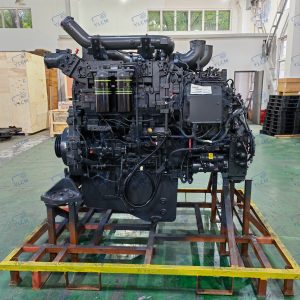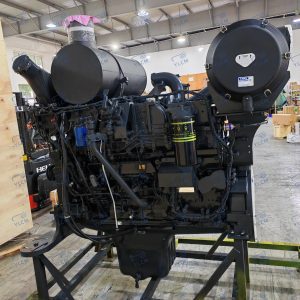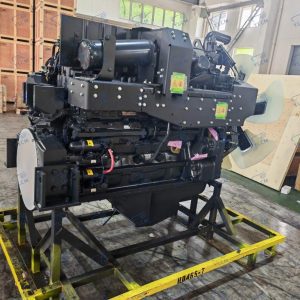

Sourcing China excavator parts Canada can reduce maintenance budgets for fleet operators and independent contractors. The gap between a factory in Shanghai and a job site in Toronto is not simply a shipping lane; it is a chain of supplier checks, part number verification, and import compliance steps that determine whether the parts arrive on time, on spec, and on budget. Without a structured procurement process, what looks like a price advantage can quickly erode through customs delays, misfit components, or quality disputes. This guide breaks down the practical framework for importing excavator components from Chinese manufacturers to your Canadian operation.
Why Canadian Operators Source Excavator Parts from China
The heavy equipment parts market in Canada carries a premium driven by distribution layers, warehousing costs, and regional supply chains. A hydraulic pump or undercarriage component for a Komatsu or Caterpillar excavator can cost 30 to 50 percent more when bought through domestic channels than it does when purchased directly from a Chinese factory that produces to the same drawings and material specifications. For a mining contractor running half a dozen machines, that difference adds up.
China´s excavator parts ecosystem is built on decades of supplying both OEM assembly lines and the global aftermarket. Factories in Jiangsu, Zhejiang, and Shandong produce engine components, swing bearings, idlers, track chain assemblies, and hydraulic cylinder kits that match OEM dimensions. The challenge is not a shortage of manufacturing capability; it is the ability to identify which suppliers consistently ship parts that meet spec, and then get them through Canadian customs without surprises.

Critical Import Regulations for Canada‑bound Heavy Equipment Parts
Canadian import rules for excavator parts are not as opaque as they first appear, but missteps at this stage cause serious delays. Most components fall under HS codes within heading 8431, which covers parts suitable for use solely or principally with the machinery of heading 8429 (bulldozers, excavators) and 8430 (other earth‑moving machinery). The specific subheading depends on whether the part is for the undercarriage, the upper structure, the engine, or the hydraulic system. Getting the HS code wrong can trigger a CBSA review, storage fees, or even re‑export.
Duty rates on excavator parts imported from China are generally low, often zero under the Most‑Favoured‑Nation tariff, depending on the exact classification. However, the 5 percent Goods and Services Tax applies to the declared value. The larger variable is the valuation methodology: undervaluing a shipment to reduce taxes is a routine red flag for CBSA auditors. I have seen containers held at Port of Vancouver for two weeks because a purchase order showed a unit price that did not match the factory invoice. Always use transaction value as the basis and retain the original commercial invoice and packing list.
A licensed customs broker is worth the fee for anything beyond a small sample shipment. They handle the B3‑3 Canada Customs Coding Form, calculate the tax and duty, and interface with the CBSA´s Release Notification System. For first‑time importers, we recommend engaging a broker before the first purchase order is cut, so the HS code classification is verified and any permits (e.g., for engines subject to emissions regulations) are identified.
How to Assess a Chinese Excavator Parts Supplier
Walking a factory floor in China tells you more in one morning than a dozen email exchanges. But when you cannot be there in person, there are concrete signals that separate a manufacturer with genuine production capability from a reseller with a nice website.
First, ask for the business license image and compare the registered business scope to the parts they offer. If a supplier claims to produce undercarriage rollers but their license lists “trading of general merchandise”, they are a middleman. Second, request a copy of a recent third‑party inspection report, not just an in‑house test sheet. Laboratories such as SGS or Bureau Veritas can verify material hardness, dimensional accuracy, and coating thickness. In the absence of an inspection report, a small trial order of commonly replaced items, such as a set of track chain or a bucket tooth, is a practical next step. Measure everything upon receipt and compare to the catalog drawing.
Communication patterns also reveal a lot. A factory engineer can explain the heat treatment process for a track roller, while a reseller can only quote price and delivery. When we first qualify a gear‑pump manufacturer, we send a series of technical questions about seal material, relief pressure setting, and test‑rig procedures. Factories that answer with specific numbers instead of reassurances are the ones we trust with production orders.
Ensuring Part Quality and Performance Before Shipment
After selecting a supplier, the next layer of risk sits between factory approval and ocean freight. A pre‑shipment inspection is not an optional step; it is the last chance to catch a dimensional error or a material substitution before the crate is sealed and the bill of lading is issued.
The inspection scope should be defined by a checklist that matches the part drawing: mounting dimensions, bolt‑hole diameters, hardness test points, surface finish, and weight. For hydraulic components such as pump couplings or control valves, we add a pressure test witnessed by the inspector. I have personally rejected a batch of swing‑motor pinions because the spline width was half a millimeter under the print tolerance, a deviation that would cause rapid wear and premature failure on a cold‑start morning in Alberta. The supplier corrected the batch before shipping because the rejection happened at the factory gate, not at the customer´s shop.
If the order value justifies it, a third‑party inspection company can be hired through a local office. For smaller lots, we recommend asking the supplier to ship a pre‑production sample first. That sample becomes the reference standard for the production run. Photographic evidence of the sample laid beside the production parts, with the inspector´s notes, gives the buyer a defensible record if a dispute arises later.
Shipping Methods and Customs Clearance from China to Canada
Excavator parts are heavy and dense, which makes sea freight the most economical option for anything larger than a few small boxes. A standard 20‑foot container can hold a mixed load of track shoes, idler assemblies, bucket pins, and a couple of hydraulic cylinders. Transit time from Shanghai, Ningbo, or Qingdao to Vancouver is roughly 14 to 20 days, plus another week by rail or truck to inland destinations such as Edmonton or Toronto. Air freight cuts transit time to 3 to 5 days but can cost five to ten times as much per kilogram, making it viable only for lightweight emergency components like a throttle motor or a sensor.
| Factor | Sea Freight | Air Freight |
|---|---|---|
| Transit time to Canada | 14–20 days + inland | 3–5 days + inland |
| Cost per kilogram | Low | 5–10× higher |
| Suitable for | Track groups, hydraulic cylinders, buckets | Engine sensors, throttle motors, seal kits |
| Documentation complexity | Bill of lading, packing list, commercial invoice | Air waybill, packing list, commercial invoice |
A forwarder experienced in heavy machinery will arrange inland trucking in China, container loading, and the customs clearance on both sides. When the container reaches Canada, the CBSA will examine the shipment based on risk assessment. Accurate paperwork speeds release. The commercial invoice must itemize each part by HS code, with unit quantity, unit price, and country of origin. A consolidated invoice that lists “spare parts” as a single line will almost certainly be flagged.
Controlling Total Landed Cost Without Sacrificing Reliability
The price a factory quotes FOB Shanghai is only the starting number. Ocean freight, marine insurance, terminal handling charges, customs brokerage, duty, GST, and inland delivery stack on top. We build a total‑landed‑cost model for every buyer we work with, because the most attractive unit price on paper can turn out to be the most expensive if the shipment is charged by volume weight on a poorly packed pallet.
Bundling orders into full container loads reduces the per‑kilogram freight rate dramatically compared to less‑than‑container‑load shipments. But that only works if the buyer has enough consumption to justify the inventory. For a repair shop that needs one drive sprocket and a couple of rollers, LCL with a reliable consolidator is the practical choice.
Currency movement also plays a role. Chinese suppliers almost always quote in U.S. dollars, so the exchange rate between CAD and USD becomes part of the budget. Locking the rate at the time of the purchase order, or at least factoring a 3‑to‑5‑percent cushion for fluctuation, prevents the landed cost from creeping up between order and payment.
If your program involves multiple machine models and you are trying to standardise part numbers across a fleet, it is worth confirming the exact cross‑reference and material specification before final orders are placed. A small mistake in a part number can put a machine down for weeks. Send your parts list and we will check compatibility against the factory´s current production data.
Common Questions About Importing Excavator Parts to Canada
How long does shipping from China to Canada take?
Sea freight from major Chinese ports to Vancouver takes between 14 and 20 days on the water. Add three to five days for port handling and customs clearance in Canada, and another five to seven days for rail or truck transport to central and eastern provinces. A typical door‑to‑door timeline is four to six weeks, though this can shorten if the forwarder coordinates direct inland delivery and the paperwork is clean.
What HS codes apply to excavator parts?
Most excavator parts fall under HS heading 8431. Undercarriage components such as track chain, rollers, and sprockets are often classified under 8431.49, while engine parts may fall under entirely separate headings like 8409. The exact code depends on the part function and machine type. Misclassification is one of the most common reasons for customs holds, so obtaining a ruling from a customs broker before the first shipment is a small upfront cost that avoids expensive delays.
Are Chinese aftermarket parts as reliable as OEM?
When manufactured to OEM specifications with proper material grades and heat treatment, Chinese aftermarket components can match OEM durability. The difference is that quality is not automatic. It depends entirely on the factory´s process control and the buyer´s verification steps. We have seen aftermarket bucket teeth and track chains that performed equally in abrasive mining conditions in Central Asia, but we have also seen failures from substandard castings. The key is to treat every order as if you are qualifying a new supplier, not assuming consistency from the last shipment.
Do I need a customs broker to import excavator parts?
Legally, you can self‑clear a shipment, but for heavy machinery parts it is rarely economical. A licensed customs broker handles the tariff classification, duty and tax calculation, and electronic release with CBSA. They also know when additional permits might be required, for example for certain engine components. For a first‑time importer, the broker´s fee is usually recovered in the first successful clearance by avoiding storage charges and inspection delays.
How can I verify a supplier´s certifications remotely?
Ask for a recent ISO certificate and then verify it through the issuing body´s public database. Follow that with a video call that shows the factory floor and test equipment. Request a wet‑signed quality control checklist for a recent completed order, not a blank template. If the supplier cannot offer at least two of these, you are likely talking to a trading company rather than a manufacturer. Share your target part list with us and we will confirm whether the factory has current production records for your specific numbers.
If you’re interested, check out these related articles:
How to Choose the Right Hydraulic Pump Coupling for Your System
469334 Excavator Part: Function and Application Explained
How to Choose Cat 320 Excavator Parts for Peak Performance
Understanding Excavator Undercarriage Parts and Their Roles
Using Caterpillar Excavator Parts Catalogs: Maximize Uptime