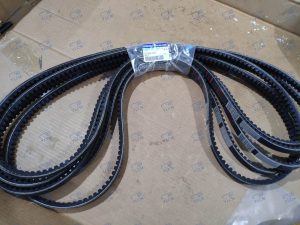
1. What is the function of engine belts in heavy machinery?
Engine belts transmit power from the crankshaft to accessories such as the alternator, cooling fan, water pump and air compressor, ensuring these components operate to support engine charging, cooling and other functions.
2. What types of engine belts do you offer?
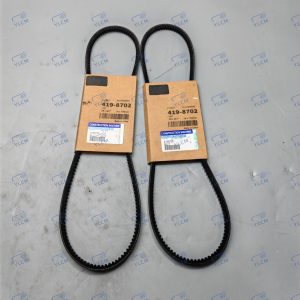
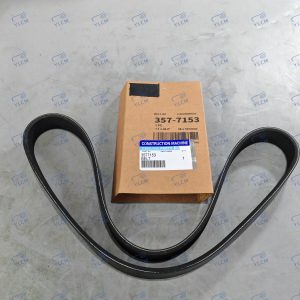
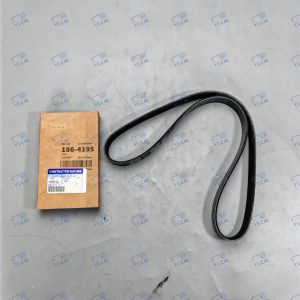
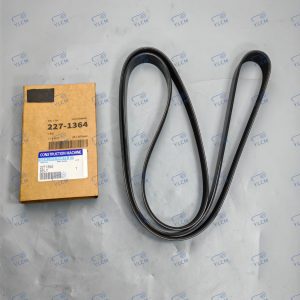
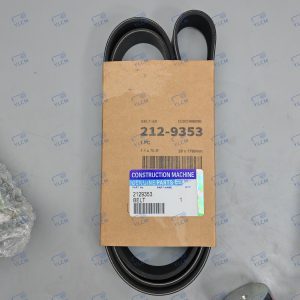
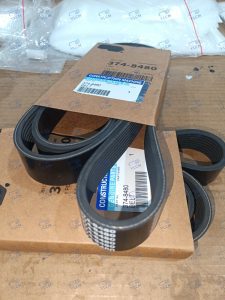
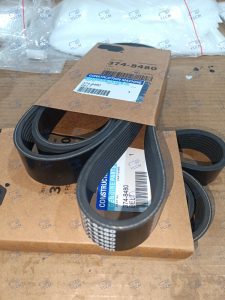
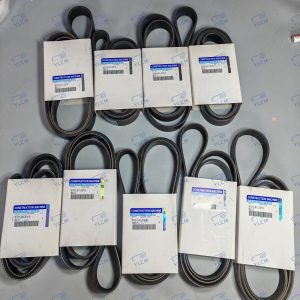
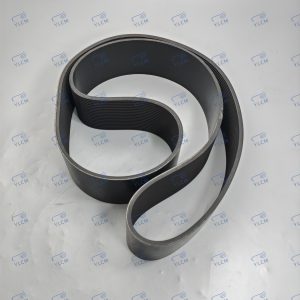
We provide V-belts, serpentine belts, timing belts and ribbed belts for heavy-duty diesel engines, including different lengths, widths and profiles to match OEM specifications.
3. Are your engine belts compatible with different engine and equipment brands?
Yes. Our belts are manufactured to match OEM specifications, compatible with Komatsu, Caterpillar, Hitachi, Volvo and Cummins engine models used in major heavy equipment brands.
4. What durability features do your engine belts have?
Our belts use high-tensile reinforced cords and heat-resistant rubber compounds, with excellent resistance to wear, heat, oil and ozone, suitable for harsh engine compartment environments.
5. Can your engine belts work in high-temperature and high-vibration conditions?
Yes. Our belts are designed to operate stably in high engine compartment temperatures (up to 120°C) and continuous vibration, with low stretch and high fatigue resistance to prevent slipping and breaking.
6. What common belt-related faults do heavy machinery engines experience?
Common issues include belt slipping, cracking, fraying, breaking and premature wear, which can cause alternator failure, overheating and engine shutdown.
7. What is the service life of your heavy machinery engine belts?
Under normal operating conditions, our belts have a service life of 2–3 years, significantly longer than ordinary aftermarket belts, due to high-quality materials and reinforced construction.
8. What regular maintenance is required for engine belts?
Regularly inspect belt tension, wear, cracks and alignment. Adjust belt tension according to OEM specifications, replace worn or damaged belts in time, and check pulleys for wear or misalignment.
9. How do I select the correct belt for my engine?
Confirm the OEM part number, belt profile (V-belt/serpentine), length and width first. Our technical team can verify compatibility based on your engine model and specifications.
10. Why choose YLCM for heavy machinery engine belts?
We offer high-tensile, durable belts with OEM compatibility, designed for harsh engine conditions, ensuring reliable power transmission and reducing maintenance costs.