1. What are the core functions of Condenser Assy, Evaporator, and Dryer/Receiver in the heavy machinery air conditioning system?
These three components are key parts of the heavy machinery air conditioning refrigeration cycle, each undertaking irreplaceable functions to ensure the stable operation of the system:
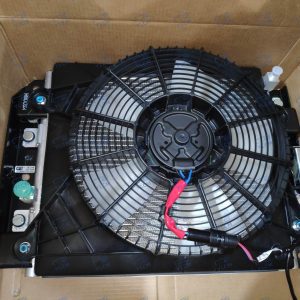
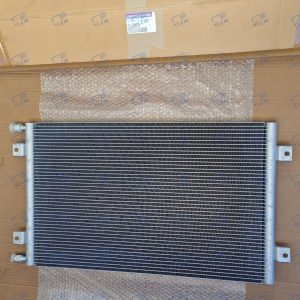
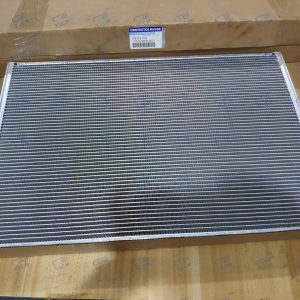
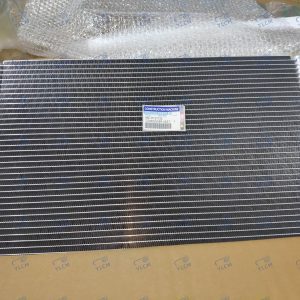
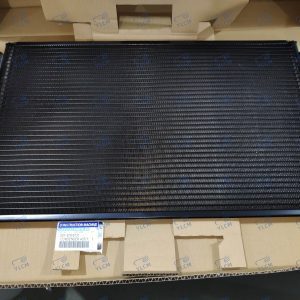
Condenser Assy: Responsible for dissipating heat from the high-temperature and high-pressure gaseous refrigerant discharged by the compressor, cooling it into a high-pressure liquid refrigerant, laying the foundation for subsequent throttling and cooling.
Evaporator: As the "cooling core" of the system, it absorbs heat from the cabin air through the evaporation of low-temperature and low-pressure liquid refrigerant, converting the air into cold air and delivering it to the cabin.
Dryer/Receiver: Filters moisture and impurities in the refrigerant to prevent ice blockage and corrosion of the system; stores excess liquid refrigerant and stabilizes the system pressure to ensure the smooth operation of the refrigeration cycle.
2. How to select Condenser Assy, Evaporator, and Dryer/Receiver for heavy machinery?
Selecting these components requires matching the air conditioning system and operating environment, focusing on the following key points:
Condenser Assy: According to the cooling capacity of the air conditioning system and the operating temperature, select the model with appropriate heat dissipation area and airflow resistance; for high-temperature and dusty environments, prioritize models with corrosion-resistant fins and anti-clogging design.
Evaporator: Match the cabin size and cooling demand, select the model with appropriate heat exchange efficiency; ensure the installation dimensions are consistent with the cabin air duct, and choose models with anti-frost and easy cleaning functions.
Dryer/Receiver: Select according to the refrigerant type and system pressure, ensure the filtering capacity and storage volume match the system; choose models with high-efficiency molecular sieves and corrosion-resistant shells.
3. What materials and technologies ensure the durability of YLCM Condenser Assy, Evaporator, and Dryer/Receiver?
YLCM adopts high-quality materials and advanced manufacturing technologies to ensure that these components can adapt to the harsh working conditions of heavy machinery:
Condenser Assy & Evaporator: Adopt corrosion-resistant aluminum alloy fins and tubes, combined with vacuum brazing technology, which improves heat exchange efficiency and service life; the fins are treated with anti-corrosion coating to resist dust, moisture and chemical corrosion.
Dryer/Receiver: The shell is made of high-density engineering plastics or stainless steel, with anti-UV and anti-corrosion performance; the internal molecular sieve has strong moisture absorption capacity, and the seal adopts high-temperature and high-pressure resistant materials to ensure no refrigerant leakage.
4. How do YLCM Condenser Assy and Evaporator improve heat exchange efficiency?
YLCM Condenser Assy and Evaporator adopt optimized design and advanced technology to significantly improve heat exchange efficiency, reducing the load of the air conditioning system:
Condenser Assy: Adopt parallel flow structure and large-area fins, increasing the heat exchange area by 30%; the fin spacing is optimized by CFD simulation, reducing airflow resistance and improving heat dissipation efficiency by 40%.
Evaporator: Adopt microchannel design, which enhances the contact area between refrigerant and air; the internal airflow is optimized to avoid vortex, ensuring uniform heat absorption and improving heat exchange efficiency by 35%.
5. Can YLCM Condenser Assy, Evaporator, and Dryer/Receiver work stably in extreme environments?
Yes. All these components are specially designed for extreme working environments of heavy machinery, with excellent environmental adaptability:
Temperature resistance: Can work stably in the range of -40℃ to 120℃, the fins and tubes will not deform or crack under extreme temperature changes. Dust and water resistance: Equipped with IP68/IP69K protection level, resistant to high dust, high humidity and high-pressure washing, suitable for mining, construction and other harsh scenarios.
Vibration resistance: The components are fixed with high-strength brackets and shock-absorbing gaskets, which can withstand continuous vibration during machinery operation, ensuring no loosening or damage.
6. Are these components compatible with major heavy machinery brands?
Yes. YLCM Condenser Assy, Evaporator, and Dryer/Receiver are designed according to the OEM specifications of major heavy machinery brands, including Komatsu, Caterpillar, Hitachi, Volvo, Cummins and other mainstream brands.
We provide a variety of models with different dimensions and parameters, which can be directly matched with different models of heavy machinery. At the same time, we provide customized services to adjust the size and structure according to the special needs of customers, ensuring perfect compatibility.
7. What regular maintenance is required for these components?
Regular maintenance can extend the service life of the components and ensure the stable operation of the air conditioning system. The recommended maintenance measures are as follows:
Condenser Assy: Clean the fins every 1-2 months to remove dust and debris, avoid blocking the airflow; check the tubes for leakage and corrosion, and repair or replace them in time.
Evaporator: Clean the surface and air duct every 3 months to remove dust and dirt; check for frost accumulation, and adjust the system parameters if necessary to avoid frost blockage.
Dryer/Receiver: Replace the molecular sieve desiccant every 6-12 months to ensure moisture removal effect; check the seal for leakage, and replace the seal if necessary.
8. How to judge the failure of Condenser Assy, Evaporator, and Dryer/Receiver?
The failure of these components will have obvious impact on the air conditioning system, which can be judged through the following phenomena:
Condenser Assy failure: Poor cooling effect, high system pressure, and the condenser surface is overheated; the air conditioning system may shut down due to overheating.
Evaporator failure: Insufficient cold air in the cabin, uneven cooling, or frost accumulation on the surface; abnormal noise when the blower is working.
Dryer/Receiver failure: System ice blockage, refrigerant leakage, or the air conditioning system frequently shuts down; the desiccant changes color (from blue to pink), indicating that it has lost moisture absorption capacity.
9. What is the service life of YLCM Condenser Assy, Evaporator, and Dryer/Receiver?
Under normal use and regular maintenance, the service life of these components is as follows: Condenser Assy and Evaporator: 7-10 years; Dryer/Receiver: 3-5 years (the desiccant needs to be replaced regularly).
The long service life is due to the high-quality materials and strict quality control: the aluminum alloy fins and tubes are corrosion-resistant and wear-resistant, the molecular sieve has strong durability, and all components undergo strict pressure and leakage tests before leaving the factory.
10. Why choose YLCM Condenser Assy, Evaporator, and Dryer/Receiver for heavy machinery?
YLCM these components have obvious advantages in performance, durability and compatibility, and are the ideal supporting choice for heavy machinery air conditioning systems:
High heat exchange efficiency: Optimized design and advanced technology, reducing system load and energy consumption. Strong adaptability: Suitable for extreme environments, with excellent corrosion resistance, dust resistance and vibration resistance.
Wide compatibility: Compatible with major mainstream machinery brands, support customized services. Long service life: High-quality materials and strict testing, reducing maintenance costs and downtime loss. Reliable quality: All components pass ISO certification, ensuring stable performance and no leakage.