
When a Komatsu PC220, Caterpillar 320, or Hitachi ZX220 sits idle waiting for parts, every hour costs real money. I spent over two decades inside the OEM supply chain before founding Shanghai Yanli, and I can tell you that the difference between a smooth parts program and constant downtime rarely comes down to luck. It comes down to how you qualify suppliers and whether you understand what “quality” actually means for a 20-ton-class excavator that works in harsh conditions. Most procurement teams spend too much time comparing unit prices and too little time verifying whether the parts pipeline can actually deliver when the machine is down. This article focuses on what I have learned about building a 220 excavator parts sourcing strategy that holds up under real job-site pressure, not just in a spreadsheet.
Understanding What 220 Excavator Parts Cover
The “220” designation refers to a 20-to-22-ton operating weight class and includes some of the most common mid-size excavators on job sites worldwide. Komatsu PC200 and PC220 series, Caterpillar 320-series machines, Hitachi ZX200 and ZX220 models, and their equivalents from Kobelco, Hyundai, and Doosan all fall into this category. When someone asks me about 220 excavator parts, they are usually managing a fleet where these machines handle everything from trenching to heavy lifting, and the parts list spans a wide range of systems.

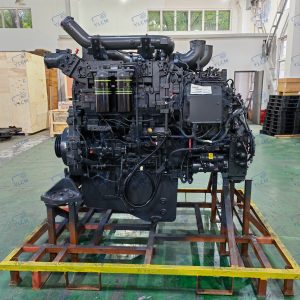
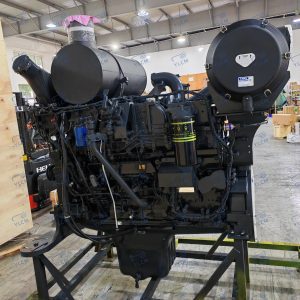
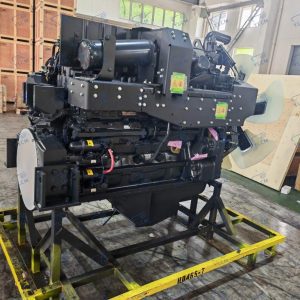
The parts that move most frequently through our supply chain for this class break down into a few clear categories. Undercarriage components such as track chains, rollers, idlers, and sprockets wear predictably based on ground conditions and operating hours. Hydraulic system parts including pumps, cylinders, seal kits, and control valves tend to fail less predictably but take longer to source if you are not prepared. Engine components ranging from turbochargers and water pumps to full short blocks become critical when a machine approaches mid-life. Structural items like buckets, bucket teeth, cutting edges, and arm components wear at different rates depending on the application. Electrical components such as wiring harnesses, sensors, monitors, and actuators have grown more important as excavators have become more electronically controlled.
What I have observed across hundreds of parts inquiries is that most buyers focus heavily on the components that fail spectacularly while underestimating the ones that fail gradually and cause secondary damage. A worn sprocket that gets overlooked will take out a track chain, turning a one-day swap into a multi-day repair with much higher parts cost.
| Part Category | Typical Replacement Interval | Lead Time Sensitivity |
|---|---|---|
| Undercarriage wear parts | 1,500–3,000 hours | Low (plan ahead) |
| Hydraulic seals and hoses | Variable, often sudden | High (downtime trigger) |
| Engine components | 6,000–10,000 hours | Medium (scheduled PM) |
| Electrical and sensors | Unpredictable | High (diagnostic-dependent) |
| Structural and bucket parts | Application-dependent | Medium (can often weld/repair short-term) |
How OEM and Aftermarket Parts Compare for 220-Class Excavators
I spent years on the OEM side at Komatsu, so I understand why dealers position genuine parts as the only safe option. The engineering and quality control are real advantages. But I have also spent years building relationships with aftermarket manufacturers who supply components that match or approach OEM specifications at a fraction of the cost. The honest answer is that neither source is always right.
For critical engine internals including pistons, liners, bearings, and crankshaft components, I generally recommend staying with OEM or a proven aftermarket brand that can provide metallurgical specifications and quality certificates. The cost of a short-block failure from a substandard component far exceeds any savings on the part itself. For hydraulic pumps and motors, high-quality aftermarket options from manufacturers who specialize in remanufacturing these units can deliver excellent value, but you need to confirm testing protocols before buying. For undercarriage components, the aftermarket has matured significantly. Multiple factories now produce track chains, rollers, and idlers with controlled heat treatment and dimensional accuracy that perform well in most applications. For seal kits and wear parts, aftermarket options from reputable suppliers are often indistinguishable from OEM in performance, and the price difference can be substantial.
The decision I see too many buyers get wrong is applying the same rule to every part on the machine. An OEM fuel injection nozzle for a PC200-8 matters a lot more than an OEM bucket tooth. Prioritize your OEM budget where precision and metallurgy directly affect engine or hydraulic system life, and use proven aftermarket sources for wear parts and structural components. This approach typically saves 30 to 40 percent on the total parts bill without increasing downtime risk.
If your equipment operates in extreme conditions such as high-altitude mining or sustained heavy rock work, it is worth confirming the specific heat treatment specifications and material grades with your supplier before committing to aftermarket undercarriage parts. Reach out at [email protected] with your machine model and operating conditions and we can walk through what matters.
What to Look for in a 220 Excavator Parts Supplier
Having managed supply relationships across more than 20 manufacturers in China, Japan, Russia, and the United States, I have developed a short list of supplier qualification criteria that I apply before placing orders. These are the same checks I use internally at Shanghai Yanli when evaluating a new factory or partner.
First, demand traceability on specifications. A supplier who cannot tell you the material grade, heat treatment process, or dimensional tolerance of a roller or track pin is a supplier who does not control their own quality. You do not need to become a metallurgist, but you do need to see that someone in the supply chain is measuring and documenting these parameters. Second, verify logistics capability before you need emergency delivery. I have seen too many cases where a supplier offered attractive pricing but could not maintain consistent lead times once the order volume increased. Ask for references from customers in your region and check whether the supplier can handle customs documentation properly for your destination country. Third, look for specialization rather than catalog breadth. A factory that produces only undercarriage parts will typically outperform a generalist who lists every excavator component in their catalog but manufactures few of them in-house.
A practical test I recommend is sending a small trial order of wear parts first before committing to higher-value components. A track roller order of 10 to 20 units reveals a lot about a supplier: packaging quality, dimensional consistency, delivery time accuracy, and communication responsiveness. If they get that right, you can gradually expand into hydraulic and engine components with more confidence.
Avoiding the Mistakes That Delay 220 Excavator Parts Deliveries
I have watched procurement teams make the same mistakes repeatedly, and most of them are avoidable. The most expensive one is ordering by price alone and discovering that the part does not fit or fails prematurely. A Komatsu PC220-7 and a PC220-8 may share a model series name, but the hydraulic pump and several undercarriage dimensions changed between generations. Always provide your machine serial number, not just the model, when requesting parts. At Shanghai Yanli, we require serial numbers on all orders for this exact reason. It adds a step to the process but eliminates the most common cause of returns and wasted freight.
Another mistake that shows up regularly is treating freight as an afterthought. For customers in Central Asia, Africa, and Southeast Asia where we do significant business, shipping method and consolidation strategy have a bigger impact on total cost than the unit price of the parts. Air freight makes sense for a failed hydraulic pump that is stopping production. Sea freight or rail consolidation works better for planned undercarriage replacements. We help customers plan shipments around their maintenance schedules so that parts arrive before the old components are worn out, not after the machine has already stopped.
The third common issue is not accounting for customs clearance time and documentation requirements in the destination country. A shipment that arrives at the port in five days but sits in customs for three weeks because the paperwork was incomplete still counts as a late delivery. Work with suppliers who can provide complete commercial invoices, packing lists, certificates of origin, and any required compliance documentation before the shipment leaves.
Building a Long-Term 220 Excavator Parts Program
After 22 years in this business, what I tell our partners is that the goal is not to find the cheapest part once. The goal is to create a parts pipeline that removes uncertainty from your maintenance planning. That means selecting a supplier who can cover the majority of your 220-class machines across multiple brands, maintaining agreed-upon stock levels for your high-consumption items, and providing consistent lead times that you can build into your maintenance schedule.
The cost advantage of sourcing from China-based suppliers who work directly with OEM and aftermarket manufacturers is real, but it only translates into operational savings when the supplier also delivers on quality control, logistics, and communication. We built Shanghai Yanli around this principle because I saw too many international buyers struggling to access China’s manufacturing capability without a reliable partner on the ground who understood both the factory side and the end-user requirements.
For procurement managers and fleet owners running 220-class excavators, the most practical next step is to build a prioritized parts list for your fleet, identify which items are downtime-critical versus plan-ahead replacements, and then qualify suppliers against that list rather than against a generic catalog. A supplier who handles your undercarriage perfectly may not be the right source for your engine components. Segmenting your parts by category and matching each to the right supplier tier consistently produces better results than looking for one supplier who claims to do everything.
Common Questions About Sourcing 220 Excavator Parts
How Do I Know Whether an Aftermarket Undercarriage Part Will Last as Long as OEM?
It depends on the manufacturer and the application. In our experience supporting mining and heavy construction customers, aftermarket track chains and rollers from factories that use induction-hardened steel and controlled heat treatment processes regularly achieve 80 to 90 percent of OEM life at 50 to 60 percent of the cost. For machines working in abrasive conditions where even OEM parts wear quickly, the cost-per-hour calculation often favors aftermarket. For machines in precision applications with low wear rates, the longevity gap narrows. Always request hardness specifications and compare them to the OEM specification for your machine before deciding.
What Is the Biggest Risk When Ordering 220 Excavator Parts from China?
Compatibility errors cause more losses than quality problems. A part can be manufactured to excellent standards and still be wrong for your specific machine if the serial number break was not checked. The supply chain in China has matured significantly over the past decade, and there are factories producing components that meet or exceed OEM specifications. The risk is not that Chinese manufacturing cannot produce a good part. The risk is that the ordering process misses a critical specification change between machine variants. Working with a supplier who insists on serial number verification before every order closes that gap.
How Should I Handle Emergency Parts Needs for a Downed Machine?
For genuine emergencies where a 220 excavator is stopped and costing production, we recommend splitting your approach. Air freight a critical component like a hydraulic pump or ECU from a supplier who has confirmed stock, while simultaneously placing the order for complementary parts that can arrive by sea a few weeks later. The key preparation step is having your machine serial number, part numbers, and preferred shipping method ready before you contact the supplier. In programs we have supported, customers who maintain a short list of downtime-critical part numbers with pre-confirmed availability get back online in days rather than weeks.
Can the Same Supplier Handle Parts for Multiple Brands of 220-Size Excavators?
Yes, and this is actually a strength to look for. A supplier who moves volume across Komatsu, Caterpillar, Hitachi, and Hyundai 220-class machines typically has better factory relationships and more consistent stock levels than a specialist who only handles one brand. The caution is that cross-brand capability must be backed by brand-specific technical knowledge. At Shanghai Yanli, our team includes specialists who know the serial number breaks, engineering changes, and common failure patterns for each major brand independently. If your fleet has mixed 220 excavator brands and you want to confirm compatibility and lead times for your specific machines, share your equipment list at [email protected] or call +86-21-55800172 and we will provide a parts availability assessment.
If you’re interested, check out these related articles:
Understanding Excavator Undercarriage Parts and Their Roles
Kobelco Excavator Parts Manuals: Your Guide to Efficient Maintenance