
Procuring Doosan excavator parts online demands more than clicking through catalogs. It requires knowing which suppliers actually deliver what they promise, understanding when aftermarket makes sense versus when OEM is non-negotiable, and avoiding the part number errors that turn a routine order into a two-week delay. This guide covers the practical decisions procurement managers, fleet operators, and workshop owners face when sourcing heavy equipment components through digital channels. Getting these decisions right keeps machines running and budgets intact.
OEM or Aftermarket: Which Doosan Excavator Parts Actually Make Sense
The choice between Original Equipment Manufacturer parts and aftermarket alternatives is not a blanket decision. It depends on the component, the machine’s age, and how much risk you can absorb if something fails.
OEM parts come from Doosan or its authorized suppliers, built to exact specifications. They fit without modification, perform as designed, and carry manufacturer-backed warranties. Aftermarket parts come from independent manufacturers, often at lower prices, but with wider variation in quality and compatibility.

| Feature | OEM Parts | Aftermarket Parts |
|---|---|---|
| Origin | Manufactured by Doosan or authorized vendors | Produced by independent manufacturers |
| Fit/Spec | Exact fit, guaranteed specifications | May vary, generally designed to fit multiple models |
| Quality | High, consistent, brand-backed | Varies widely, can be high or low |
| Warranty | Typically comprehensive, manufacturer-backed | Varies by manufacturer, often shorter |
| Cost | Higher initial investment | Generally lower initial cost |
| Availability | Through authorized dealers, specialized suppliers | Wider range of suppliers, online marketplaces |
For critical engine components or hydraulic system parts, OEM reliability often justifies the price difference. A failed hydraulic pump does not just cost the part replacement; it costs the machine’s downtime, the labor to diagnose and repair, and potentially the damage to connected systems. On older machines or for wear items like filters, bushings, or track components, quality aftermarket parts from established manufacturers can deliver 80% of the performance at 50% of the cost.
The key is matching the part’s function to the risk tolerance. A track roller on a DX225 running in a quarry sees different stress than the same part on a machine doing light utility work. The quarry application probably warrants OEM; the utility machine might run fine on aftermarket for years.
What Separates Reliable Doosan Parts Suppliers from the Rest
The digital marketplace offers thousands of Doosan parts suppliers, but their actual capabilities vary enormously. A supplier listing parts is not the same as a supplier who can consistently deliver correct, quality components on predictable timelines.
Reliable suppliers demonstrate several characteristics. They maintain relationships with multiple manufacturers, giving them access to both OEM channels and vetted aftermarket sources. They understand Doosan excavator models well enough to catch ordering errors before they ship. They price transparently, without hidden fees that appear at checkout or customs.
Shanghai Yanli Construction Machinery Co., Ltd. works directly with over 20 manufacturers across multiple regions, which allows sourcing flexibility that single-channel suppliers cannot match. When a client in Kazakhstan needed a specific DX series component that was back-ordered through standard OEM channels, this network made it possible to source from a Chinese aftermarket manufacturer with documented quality control. The part arrived in two weeks at 30% below the OEM quote. That kind of sourcing capability matters when downtime costs real money.
When evaluating any supplier, examine their inventory breadth, their willingness to discuss part specifications in detail, and the clarity of their return and warranty policies. A supplier who cannot answer technical questions about the parts they sell is probably just a middleman without the expertise to catch problems before they reach your shop.
Getting the Right Doosan Excavator Part the First Time
Ordering the wrong part wastes money twice: once on the incorrect component, again on the delay while sourcing the correct one. Accurate identification requires systematic verification, not guesswork.
Start with the machine’s model and serial number, typically found on the data plate on the frame or in the operator’s manual. Use these to locate the specific part number in the official parts manual or a verified online catalog. Part numbers for Doosan excavators follow consistent formats, but similar-looking numbers can reference completely different components.
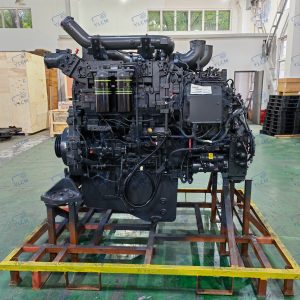
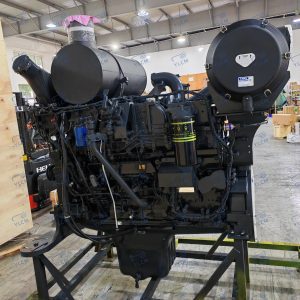
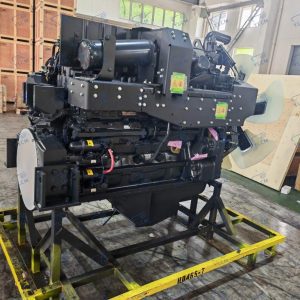
Cross-reference visual details when possible. Compare product images with the actual component on the machine, looking for distinguishing features, mounting points, or casting marks. For hydraulic system parts or engine spare parts, additional specifications like flow rates, pressure ratings, or engine model compatibility become critical.
When contacting a supplier, provide the machine model, serial number, and exact part number together. A knowledgeable supplier will verify compatibility before processing the order, catching potential mismatches that might not be obvious from the part number alone. This verification step prevents the most common procurement errors.
If uncertainty remains, ask the supplier to cross-reference. Their expertise exists precisely for situations where the parts manual is ambiguous or the machine has been modified from original specifications.
Managing International Orders from Purchase to Delivery
For buyers outside Doosan’s primary markets, international procurement adds complexity that domestic orders do not face. Shipping method selection, customs documentation, and delivery timeline management all affect whether parts arrive when needed.
| Shipping Option | Speed | Cost | Tracking | Customs Handling | Ideal For |
|---|---|---|---|---|---|
| Express Air | 3-7 days | Highest | Detailed | Often assisted | Urgent, high-value, small items |
| Standard Air | 7-14 days | Medium-High | Good | Standard | Time-sensitive, moderate size/weight |
| Ocean Freight | 30-60 days | Lowest | Basic | Complex | Bulk orders, non-urgent, heavy/large items |
| Consolidated | 10-20 days | Medium | Moderate | Shared | Multiple small orders from one region |
Express air makes sense for emergency repairs where every day of downtime carries significant cost. Standard air handles most routine orders where a week or two of lead time is acceptable. Ocean freight works for planned inventory replenishment, bulk orders, or heavy components where air freight costs become prohibitive.
Customs procedures vary by destination country and can add days or weeks to delivery if documentation is incomplete. Confirm with your supplier what paperwork they provide and what your receiving country requires. Harmonized System codes, commercial invoices, and certificates of origin all affect clearance speed and duty calculations.
Build buffer time into critical orders. A part that “typically ships in 5-7 days” can take 10-14 days if a supplier faces stock issues or if customs flags the shipment for inspection. For machine-down situations, communicate urgency clearly and confirm actual stock availability before paying for expedited shipping.
Verifying Authenticity Before Counterfeit Parts Reach Your Shop
Counterfeit and substandard parts circulate through online marketplaces, sometimes at prices that seem too good to be true because they are. A counterfeit hydraulic seal might look identical to genuine, but fail under pressure. A substandard bearing might last months instead of years.
Verification starts with supplier selection. Authorized dealers and established independent suppliers with documented quality control processes represent lower risk than anonymous marketplace sellers. Ask about sourcing: where do the parts come from, and what quality verification occurs before shipping?
Examine product details carefully. Genuine Doosan parts carry consistent branding, original packaging, and verifiable part numbers that match official catalogs. Request certificates of authenticity or manufacturing origin for high-value components. Detailed product photos showing packaging, labeling, and the part itself can reveal inconsistencies that indicate counterfeits.
Warranties matter here. A supplier confident in their parts will stand behind them with clear warranty terms. Vague or missing warranty information suggests the supplier knows their products may not perform as expected.
For critical components where failure creates safety risks or major repair costs, the price difference between verified genuine parts and questionable alternatives rarely justifies the risk. The savings on a suspect hydraulic pump disappear quickly when it fails and takes the cylinder with it.
Building a Reliable Doosan Parts Supply Chain
Consistent access to quality Doosan excavator parts at competitive prices requires more than finding a single good supplier. It requires building relationships with partners who understand your equipment, your operational context, and your timeline requirements.
Shanghai Yanli Construction Machinery Co., Ltd. maintains the manufacturer network and technical expertise to support global partners across the full range of Doosan excavator components. Whether the need is OEM parts for critical systems or quality aftermarket alternatives for routine maintenance, the goal remains the same: keeping machines operational without overpaying for components.
To discuss specific requirements, contact us at [email protected] or +86-21-55800172.
Frequently Asked Questions
Can I return Doosan excavator parts if they are incorrect or faulty?
Most established online suppliers accept returns for incorrect or defective parts within a defined window, typically 15-30 days from delivery. Review the supplier’s terms before ordering, paying attention to who covers return shipping costs and whether restocking fees apply. For parts that fail after installation, warranty terms govern the process rather than return policies.
How do I know if an online supplier of Doosan parts is trustworthy?
Look for verifiable contact information, not just a web form. Check for customer reviews on independent platforms, not just testimonials on the supplier’s own site. Confirm they offer secure payment processing and clear warranty documentation. A trustworthy supplier will answer technical questions about the parts they sell and provide detailed information about their sourcing and quality verification processes.
Are there any specific customs duties or taxes when ordering Doosan parts internationally?
Import duties, taxes, and fees vary significantly by destination country and product category. These costs add to the landed price of parts and can represent 10-25% or more of the product value in some jurisdictions. Clarify potential charges with your supplier or freight forwarder before ordering. Some suppliers provide landed cost estimates; others quote only the product and shipping, leaving customs costs as your responsibility to calculate.
What payment methods are typically accepted for online Doosan parts purchases?
Bank transfers remain common for B2B transactions, particularly for larger orders. Major credit cards provide buyer protection but may carry processing fees. Some suppliers accept secure online payment platforms. Verify that any payment gateway uses encryption, and be cautious of suppliers who request payment methods that offer no recourse if products fail to arrive or match descriptions.
How can I get technical support if I have questions about installing a Doosan part?
Established suppliers typically offer technical support through phone, email, or chat channels. The depth of support varies: some suppliers employ staff with hands-on equipment experience who can walk through installation procedures, while others provide only basic order support. Confirm available support options before purchasing, particularly for complex components where installation questions are likely to arise.
If you’re interested, check out these related articles:
Shanghai Yanli Participated in Mining & Construction Vietnam 2026 in Hanoi
Fluid Coupling: Principles and Industrial Applications in 2026