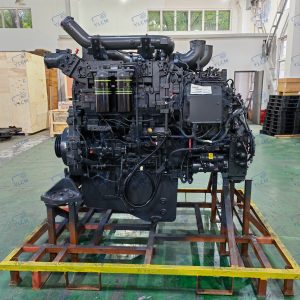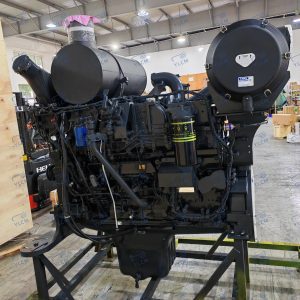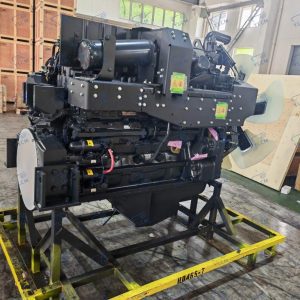

Locating an excavator hydraulic pump is rarely just a part-number lookup. A pump that arrives with the right casting number but the wrong internal clearances, or one packed poorly for a 6,000‑mile journey, can cost you three weeks of downtime while the machine sits idle. I’ve spent over two decades inside the construction equipment supply chain, first at Komatsu China and now sourcing parts for customers across Central Asia, Russia, and Africa, and the pattern I see again and again is that the real risk isn’t finding a pump. It’s finding one you can trust before you pay and before the machine goes back to work.
Why the Source Matters More than the Part Number
A hydraulic pump moves oil at pressure, and every internal component, the barrel, pistons, valve plate, and bearings, must stay within micron‑level tolerances. A pump that looks identical on the outside can deliver 10% less flow or generate heat that degrades the oil within the first hundred hours. When a supplier tells me “same as OEM” without being able to name the plate material or the break‑in test pressure, I know the product description wasn’t written by anyone who touched the part.
What makes this harder is that the excavator doesn’t care where the pump was manufactured, only whether it meets the design spec. I’ve seen aftermarket units from a factory with a disciplined quality management system outlast a genuine pump that sat on a shelf for four years with dried shaft seals. The source isn’t a label. It’s a process.

How to Pinpoint the Exact Hydraulic Pump Specification
Before you search, you need three pieces of information, not one.
- The machine model and serial number, because the same excavator series can switch pump families mid‑production.
- The OEM part number stamped on the old pump’s data plate; a photo is better than a note.
- The pump’s technical parameters: displacement in cc/rev, maximum working pressure, rotation direction, and shaft spline count.
If the old pump failed catastrophically and the data plate is gone, cross‑reference the excavator service manual with the hydraulic schematic. The schematic will list the pump model series (Kawasaki K3V, Rexroth A10VO, etc.) and often the displacement. I’ll add that when I’m sourcing for a mining customer in Ghana, I don’t stop at “it’s a Komatsu PC300‑7 pump.” I ask the supplier to confirm pilot‑pump displacement and the regulator type, because those details separate a pump that bolts on and works from one that bolts on and causes the main relief to chatter.
| Information Needed | Where to Find It | Why It Matters |
|---|---|---|
| Machine model and serial number | Cab plate, frame stamp, service records | Pumps can change within a model run |
| OEM part number | Data plate on the pump body | Matches the exact factory configuration |
| Displacement and pressure | Service manual, hydraulic schematic | Confirms performance envelope |
| Rotation and shaft spline | Old pump shaft examination | Prevents expensive coupling mismatch |
Where Buyers Typically Look, and What They Often Miss
Most procurement paths break down into four channels.
OEM dealers guarantee compatibility and warranty, at the highest price. Aftermarket specialists, particularly in China, offer pumps built to the same print but at 40–60% less. Online marketplaces have immediate listings but almost no vetting of the seller. Rebuilt and used pumps can work when the machine age makes a new pump uneconomical, but only if the rebuilder replaced the rotating group, not just the seals.
The channel that routinely surprises buyers is the Chinese aftermarket supply network, when engaged directly. The quality range is enormous. We work with factories that run full‑flow test benches and can supply a test report with each unit. We also know factories that wash a used pump, paint it, and ship it as “remanufactured.” The distance and language create a screening cost that makes some buyers walk away, but that screening cost is often less than the premium paid for an OEM unit whose supply chain passes through three intermediaries before it reaches the end user.
If your program involves a pump model that is out of production or has a 12‑week lead time from the OEM, it is worth confirming whether an aftermarket channel can deliver a pre‑tested unit in half that window before you lock in the purchase order.
How to Verify a Pump Supplier Before the Payment Leaves
I evaluate a hydraulic pump supplier on five points.
First, ask for a detailed technical proposal that includes the bill of materials for the rotating group, valve plate material, and break‑in pressure test results. A supplier that can’t describe the pump’s internal metallurgy is a trading company that has never opened one.
Second, request a video call of the test bench in operation with the actual pump, if it’s a custom‑order unit. Seeing a pressure gauge sweep across a flow curve during a real test tells you more than a PDF certificate.
Third, ask for reference customers in your region who have run the same pump for more than 2,000 hours. If the supplier has none, the pump is untested by any standard that matters.
Fourth, review the payment terms. I am more comfortable when a supplier accepts a deposit with the balance against a copy of the shipping documents and a test video. Full payment before production is a red flag unless the supplier is an established OEM channel.
Fifth, check shipping documentation practices. A supplier that resists providing a commercial invoice with the correct HS code, typically 8413.60 for hydraulic pumps, may be hiding the product’s actual origin or value, and customs in your country will not be lenient.
Shipping and Logistics That Protect a Heavy Hydraulic Pump
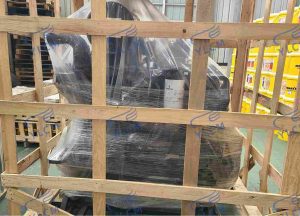
A hydraulic pump weighs anywhere from 30 kg for a compact excavator to over 200 kg for a 50‑tonne machine. Standard cardboard packaging will collapse under its own weight in a container. We require plywood crates with internal steel bracing, and we instruct the forwarder to block and brace the crate against the container floor so it cannot shift during ocean transit.
The second factor is moisture. Once, a shipment of pumps arrived in Vladivostok with condensation inside the ports because the factory had sealed the pump in a plastic bag without desiccant. That delay cost the customer weeks while we sourced replacement seals. Now every pump leaves our warehouse with all ports plugged and a VCI (volatile corrosion inhibitor) bag inside the crate, regardless of the destination climate.
Incoterms matter for heavy parts. For a buyer without a regular freight forwarder, FOB Shanghai or CIF destination port is practical because the supplier handles the main carriage. For buyers with their own logistics chain, EXW lets them control the freight, but they must arrange the crate inspection themselves.
What You Actually Pay For When You Buy a Pump
The purchase price is only the first line of the cost equation.
A pump that costs $1,800 less but requires three days of troubleshooting because the regulator pressure isn’t matched to the machine’s load‑sense system costs more in labor and lost production than the savings. The economics tilt toward the supplier that provides the technical documentation, not just the part.
I’ve seen procurement managers fixate on unit price while overlooking a supplier’s ability to hold stock and ship within 72 hours. A pump that arrives in four weeks at $400 less creates a machine‑idle cost that often exceeds the price difference entirely.
| Cost Factor | What It Includes | Typical Impact |
|---|---|---|
| Unit price | Pump, test report, basic packaging | 100% of invoice |
| Freight and insurance | Ocean or air, crate, customs clearance | 8–15% of pump value for sea freight |
| Import duties and taxes | Based on HS code and country | Varies; usually 0–10% |
| Downtime risk | Machine idle cost if pump fails early or arrives late | Can exceed pump cost in one week for large excavators |
Your Next Step for a Reliable Hydraulic Pump Supply
When an excavator hydraulic pump fails, the priority is getting the right replacement quickly, without inheriting a quality problem that re‑creates the same downtime in six months. That means matching the pump’s internal specification to the machine’s hydraulic system and selecting a supplier that treats testing and shipping as part of the product, not an afterthought.
If you have a pump part number and a machine model, share them with our team at [email protected] or call +86‑21‑55800172. I’ll confirm the spec personally, walk you through the test documentation, and provide a shipping timeline that accounts for your location and customs requirements. We keep common Kawasaki, Rexroth, and Komatsu pump models in stock, and we can build non‑stock units with a standard lead time. No sales pitch, just the information you need to make a sourcing decision that keeps your machine working.
Common Questions About Excavator Hydraulic Pump Sourcing
How do I know if a Chinese hydraulic pump supplier is reliable?
Look for a supplier that can produce a factory test report with pressure and flow curves, not just a fit‑form‑function confirmation. A video of the pump on a test bench with a visible gauge date‑stamped within the last week is a strong signal. Also check whether they accept inspection by a third‑party agency before shipment. If the supplier pushes back on all of these, walk away.
Is a remanufactured pump a safe choice?
It can be, but the term “remanufactured” isn’t standardized. Some shops only reseal the pump and repaint it. A proper remanufacture replaces the rotating group, valve plate, and bearings, and then runs a full‑load test. Ask what exactly was replaced and request the post‑rebuild test data. Without that, you are buying a used pump with fresh paint.
How long should an aftermarket hydraulic pump last?
A correctly specified aftermarket pump from a quality‑managed factory should deliver 80–100% of the OEM service life under the same operating conditions. The key variables are oil cleanliness, operating temperature, and adherence to the break‑in procedure. If the first oil sample after 500 hours shows elevated wear metal, the pump wasn’t built right or the installation introduced contamination.
What happens if the pump fails shortly after installation?
Good suppliers stand behind their product with a clear warranty that covers manufacturing defects, usually 12 months or 2,000 hours. The process typically involves you providing photos of the failure, oil analysis, and installation conditions. I advise buyers to always install the pump with fresh hydraulic oil and a new return filter, because a warranty claim loses credibility if the downstream contamination isn’t addressed. Share your requirement details and we will confirm the warranty terms that apply to your specific pump model before any order.
If you’re interested, check out these related articles:
Fluid Coupling: Principles and Industrial Applications in 2026
Hyundai Excavator Spare Parts: Choose the Best Fit
469334 Excavator Part: Function and Application Explained
Choosing Reliable Excavator Parts Suppliers: A China Guide