
Every excavator on a job site shares the same fundamental architecture, but when a machine goes down, knowing what each part is called and what it does makes the difference between a two-day repair and a two-week wait. After more than twenty years in the heavy equipment supply chain, I have seen too many procurement teams order the wrong component simply because the naming conventions on a parts diagram did not match what their mechanic described over the phone. This article walks through the main excavator part groups, explains what each does, and flags where sourcing complexity tends to concentrate.
Major Excavator Part Groups and What They Do
An excavator breaks into five systems that procurement managers and maintenance planners deal with regularly: the undercarriage, the upper structure and frame, the hydraulic system, the engine and powertrain, and the work equipment. Each group carries its own lead time profile, wear rate, and aftermarket availability.
The undercarriage supports the machine and moves it around the site. It absorbs more abrasive wear than any other system and drives the highest spare parts volume across most fleets. The upper structure houses the engine, hydraulic pumps, swing motor, cab, and counterweight. The hydraulic system converts engine power into digging force through pumps, valves, and cylinders. The work equipment includes the boom, arm, bucket, and the pins and bushings that connect them. Most articles stop at naming these groups. What matters for sourcing is that each group pulls from a different tier of the supply chain, and mixing up which tier you are buying from is how lead times blow out.
Hydraulic System Components and Why They Drive Maintenance Costs
The hydraulic system is where a mid-size excavator’s real cost of ownership accumulates. At its core are the main hydraulic pumps, typically variable-displacement piston pumps on machines above twenty tons, driven directly off the engine. The control valve bank distributes pressurized oil to each function: boom raise and lower, arm in and out, bucket curl, and swing. Hydraulic cylinders on the boom, arm, and bucket convert that oil flow into linear force. Hoses, fittings, and a hydraulic oil cooler complete the circuit.
From a parts sourcing standpoint, hydraulic pumps and control valves are the high-stakes items. OEM units carry lead times that can exceed twelve weeks on certain Komatsu and Hitachi models, which is why a functioning aftermarket channel exists for remanufactured pumps and tested valve assemblies. Cylinder seal kits, by contrast, are consumable-level items with broad aftermarket coverage and short lead times. The sourcing decision tree for hydraulics is not one-size-fits-all: a pump failure on a critical production machine justifies OEM or a known reman supplier with a warranty; a cylinder reseal can be handled with a quality aftermarket seal kit without drama.
If your operation runs machines across multiple brands, it is worth confirming interchange data on hydraulic pumps before committing to a single source. Some Kawasaki and Rexroth pump series appear across Caterpillar, Kobelco, and Sumitomo excavators, which opens up supplier options that a brand-specific catalog search will miss.
Undercarriage Parts That Wear First and What That Means for Sourcing
Undercarriage wear is predictable, and predictability is the procurement manager’s best friend. Track chains and track shoes take the brunt of abrasive contact with the ground. Sprockets engage the chain and transmit drive force. Idlers at the front of the track frame maintain tension and guide the track. Upper and lower rollers support the machine’s weight and keep the track aligned.
On machines working in sand, clay, or wet conditions, rollers and idlers tend to go first because fine material works into the seals and accelerates internal bearing wear. On rocky or demolition sites, track shoes and sprockets wear faster from impact and abrasion. The sourcing pattern that follows is consistent across most fleets: track chains and shoes are ordered in full sets on a planned replacement cycle, while rollers and idlers are bought as-needed based on inspection intervals.
The aftermarket for undercarriage parts is mature and competitive. Chinese, Korean, and Italian manufacturers supply a large share of the global replacement market, and quality differentiation is real. Track chains from a factory that supplies an OEM’s aftermarket division will carry different heat treatment specs and pin hardness than generic commodity stock. The price difference, often 30 to 40 percent, is not random. When you are comparing quotes, ask for the Brinell hardness range on pins and bushings and the seal type on rollers. Suppliers who cannot answer that question are selling on price alone.
Engine and Powertrain Parts Every Procurement Manager Should Know
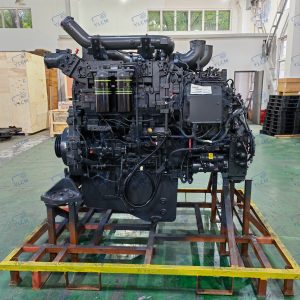
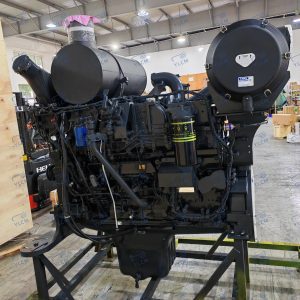
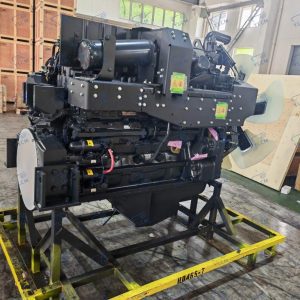
The engine on most mid-size and large excavators today is a Tier 3 or Tier 4 diesel from Cummins, Isuzu, Komatsu, or Yanmar, depending on the machine brand. The powertrain connects the engine to the hydraulic pumps and, through a swing motor and final drives, to the tracks. The key components from a parts sourcing perspective are the engine itself, the turbocharger, the starter and alternator, the radiator and oil cooler, and the final drive assemblies on each track frame.
Engine components follow a different sourcing logic than undercarriage or hydraulic wear parts. Turbochargers, water pumps, and alternators are typically sourced as complete units rather than rebuilt in the field, so lead time and core charge policy become the deciding factors. Final drives, which contain a hydraulic motor and a planetary gear set inside a sealed housing, are among the most expensive single components on an excavator after the engine and main pumps. When a final drive fails, the choice is between a new OEM unit, a remanufactured exchange unit, or an aftermarket replacement. Reman units with a documented test report and a warranty that covers both the motor and the gear set are the middle ground most operations land on.
One pattern I have observed across multiple markets is that final drive failures are frequently misdiagnosed as hydraulic pump problems because the symptoms overlap: loss of power on one track, slower travel speed. Before ordering a pump or a final drive, confirm the case drain flow on the travel motor. High case drain flow points to the motor, not the pump, and the cost difference between the two repairs is substantial.
How to Plan Parts Sourcing by Component Category
Grouping your excavator parts spend by category rather than by machine model simplifies supplier management and makes lead time forecasting more accurate. The categories that work for most operations are: undercarriage wear parts, hydraulic consumables, engine service items, structural and attachment parts, and major components.
Undercarriage wear parts and hydraulic consumables like seal kits, hoses, and filters are high-frequency, moderate-cost items suited to blanket orders with a short-list of pre-qualified suppliers. Engine service items such as oil filters, fuel filters, and belts follow the same pattern. Structural and attachment parts (bucket teeth, cutting edges, pins, bushings) can be bundled with undercarriage orders from suppliers who carry both lines. Major components (pumps, final drives, control valves, engine long blocks) are low-frequency, high-cost purchases that justify individual sourcing with full documentation, test reports, and warranty terms.

For operations running mixed fleets across multiple brands, consolidating undercarriage and hydraulic consumable spend with two or three suppliers who stock across Caterpillar, Komatsu, Hitachi, and Kobelco platforms reduces the number of purchase orders and shipping consolidations without putting you in a single-source position. If your fleet is predominantly one or two brands, a supplier with deep stock in those specific platforms will usually outperform a generalist on availability and price. Send your part numbers and quantities to [email protected] or call +86-21-55800172, and we will confirm stock and lead times against your fleet list.
Common Questions About Excavator Parts and Sourcing
The aftermarket part is half the OEM price. Is the quality difference real?
It depends on the component category. For hydraulic filter elements and seal kits, a reputable aftermarket brand will match OEM performance at a lower cost because the technology is well understood and the materials are commodity-grade. For load-bearing components like track chains, sprockets, and final drive gears, the difference in heat treatment depth, material grade, and dimensional tolerance is measurable and does affect service life. The practical approach is to run aftermarket on consumable items where failure consequences are low, and to evaluate major component aftermarket options case by case with a supplier who can provide specifications, not just a price list.

How do I know if an excavator part number is interchangeable across brands?
Interchange is common in hydraulic pumps, engines, and some undercarriage components where the base component is manufactured by a third-party supplier that serves multiple OEMs. The quickest check is to request the OEM part number cross-reference from your supplier and then verify it against the manufacturer’s interchange database. On Kawasaki and Rexroth hydraulic pumps, the model code on the pump nameplate is more reliable for interchange than the machine brand’s part number.
Why do undercarriage parts from different suppliers vary so much in price?
Price differences in undercarriage parts track closely with three manufacturing decisions: the alloy specification and heat treatment of the pins and bushings, the type and quality of the floating seals used in rollers and idlers, and whether the track shoe is forged or cast. Suppliers competing at the lowest price point are typically using lower-grade steel, basic nitrile seals, and cast shoes. The cost difference is not a margin game; it reflects real manufacturing choices that show up in wear life. Share your operating conditions and expected annual hours with your supplier, and ask them to quote the grade that matches your duty cycle rather than the cheapest option in the catalog.
If you’re interested, check out these related articles:
How to Replace Nissan Excavator Parts Effectively
307 Cat Excavator Parts: Your Guide to Simplified Maintenance