
An excavator grapple is a hydraulically powered attachment that turns a standard hydraulic excavator into a grabbing, lifting, sorting, and stacking machine. Instead of scooping material like a bucket, the grapple opens and closes around the load with two or more hinged tines, giving operators precise control when handling rocks, logs, scrap, demolition debris, or unprocessed material. For buyers, the key question is not only what a grapple is, but whether the attachment’s hydraulic, mechanical, and wear characteristics match the excavator and the daily duty cycle.
What Is an Excavator Grapple?
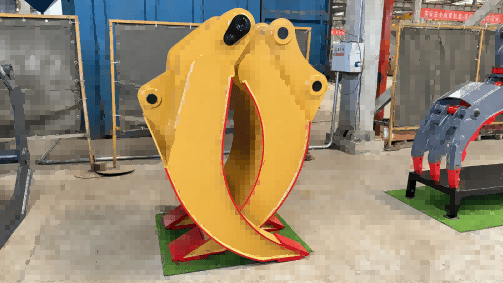
At its simplest, an excavator grapple is a clamshell-style work tool mounted on the excavator arm in place of, or in combination with, a bucket. It follows the same attachment-interface logic described in ISO 7135, which sets out terminology and commercial specifications for hydraulic excavators [1]. A typical grapple assembly includes:
- A structural housing or frame that carries the load and spreads stress across the attachment.
- Two or more hinged tines or arms that close around the material.
- One or more hydraulic cylinders that open and close the tines.
- Hardened pins and bushings at the hinge points where most rotational wear occurs.
- On rotating models, a hydraulic rotary group that turns the whole grapple left or right.
The material and heat treatment of the tines matter more than most buyers first assume. Grapples handling jagged concrete, rebar, or heavy rock need wear-resistant steel and reinforced hinge areas; a general-purpose light-duty grapple will deform or crack under repeated impact.
How Does an Excavator Grapple Work?
A grapple depends on the excavator’s auxiliary hydraulic circuit. When the operator moves the joystick control assigned to the attachment, pressurized oil flows through hoses or tubes to the grapple’s cylinder, forcing the piston to extend or retract. That linear movement translates through the hinge geometry into the opening or closing motion of the tines.
There are two levels of hydraulic demand to understand:
- Open/close only: the attachment uses one simple double-acting circuit. The operator grabs and releases, and positions the load by moving the boom, arm, and swing of the excavator itself.
- Open/close plus rotation: the attachment adds a second circuit or a combined valve block. Rotating grapples let the operator turn the tool around its vertical axis to align with truck beds, hooks, or material rows without repositioning the whole machine.
Because grapples rely on an auxiliary circuit, mounting and coupling are safety-critical operations. ISO 13031 defines safety requirements for quick couplers used on earth-moving machinery, including attachments such as grapples [2]. A coupler that looks closed but is not fully engaged can release the attachment under load, so operators must verify the latch and follow the manufacturer’s coupling procedure before every shift. General operational safety also falls under ISO 20474-1, which addresses the broader safe-use requirements for earth-moving machinery [3].
The practical result: the same hydraulic excavator becomes far more versatile once the auxiliary flow, pressure, and control settings are confirmed for the specific grapple model.
Main Types of Excavator Grapples
Grapples are not one standardized tool. The right type changes with the material and the job:
- Root/rake grapples: wide, open tine spacing for clearing brush, roots, and vegetation while letting soil fall through.
- Demolition/sorting grapples: narrow, heavily reinforced tines for pulling apart structures and separating steel, concrete, and pipe.
- Scrap grapples: aggressive tine geometry for dense, irregular scrap in recycling yards and steel handling.
- Bucket grapples: a bucket body with a hydraulically opened clamshell or thumb-style lid; useful for mixed digging and grabbing where some material containment is wanted.
- Log/forestry grapples: deep curved tines designed to hold round timber with minimal fiber damage.
The distinction between light-duty and demolition-grade is not cosmetic. It appears in the thickness of the tine plates, the size of the hinge pins, and the reinforcement gusseting behind the hydraulic cylinder mounts.
Grapples are one category among many exchangeable work tools for hydraulic excavators. <Excavator Implements: Types, Uses, and Sourcing Tips> covers the wider implement range and how to match each tool to the jobsite task.
Key Selection Factors for Buyers
Choose the grapple around the excavator’s real constraints, not a catalog photo:
- Auxiliary hydraulic rating: confirm the host machine’s auxiliary pressure and flow for the attachment port in use. Undersized flow causes slow tine movement; mismatched pressure can reduce clamping force or overload seals.
- Mounting interface: pin-on, dedicated coupler, or quick coupler compatibility must be checked against the excavator’s stick end. Mixing mounting classes creates unsafe wedge points and uneven pin wear.
- Material density and abrasiveness: hard rock and demolition debris demand reinforced tines, replaceable tips, and cylinder guards; loose bulk and brush handling can use lighter open-tine designs.
- Cylinder and seal quality: the open/close cylinder is the hardest-working component. Low-grade chrome rod, soft seals, or poor machining will leak and reduce grip over time.
- Wear-part availability: tines, pins, bushings, and cylinder seal kits wear out. A grapple without a predictable replacement-part path becomes an expensive parked tool.
The hidden cost is downtime. A cracked tine or leaking cylinder on a demolition grapple can stop a sorting line, and every hour of waiting for an unstocked pin or seal costs more than the part itself.
Choosing the right attachment depends on the same logic as choosing any high-wear excavator component. <What Really Matters When Sourcing Excavator Parts: A Breakdown of Critical Components> breaks down the inspection points that separate dependable parts from costly short-term buys.
If you are comparing grapples for a specific excavator model or application, email the working details to [email protected] or call +86-21-55800172 so the sourcing team can check the hydraulic match and wear-part availability before you commit.
Sourcing and Inspection Considerations
When sourcing a grapple, treat documentation and dimensional checks as part of the quote, not as an optional extra. Ask the supplier to confirm:
- The cylinder bore, rod diameter, and stroke against the attachment’s nominal design.
- The tine and frame material specification, including any documented heat treatment or wear-resistant steel grade.
- Hardness documentation for hinge pins and the availability of replacement bushing sets.
- Test points for the auxiliary hydraulic circuit and any rotary group, where fitted.
Physically inspect the hinge areas first. Visible play, uneven bushing wear, or dry pin surfaces indicate poor fit-up or absent maintenance ports. On cylinders, look for rod scoring, wiper damage, and dry or contaminated residue around the gland — these are early signs of internal leakage that will not improve in service.
Documentation should also line up with the equipment’s operational scope. If the supplier cannot identify which quick-coupler standard the mounting follows or cannot confirm compliance with the relevant machine-safety requirements, that is a red flag regardless of price.
Even a well-matched grapple only performs if the supplier behind it is dependable. <Choosing Reliable Excavator Parts Suppliers: A China Guide> explains how to screen manufacturers on documentation, traceability, and service response.
For buyers who already run a mixed fleet, the same purchasing discipline applies downstream. When a grapple opens slowly or drifts closed under load, the usual suspects are worn cylinder seals, scored rod surfaces, or ovaled hinge bushings — replacement components that should be cross-checked against the original part number rather than guessed. Shanghai Yanli supports this maintenance path for construction machinery attachments with replacement pins, bushings, and hydraulic cylinder seal kits matched to the equipment specification, helping workshops return a grapple to working condition without waiting on full-attachment replacement.
Source Grapples and Replacement Components with Confidence
If you are evaluating a new grapple or need replacement pins, bushings, cylinder seal kits, or related work-tool components, send an inquiry with the following information to [email protected] or call +86-21-55800172:
- Excavator make, model, and auxiliary hydraulic specification
- Work tool type: rotating or non-rotating grapple, tine spacing, and material handled
- Any original part numbers from the attachment or cylinder
- Target quantity and destination
The team will confirm the hydraulic and mechanical match, verify replacement-part availability, and return a clear quotation for review.
Frequently Asked Questions
What is the difference between a grapple and a bucket on an excavator?
A bucket scoops and contains material in one shell. A grapple grips material between two or more hinged tines, which makes it better for irregular, bulky, or interlocked material such as rocks, logs, scrap, and demolition debris that a bucket cannot hold consistently.
Can any excavator run a grapple?
Not automatically. The excavator must have an auxiliary hydraulic circuit with the pressure, flow, and control function required by the specific grapple model. Mounting hardware, quick coupler type, and machine weight class must also match. Compatibility is confirmed from the host machine’s specifications before purchase.
Do grapples need a rotation circuit?
Only rotating grapples do. A basic open/close grapple uses a single double-acting auxiliary circuit. A rotating model adds a second circuit or integrated valve so the operator can spin the tool without repositioning the machine.
What are the most common wear parts on an excavator grapple?
Tines or replaceable tips, hinge pins and bushings, the hydraulic cylinder and its seal kit, guard plates, and hydraulic hoses and fittings. Hinge areas and cylinder rods are usually the first places wear becomes visible.
How do buyers verify grapple quality before purchase?
Buyers should check material and heat-treatment documentation, inspect hinge and cylinder condition, confirm quick-coupler and hydraulic compatibility, and verify replacement wear-part availability from the supplier. Traceability and service response matter as much as the initial purchase price.
References
[1] International Organization for Standardization, “ISO 7135:2009, Earth-moving machinery — Hydraulic excavators — Terminology and commercial specifications,” ISO, Geneva, Switzerland, 2009.
[2] International Organization for Standardization, “ISO 13031:2016, Earth-moving machinery — Quick couplers — Safety,” ISO, Geneva, Switzerland, 2016.
[3] International Organization for Standardization, “ISO 20474-1:2017, Earth-moving machinery — Safety — Part 1: General requirements,” ISO, Geneva, Switzerland, 2017.
If you’re interested, check out these related articles:
Kobelco Excavator Parts Manuals: Your Guide to Efficient Maintenance
Understanding Excavator Undercarriage Parts and Their Roles