

Takeuchi excavator spare parts sourcing fails most often when the buyer trusts a model name instead of a confirmed part number. I have spent more than twenty years inside excavator supply chains, first at Komatsu China and now managing parts supply for mining and construction fleets across Central Asia, Russia, Africa, and Southeast Asia. In that time, most wrong orders have not started with a bad supplier. They started with a weak identification step. This article lays out the part number, compatibility, quality, and supplier checks that keep the right Takeuchi components moving without a return shipment.
Part Number Verification for Takeuchi Excavator Spare Parts
Takeuchi excavator spare parts ordering should begin with the part number, not the model name. A machine can share a model designation across different serial number breaks, and the correct reference often sits on an old component, a parts manual page, or the machine identification plate. We ask buyers to photograph the old part, the machine plate, and the hour meter before sending a request. That gives us enough information to trace the correct drawing instead of guessing from a sales description. For high wear positions, undercarriage parts such as track rollers, idlers, and sprockets should be matched to both the part number and the track chain pitch. A number that is one digit away can mean a different bore or mounting face.
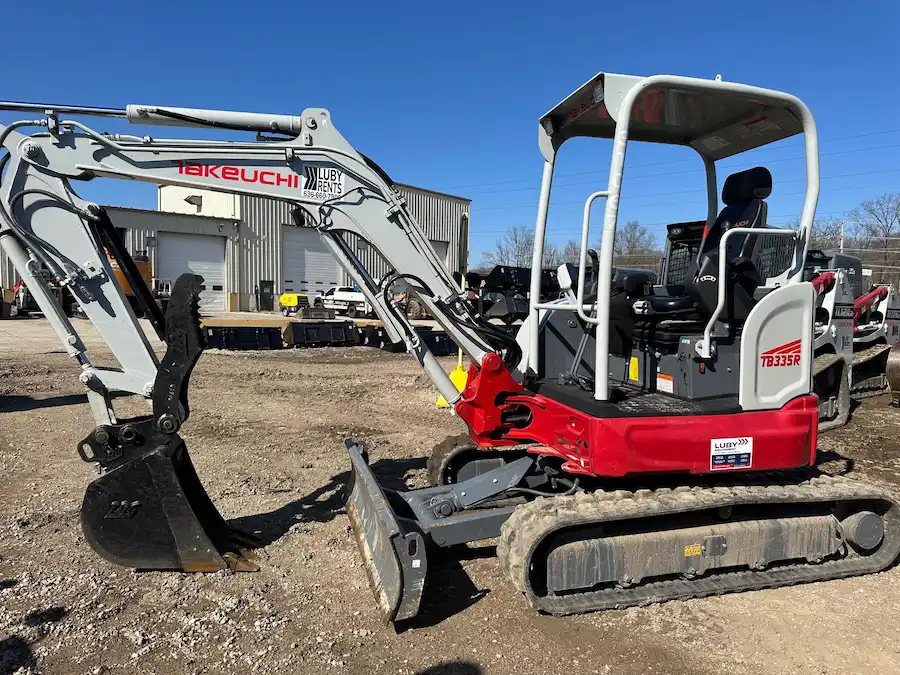
Model-Based Matching and Why It Creates Fitting Risk
Matching by model alone creates fitting risk because the same Takeuchi family can cover several production revisions, engine options, and regional configurations. A hydraulic pump or control valve listed for one market may arrive with a different port orientation, displacement, or mounting flange. When a buyer orders hydraulic components by machine model alone, the supplier has no way to verify those details against the specific unit. We resolve this by asking for the part number stamped on the old component, plus the machine PIN. In some cases a clear photo of the name plate tells us more than the catalog page. The goal is not to make the buyer do extra work. It is to keep the replacement part from becoming a second failure in the machine.
OEM and Aftermarket Quality Signals for Takeuchi Parts
The aftermarket choice is not the problem. The problem is accepting a part number match without checking the material, seal compound, or heat treatment behind that number. For example, seals that look identical often differ in compound and temperature tolerance. We have seen aftermarket parts fail early not because they were aftermarket, but because the buyer compared price against a catalog number and stopped there. The table below shows the checks we use when reviewing a Takeuchi parts supplier.
| Check | What to Look For | Why It Matters |
| Part number alignment | Exact match to Takeuchi reference or verified cross-reference | Confirms correct fit before payment |
| Material and hardness | Supplier test data for pins, bushings, and wear items | Predicts service life in abrasive work |
| Seal and rubber compound | Compatible oil and temperature range | Avoids early leakage and contamination |
| Marking and packaging | Part number, batch code, and supplier label on every item | Speeds receiving inspection and traceability |
For machines working in high abrasion or coastal conditions, the seal material and bushing hardness matter more than the part number alone. If your fleet operates in those environments, confirm the material specification before finalizing the order. Send your part number and operating conditions to sales@sh-yshuo.com and we will check the specification against the original drawing before you commit.
Supplier Screening and Freight Planning for Spare Parts Orders
A strong quote is only as good as the supplier’s ability to inspect before shipment and pack for the destination. We look for suppliers that photograph each item against the part number before dispatch, attach batch labels to cartons, and list the correct HS code on the invoice. For buyers new to China, Choosing Reliable Excavator Parts Suppliers: A China Guide explains how to narrow a factory list before sending an RFQ. Freight planning should run in parallel with the parts search. A compact final drive or swing motor can move by air freight when downtime is expensive, while heavier undercarriage sets usually justify sea freight for cost control. Confirming weight, dimensions, and delivery deadline before quoting avoids a good parts price becoming a bad landed cost.
A Sourcing Checklist for Takeuchi Excavator Spare Parts
Before you send a Takeuchi parts request, gather four pieces of information: the part number from the old component, the machine PIN and serial number break, the required quantity and delivery deadline, and the operating conditions if wear life is a concern. That preparation removes most quoting delays and wrong-fit risk. We use the same details to check stock, confirm the drawing, and select the right factory from our OEM and aftermarket supply network. If your machine is down or a maintenance window is approaching, send the part number and quantity to sales@sh-yshuo.com or call +86-21-55800172. We will confirm compatibility, availability, and the fastest workable shipping option before you pay.
Common Questions About Takeuchi Excavator Spare Parts
Can Aftermarket Takeuchi Parts Match OEM Quality?
A well-sourced aftermarket part can match or occasionally exceed the service life of an OEM part, but only when the supplier starts from the correct part number and material specification. The difference shows up in pins, bushings, seals, and track components that carry high load. We compare hardness data, tolerance, and material grade before offering a replacement. Aftermarket does not mean inferior. It means the buyer must confirm the engineering inputs behind the part, not just the catalog line.
Which Takeuchi Parts Need Replacement Most Often?
It depends on the machine’s working hours, soil condition, and whether the excavator runs in water or abrasive material. In the fleets we support, track rollers, idlers, sprockets, bucket teeth, seals, and hydraulic hoses appear most often at the top of the maintenance list. Undercarriage life drops quickly in rocky ground, while hydraulic seals fail faster when oil temperatures run high. Tracking the hour meter at replacement lets you forecast the next purchase instead of reacting to a breakdown.
How Do I Confirm Whether a Part Fits My Takeuchi Model?
Many buyers assume the model designation alone identifies the part. It does not. Takeuchi machines can carry serial number breaks, optional hydraulic circuits, and regional engine differences that change the correct reference. The most reliable check is the part number stamped on the old component, supported by the machine PIN. When the old number is unreadable, a photo of the part and the machine plate lets a parts specialist cross-check the drawing. Sending all three details at the start is faster than exchanging messages after the wrong part arrives.
What Information Should I Send to Get an Accurate Quote?
In the quote requests we process, the fastest responses come when the buyer includes the part number, machine model and PIN, required quantity, and delivery city or port. If the part is a wear item, include the operating conditions too. That information lets us confirm the drawing, check stock across the supply network, and quote a realistic shipping route. Send your part number, machine serial number, and quantity to sales@sh-yshuo.com and we will confirm compatibility and availability before payment.
If you’re interested, check out these related articles:
Link-Belt Excavator Parts Lookup: Your 2026 Sourcing Guide
DAEWOO Throttle Motor 523-00006: Function, Faults, and Replacement
What Really Matters When Sourcing Excavator Parts: A Breakdown of Critical Components
How Aftermarket Excavator Parts Factories Operate: A Deep Dive


