
Rankings of the top 10 excavator companies matter most when they are tied to parts availability, dealer support, and total operating cost. A machine can lead the market in brand recognition and still leave a fleet idle if critical engine components, hydraulic components, or undercarriage parts sit on backorder. After more than two decades in construction machinery supply chains, I have seen buyers choose a top tier excavator manufacturer and then struggle with service coverage in their region. This article ranks the major global excavator companies and explains what procurement teams should verify before committing to one brand.
Why Excavator Company Rankings Matter for Parts Planning
Global rankings of excavator manufacturers matter for two reasons. The largest companies usually operate the widest dealer networks, which shortens the distance between a broken machine and the required replacement part. Market leaders also tend to have the most mature aftermarket supply chains, including third party manufacturers producing compatible components. From our sourcing work across Central Asia, Russia, and Africa, we see a different pattern on the ground. A top ranked brand may have strong coverage in North America or Europe but limited local stock for certain heavy equipment parts in remote mining regions. That gap is where procurement planning matters more than brand prestige.
The Top 10 Excavator Companies and Their Market Strengths
The list below reflects the brands most often encountered in global construction and mining fleets. Rankings vary by region and machine size, but these ten companies hold the strongest combined presence in dealer coverage, product range, and parts availability.
| Rank | Company | Headquarters | Market Strength |
|---|---|---|---|
| 1 | Caterpillar | USA | Broad global dealer network, strong parts availability, heavy duty mining and construction models |
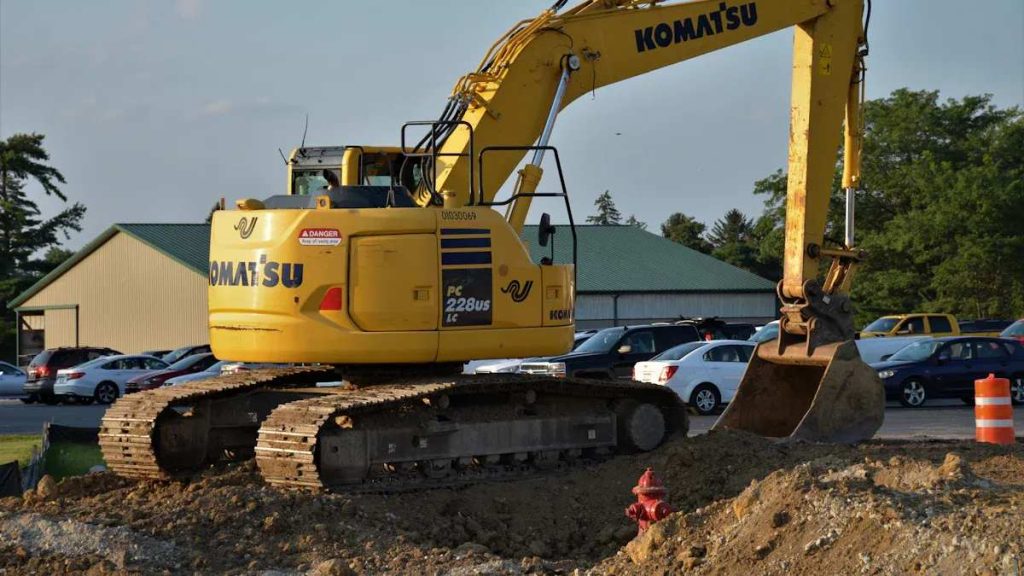
| 2 | Komatsu | Japan | Deep mining equipment line, integrated machine monitoring, strong Asia Pacific presence |
| 3 | Volvo Construction Equipment | Sweden | Fuel efficient engines, operator comfort, strong European and emerging market coverage |
| 4 | Hitachi Construction Machinery | Japan | Large mining excavators, hydraulic systems, detailed parts documentation |
| 5 | HD Hyundai (Doosan) | South Korea | High power to weight performance, competitive pricing, expanding aftermarket support |
| Rank | Company | Headquarters | Market Strength |
|---|---|---|---|
| 6 | XCMG | China | Broad product range, fast growing global dealer footprint, cost efficient pricing |
| 7 | SANY | China | High volume production, aggressive international expansion, strong in emerging markets |
| 8 | Liebherr | Germany/Switzerland | Premium engineering, high lifting capacity, strong build quality |
| 9 | Kobelco | Japan | Specialized in crawler excavators, strong performance in demolition and lifting |
| 10 | John Deere | USA | Precision technology, strong North American dealer support, fleet management tools |
The ranking order matters less than a buyer’s local support picture. A brand at position six in global volume may outperform a top three name in a given mining district if its dealer and parts stock are better established there.
Aftermarket Support Differences Across Major Excavator Brands
Aftermarket support is not equal across the top 10 excavator companies. High volume brands such as Caterpillar and Komatsu benefit from large machine populations, which attract independent manufacturers to produce compatible engine components, final drive units, and undercarriage parts. For buyers, that means shorter lead times and more price competition. Premium brands with smaller populations, such as Liebherr, often depend more heavily on OEM parts channels, which can extend delivery times and raise total cost. We see the widest aftermarket depth in hydraulics and undercarriage components for Komatsu and Cat machines because their installed base is large enough to sustain multiple competing suppliers.
What Buyers Should Verify Before Committing to an Excavator Brand
Before a fleet commits to a specific excavator brand, several checks reduce risk. First, confirm that the machine models in your region have mature parts pipelines. A newly introduced model can create long waits for hydraulic components, seals, and electronics until independent suppliers build inventory. Second, verify whether local or regional suppliers stock critical wear parts for the series you plan to run. Third, compare the cost of high failure items such as main pumps, final drive motors, and track systems across brands. Without this comparison, the purchase price of an excavator can look attractive while the ten year parts bill becomes the real burden.
Understanding how aftermarket supply chains operate also reduces the risk of paying a brand premium for parts with identical specifications. How Aftermarket Excavator Parts Factories Operate: A Deep Dive explains the production process, quality control gates, and what separates a careful supplier from an unreliable one.
If your fleet program involves multiple excavator series and you are not certain about part interchangeability, it is worth confirming compatibility before finalizing your bill of materials. Send your machine serial numbers and the part numbers you plan to replace to sales@sh-yshuo.com and we can verify the cross references before you commit.
Sourcing Parts for Any Excavator Brand Without Long Lead Times
Sourcing replacement parts for the top 10 excavator companies follows the same discipline regardless of brand. Start with the correct part number from the machine serial plate or the parts catalog. Then decide whether an OEM part, an aftermarket equivalent, or a rebuilt unit fits the application and budget. For critical systems such as final drive units and main pumps, we usually ask customers to share the machine serial number and the failed part number so the replacement can be cross referenced before shipment. This step prevents expensive misfits and return freight.
We source parts for Caterpillar, Komatsu, Hitachi, Volvo, HD Hyundai, XCMG, Sany, Liebherr, Kobelco, and John Deere machines from a network of more than 20 OEM and aftermarket manufacturers in China, Japan, Russia, and the USA. The practical difference for buyers is that one supplier can cover mixed fleets, which simplifies ordering and reduces the minimum order pressure that comes from splitting purchases across multiple channels.
For a mixed fleet or a single brand operation, parts supply problems usually come down to the same pain point: a machine sits idle while the right component is still being located. Our team works on resolving that before it turns into project delay. Send your part numbers and quantities to sales@sh-yshuo.com or call +86-21-55800172 and we can confirm pricing, stock, and shipping time for your fleet.
Common Questions About Excavator Companies and Parts Supply
Which excavator company has the best parts availability?
Caterpillar and Komatsu generally offer the broadest parts availability because their global machine populations are the largest. This does not mean every regional dealer has every part in stock. In many mining regions where we source parts, a Komatsu PC series or Caterpillar 320 class machine may still wait days or weeks for specific engine or hydraulic components if the local dealer does not stock them. That is why fleet owners often keep critical wear items on hand or work with independent suppliers who can ship parts directly without routing through the dealer network.
Are Chinese excavator brands reliable for mining and heavy construction?
A common assumption is that Chinese excavator brands suit only light duty work. That view is outdated. XCMG and SANY now produce large mining and heavy construction excavators with service networks expanding beyond China. The more relevant question is aftermarket support in your specific region. If the dealer network is thin and third party parts coverage is limited, even a capable machine can become a downtime risk. Buyers should confirm parts availability and documented service intervals in their operating area before choosing a Chinese brand for heavy applications.
Do I have to buy OEM parts for a new excavator under warranty?
It depends on the warranty terms and the jurisdiction. Some manufacturers require OEM parts during the warranty period to keep coverage valid, while others accept equivalent quality aftermarket components. In practice, we advise customers to check the written warranty conditions before installing aftermarket parts on new machines. For units outside warranty, aftermarket equivalents often make economic sense when they meet the same specifications. Keep the warranty documentation and any supplier test reports in the maintenance record to avoid disputes later.
How can I reduce downtime on a mixed fleet of excavator brands?
For mixed fleets across Central Asia and Africa, operating several brands at once is the norm rather than the exception. The fastest way to reduce downtime is to consolidate parts sourcing with a supplier who can cross reference multiple brands from one order. That cuts the number of purchase orders, reduces freight costs, and shortens the time spent chasing individual dealer quotes. Keeping the wear items that fail most often across all machines also shortens emergency lead times: filters, seals, hoses, track parts, and bucket teeth. Share your fleet list and part numbers with us and we can confirm which items are available for immediate shipment.
If you’re interested, check out these related articles:
Safe Shipping Excavator Parts: Protecting Your Heavy Machinery Investment
Excavator Hydraulic Pumps Near Me: 5 Expert Sourcing Tips
How to Extend Caterpillar Excavator Wear Parts Life: Tips


