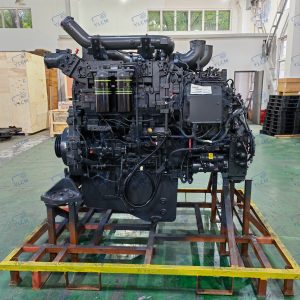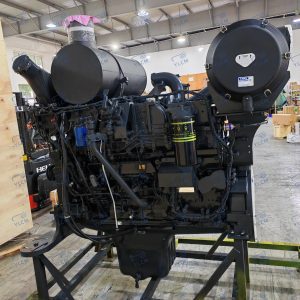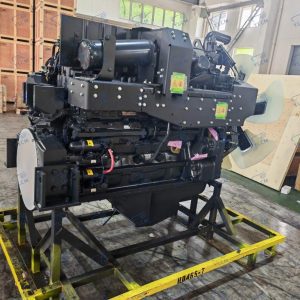

Komatsu mini excavator parts do not fail randomly. Most unplanned downtime starts with a small set of high-wear components that give warning through noise, heat, leakage, or track movement before the machine stops. I learned this pattern during more than two decades of parts support for Komatsu equipment in China, and it is the first thing I explain to owners and procurement teams. Knowing what each part does changes the replacement conversation from a part number lookup to a condition based decision. That shift usually reduces both risk and total cost.
Komatsu Mini Excavator Undercarriage Parts Show Wear First
On a compact machine, the undercarriage parts absorb uneven loading before anything else. Track chains, rollers, idlers, sprockets, and the track adjuster all wear together, but not at the same rate. Operators usually notice speed loss, vibration, or a track that throws first. Replacing the most visible item and leaving the rest of the undercarriage to wear shortens the life of the new part. The conditions on small sites make this worse because tight turning and mixed ground put higher side loads on the track frame.
Track pitch is the most practical measurement on a Komatsu mini excavator. When pitch elongates beyond the spec, the chain no longer matches the sprocket, and the sprocket starts cutting into the bushings. I ask buyers to measure four links with the track pulled tight, then compare that number with the model spec. If the measurement is close to the limit, the repair should be planned, not treated as a surprise.
| Part | Function | Warning sign | What to check before ordering |
|---|---|---|---|
| Track chain | Carries the machine and transfers drive force | Stretched pitch, loose pins, uneven shoe wear | Measure pitch over four links and compare with spec |
| Track roller | Supports the track frame and guides the chain | Flat spots, oil leaks, rough rolling | Check flange wear and rotate each roller by hand |
| Idler | Holds track tension and alignment | Cupped face, guide wear, scraping noise | Inspect tension cylinder and guide clearance |
| Sprocket | Drives the track chain | Hooked or pointed teeth | Compare tooth profile with a new sample |
| Track adjuster | Maintains track tension | Grease leak, track whipping | Check for rod scoring and seal leakage |
Once the wear signs are clear, separating carrier roller wear from track chain stretch becomes the main decision. Understanding Excavator Undercarriage Parts and Their Roles covers how each part shares load and why replacement order matters more than replacing the failed component alone.

Komatsu Mini Excavator Hydraulic Components Set the Machine’s Rhythm
The hydraulic components on a Komatsu mini excavator are easy to misdiagnose. The pump, main control valve, cylinders, hoses, filters, and swivel joint work as one circuit, but a small internal leak can change cycle time and oil temperature before a pressure gauge shows a hard failure. When a machine slows down, the engine is not always the problem. A worn pump or a leaking relief valve can consume power and turn it into heat.
I start with hydraulic oil temperature after fifteen minutes of normal digging. If the oil is hot and the cycle time drifts, internal leakage is usually involved. Replacing a pump before confirming the relief setting can waste a good core. The same logic applies to cylinders. A cylinder that creeps under load may have a scored barrel or a worn piston seal, and the only way to separate the two is a pressure and drift test.
If your Komatsu mini excavator runs a hammer, a thumb, or a high flow attachment and the cycle time changes with temperature, confirm the relief pressure and port configuration before ordering a replacement pump. Send the serial number and the symptom to sales@sh-yshuo.com, and we can check the correct specification before any part is committed.
Engine Components on Komatsu Mini Excavators Signal Trouble Early
On a Komatsu mini excavator, engine components are more predictable than hydraulic problems when daily checks stay consistent. Oil level, coolant condition, belt tension, air filter restriction, and radiator face condition give early warning. The part ignored most often on mini excavators is the cooling package. It is packed tightly into a small engine bay and hidden behind guards, so cleaning gets postponed.
On a dusty site machine I supported, the radiator face was half blocked with fine material. The engine derated during the afternoon shift, and the operator assumed an injector fault. The actual fix was a fin cleaning and fresh coolant, not a fuel system repair. That experience is why I ask buyers to describe dust level, ambient temperature, and duty cycle before recommending a replacement cooling part. The cheapest part is not always the right option when the root cause is airflow.
Engine serial number matters more than the model name when ordering. Komatsu has changed belt routing, filter threads, and electrical connectors across production periods on similar models. A photo of the identification plate and the old part reduces wrong shipment. For worn belt and pulley components, ask whether the replacement matches the pulley profile exactly.
Structural and Work Tool Parts Carry the Real Load
Structural and work tool parts include the boom, arm, bucket, pins, bushings, bucket teeth, and quick coupler. These parts carry the burdened weight plus every shock from digging. Pin and bushing wear appears first as slop in the linkage. That slop then multiplies stress into the boom and arm plates, which is how a cheap pin issue becomes a structural repair.
A common mistake is replacing bucket teeth on a worn adapter, or replacing an arm bushing without checking the boss bore. If the bore is oval, the new bushing will not last. I prefer to inspect the full front linkage before ordering because the part that looks worn is often the symptom, not the source. When the front linkage has several wear points, the useful next check is What Really Matters When Sourcing Excavator Parts: A Breakdown of Critical Components. It covers how to prioritize wear parts and avoid replacing a symptom instead of the cause.
Sourcing Komatsu Mini Excavator Parts Rewards a Supplier Review
Replacement parts become expensive when the supplier guesses. A reliable quote for Komatsu mini excavator parts starts with the serial number, a photo of the old part, and the operating environment. Without those three, even a genuine part number can lead to an interchange mistake. I have seen machines lose a week of work because the ordering data was limited to a model name and a rough description.
Ask whether the supplier checks OEM part number changes and whether the warehouse treats rust sensitive electrical parts differently from structural steel. Ask for the actual interchange record when the part has a production split. I prefer a partner that asks questions over one that promises every part fits. A supplier that understands Komatsu sourcing usually has a track record with the exact machine family and works from the equipment serial number.
If you are holding a worn undercarriage, a slow hydraulic system, or a failed cooling component, delaying the order usually costs more than the part. We confirm the correct Komatsu replacement for owners, repair shops, and contractors, then verify interchange and arrange shipment with full part documentation. Send your part number, serial number, and quantity to sales@sh-yshuo.com or call +86-21-55800172, and we will confirm stock and compatibility before you commit.
Common Questions About Komatsu Mini Excavator Parts
How do I know whether a track chain has run too far?
Track chain wear is measurable before it causes a failure. The best check is pitch elongation across four links; when the pitch stretches beyond the wear limit for your model, the chain no longer matches the sprocket. Continuing to run a stretched chain accelerates sprocket and roller wear. If you do not have the specification, measure the same pitch distance on a new chain or ask a supplier to check by serial number.
Should I replace one hydraulic pump part or the full assembly?
A leaking seal or a scored valve plate does not automatically mean the entire pump assembly is finished. In many cases, the pump can be rebuilt if the housing, shaft, and rotating group are still within tolerance. Replacing the full assembly is the right call when the housing is cracked or the shaft has play. Ask for a bench check and a measurement report before choosing the expensive route.
Are aftermarket Komatsu mini excavator parts safe for daily rental work?
It depends on the part and the duty cycle. For wear items like bucket teeth, filters, track shoes, and undercarriage parts, a quality aftermarket supplier can match service life. For tight tolerance components like injectors, hydraulic valve assemblies, and electronic controls, I recommend matching the OEM specification or a supplier with documented interchange testing. The key is not the label but the manufacturing source and quality record.
What information should I send to get the right replacement part quickly?
The fastest way to avoid a wrong order is to stop asking for a generic model name and start sharing the serial number. A Komatsu mini excavator can have production splits that change hoses, filters, electrical connectors, and even hydraulic line sizes. Send the serial number, a photo of the old part, and the operating hours. Share your part number and quantity with sales@sh-yshuo.com or call +86-21-55800172, and we will confirm the interchange before the order ships.
If you’re interested, check out these related articles:
OEM vs Aftermarket Hitachi Undercarriage Parts: A Deep Dive
469334 Excavator Part: Function and Application Explained
How to Extend Caterpillar Excavator Wear Parts Life: Tips
Sourcing John Deere 120C Excavator Parts: A Practical Guide
Universal Excavator Keys: How They Work & Sourcing Tips