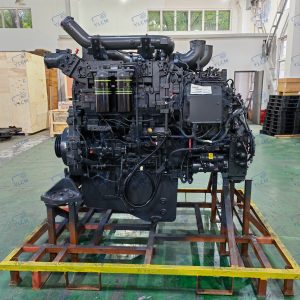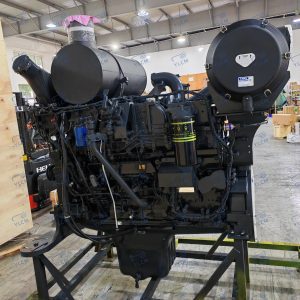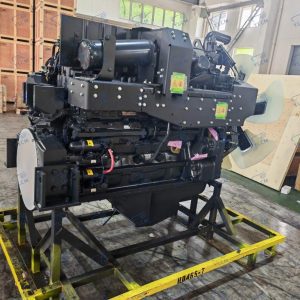

Komatsu excavator engine parts do not fail one at a time. They fail in groups, usually after a maintenance interval has been stretched or a replacement part has been matched only by appearance, not by engine serial number. That is the practical reality I have seen across mining and construction fleets. An engine rebuild quote starts with the cylinder block, piston, and crankshaft, but what actually saves the machine is knowing how the fuel, cooling, and lubrication components interact. This article explains what each major engine part does, where failure begins, and how to buy replacements without turning a repair into a procurement delay.
Core Excavator Engine Parts and Their Functions
Most engine failures that look sudden begin as a small component problem: a piston ring that loses tension, a bearing that wears through the oil film, or an intake valve that no longer seats. The core parts below determine whether combustion pressure stays where it belongs.
| Component group | Primary function | Early replacement signal |
|---|---|---|
| Cylinder block and liners | Hold bore alignment and guide piston travel | Coolant in oil, rising blowby, uneven compression |
| Pistons and rings | Seal combustion gas and transfer force to the connecting rod | Blue smoke, high oil consumption, low compression |
| Crankshaft and bearings | Convert linear piston force into rotation | Low oil pressure, metallic knocking, vibration |
| Cylinder head and valves | Control intake and exhaust gas flow | White smoke, misfire, compression loss |
| Timing gear train | Synchronize camshaft and crankshaft motion | Derating, hard shutdown, timing faults |
At the center of the assembly are the cylinder block, liners, piston, connecting rod, crankshaft, and main bearings. The block holds the bores in alignment. The liners give the piston a stable sealing surface. The piston and rings carry combustion force downward, the connecting rod transfers that force to the crankshaft, and the crankshaft converts it into rotation. These parts should not be ordered separately without checking the engine arrangement number. Komatsu uses application-specific piston cooling jets, ring sets, and bearing sizes depending on the machine series and emission level.

Fuel and Air Components in Excavator Engines
Fuel and air components decide how cleanly the engine burns and how much output the operator actually gets. The main parts are the fuel injection pump, injectors, turbocharger, intake manifold, exhaust manifold, air cleaner, and after cooler where fitted.
What causes fuel-related derating in an excavator?
Contaminated fuel is the usual starting point. Water and abrasive fines pass through the filter, wear the injection components, and reduce spray pressure. The control system then limits engine output to protect the machine. In dusty site conditions, the same pattern happens on the air side when a damaged air cleaner seal lets dust reach the turbocharger and score the compressor wheel.
What should be checked before replacing a turbocharger?
Replacement becomes expensive or unsuccessful when the root cause is ignored. A turbocharger often scores because the oil supply line is coked or the air cleaner has already failed. We do not quote a replacement turbocharger until the customer confirms the oil line condition and whether the compressor wheel has contacted the housing.
Cooling and Lubrication Parts That Determine Service Life
Cooling and lubrication parts do not produce power, but they decide how long the power-producing parts survive. The radiator, water pump, fan, fan belt, thermostat, oil pump, oil filter, and oil cooler are the main service-limiting items.
On a Komatsu excavator, the common failure sequence starts with a blocked radiator or a slipping fan belt. Cylinder head temperature rises, the oil film thins, and bearing wear accelerates. By the time the operator sees high coolant temperature, internal clearances may already have opened up. In high-hour engines I have inspected, the first measurable damage is often not the scored liner but the failed oil cooler seal. Coolant enters the oil, oil pressure drops, and the main bearings wear before the operator sees a warning light.
If your machine is losing oil pressure on long pulls or the coolant temperature climbs only under load, send the serial number and the last oil analysis result to sales@sh-yshuo.com. We can verify whether the problem is the pump, the cooler, or bearing clearance before you buy parts.
Matching Excavator Engine Parts to a Machine Serial Number
Komatsu parts books are serial number driven. Two identical machine models built six months apart may carry different piston part numbers because of an emission update or a supplier change. The engine arrangement number, usually stamped on the engine block, is the first data a supplier should ask for.
Why do the same model and series use different part numbers?
An engine may be identical externally but changed internally across production batches. Changes to piston bowl geometry, ring width, bearing material, and injector sleeve height all alter the part number without changing the model code. A parts book that stops at the model level hides those breaks. Serial number range lookup is the only way to avoid a part that fits mechanically but performs incorrectly.
Sourcing Excavator Engine Parts Without Overpaying
Buyers often assume genuine is always better or aftermarket is always cheaper. The more useful question is whether the replacement part matches the machine application and the remaining service window. A rebuilt turbocharger may be fine for a machine with 14,000 hours on a contract with six months remaining because the unit only has to survive that remaining work window.
Request the full set rather than a per-component price. A low-priced piston means little if the ring set comes from a different manufacturer and the gasket kit has been packaged from mixed sources. Ask the supplier to confirm the complete set shares one production batch or at least one confirmed compatibility check. I have seen buyers order a cylinder head assembly by photo alone only to find that the injector sleeve height was different once the part arrived. That outcome is easy to avoid at quotation stage.
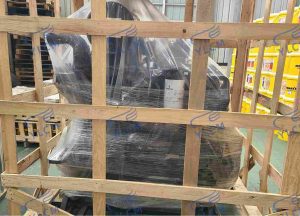
Freight handling also changes the sourcing decision. Safe Shipping Excavator Parts: Protecting Your Heavy Machinery Investment explains why engine components require impact-rated packaging and moisture control that standard freight may not include.
Order engine parts around a service plan, not a failure date. If you have the serial number, the failure symptoms, and the target budget, send those details with your part numbers to sales@sh-yshuo.com or call +86-21-55800172. We confirm compatibility against the engine arrangement number and quote the complete set so you do not end up with a mixed repair package.
Common Questions About Komatsu Excavator Engine Parts
Are engine parts interchangeable between PC200 series models?
Not automatically. The manufacturer distinguishes parts by series and serial number breaks. A PC200-8 engine may use a different piston, injection component, or bearing set than a PC200-7, even where the engines share the same basic layout. The safe move is to send the full engine serial number and arrangement number before ordering. That takes a few minutes and removes most cross-series fitment risk.
Does aftermarket always mean lower quality for engine parts?
A common mistake is treating aftermarket as a single quality level. Some aftermarket engine parts come from factories that already produce for major equipment programs; others are built only to a price. The deciding factor is whether the supplier can confirm the part number break and the production source. A documented aftermarket component with the correct arrangement number can perform well in a short remaining service window, while a cheap part with no traceability often fails early.
If a machine loses oil pressure, should the pump be replaced first?
It depends on where the pressure loss is coming from. If the pressure drops only at hot idle, the cause is often bearing clearance or a worn oil pump. If pressure falls under load and metal shows up in the oil sample, the main or rod bearings are usually the problem. Replacing the oil pump first may not fix the underlying wear and can waste repair time. Confirm the pressure point, the oil analysis result, and the engine serial number before ordering.
Which detail should buyers confirm before ordering engine parts?
In fleets we work with, the most useful single detail is the engine arrangement number, not just the model code. That one reference opens the correct supercession chain and prevents most incorrect shipments. If you are already seeing oil pressure loss, metal in the oil, or hard starting, send those symptoms with the serial number to sales@sh-yshuo.com and we will confirm the correct engine parts before you commit to a teardown.
If you’re interested, check out these related articles:
469334 Excavator Part: Function and Application Explained
Excavator Seal Kits: Fast 3-Day Delivery for Repairs
Finding Quality 220 Excavator Parts: A Sourcing Strategy