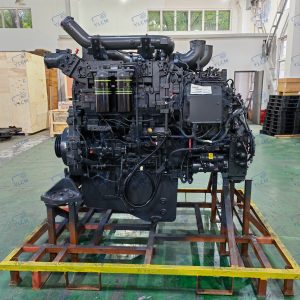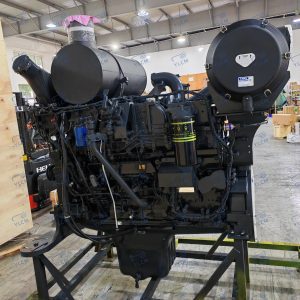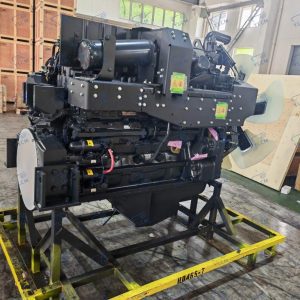

A hydraulic pump excavator parts problem is rarely just a pump problem. When pressure drops or flow becomes erratic, most maintenance teams immediately suspect the pump. In my experience across Komatsu China’s service network and now sourcing components for fleets in Central Asia and Africa, the root cause sits deeper in the system — often in the regulators, seals, or the quality of the hydraulic oil itself. Structural stress concentrates at the pump coupling, and contamination attacks the precision clearances inside the rotating group long before the pump case shows external damage. A pump is a system, not a single component. This article breaks down which hydraulic pump excavator parts matter most for uptime, how they fail in real-world conditions, and the sourcing pitfalls that lead to repeat failures.
What Are the Main Hydraulic Pump Excavator Parts
A hydraulic pump on an excavator is not one sealed unit but a precision assembly of interacting components. The rotating group, which includes the cylinder block, pistons, and swash plate, converts the engine’s mechanical energy into hydraulic flow. A fixed-displacement pump uses a set swash plate angle; variable-displacement pumps, common on machines above 20 tonnes, adjust the swash plate in real time through a regulator.

The shaft and its coupling transmit torque from the engine or PTO. The coupling is a stress concentrator — misalignment as small as 0.5 mm accelerates spline wear and can crack the pump housing. The valve plate directs oil between the inlet and outlet ports, and its flatness tolerance is typically held to within 5 microns. Wear here drops volumetric efficiency long before the machine throws a fault code.
Seals and backup rings isolate high-pressure oil from the case drain and atmosphere. High temperatures degrade polyurethane seals faster than most operators realize. In programs where hydraulic oil temperatures consistently exceed 80 °C, we have seen service intervals halve.
Why Hydraulic Pump Excavator Parts Fail Before Their Rated Service Life
Most hydraulic pump excavator parts carry a design life based on clean oil, rated loads, and predictable duty cycles. The real world breaks those assumptions fast. In mining and quarry applications, airborne silica slips past worn wiper seals on cylinders and enters the hydraulic circuit. The particles settle in the pump’s rotating group, scoring the piston shoes and the swash plate surface. What looks like a pump failure is often a contamination failure that the pump received from elsewhere in the system.
Another hidden cause is cavitation at the inlet. If the suction line is undersized or the hydraulic tank breather is clogged, dissolved air comes out of solution as the fluid accelerates into the pump. The resulting bubbles collapse against the valve plate and piston faces. The damage pattern is distinctive — a pitted, sandblasted appearance — and it progresses even when pressure gauges read normal.
Pressure overshoot during rapid cycling also shortens component life. The pump regulator is designed to destroke when flow demand drops. If the regulator spool sticks, even momentarily, the pump briefly spikes to its maximum pressure relief setting. Over months, this fatigues the swash plate cradle, the servo piston, and the shaft bearings. By the time a maintenance team notices the pump is running hot, bearing damage is already irreversible.
How to Tell Whether a Regulator, Rotating Group, or Coupling Needs Attention
A drop in cycle speed without an accompanying pressure loss typically points to a worn rotating group, not a regulator issue. The pistons no longer hold tight inside the cylinder block bores, so internal leakage rises. The pump still builds pressure, but a portion of the flow recirculates internally. Operators notice that the boom lifts smoothly at idle but slows noticeably under load.
If cycle speed is consistent but the machine struggles to reach maximum pressure, the regulator or its pilot circuit is often at fault. The pump is not destoking, but it is not reaching full stroke either. A common misdiagnosis is to replace the regulator cartridge without first checking the pilot signal pressure from the control valve. We have seen new regulators installed on pumps where the real fault was a kinked pilot line.
The coupling between the pump and engine transmits all torque but gets inspected the least. When a coupling fails, it is rarely gradual. Spline fretting from micro-misalignment escalates until a tooth shears. The pump stops instantly, and the debris circulates through the entire hydraulic system. Whenever a pump is removed for service, measuring the coupling hub runout with a dial indicator adds less than ten minutes to the job and can prevent a catastrophic breakdown.
| Symptom | Likely Cause | Immediate Check |
|---|---|---|
| Slow cycles, pressure normal | Worn rotating group (piston/cylinder block) | Case drain flow; high internal leakage |
| Will not reach max pressure | Regulator or pilot signal issue | Pilot pressure at regulator port |
| Normal performance, then sudden stop | Coupling or shaft failure | Hub runout, spline condition |
| Pitted valve plate, noisy operation | Cavitation | Suction line size, breather condition |
What Separates a Serviceable Pump Rebuild from a Short-Term Fix
A pump rebuild that replaces only the visibly damaged parts is a single-shift fix, not a reliability upgrade. The cylinder block bore tolerance is typically 15–20 microns on a medium-duty excavator pump. If the bores are worn but still within the manufacturer’s service limit, some rebuilders will reuse them. Once the new pistons are installed, the clearance might be near the upper limit. For one shift, the pump performs. After 400 hours, the clearances open further and the same failure returns.
We have moved away from rebuilds that reuse the swash plate cradle without re-grinding the running surface. Even light scoring acts as a stress riser. When the cradle is re-ground, the shim stack behind the valve plate must be adjusted to restore port timing. Skipping this step changes the pre-compression angle and generates pressure ripple. The ripple transmits back through the pump as vibration, accelerating bearing wear in the very components the rebuild was meant to save.
If a pump has already suffered a major internal failure — a piston seizure or a shattered valve plate — the debris load changes the rebuild calculus. The entire system needs flushing, and residual particles lodged in the cooler and filter head will reinfect the new pump within days. In these cases, a factory-remanufactured pump or a verified aftermarket unit from a supplier that pressure-tests each assembly is a safer path than an on-site overhaul.
Sourcing Hydraulic Pump Excavator Parts for Long Service Life, Not Just Lowest Price
The difference between a pump that runs 8,000 hours and one that fails at 2,000 is largely determined at procurement. Three factors carry more weight than the invoice price: the quality of the rotating group metallurgy, the dimensional accuracy of the regulator spool, and the pre-delivery test protocol.
The cylinder block and pistons in a high-hour pump use nitrided steel or hardened ductile iron. Aftermarket parts that use induction-hardened surfaces without nitriding show higher wear rates when oil cleanliness drops. A pump operating in a dusty demolition site will expose this difference within six months. We specify sliding surface hardness and case depth on inquiries, not just the OEM part number cross-reference.
The regulator spool-to-bore clearance is where many aftermarket parts fall short. A 5-micron difference changes the hysteresis of the pump’s stroking response, causing hunting under partial load. This is not visible on a static bench test; it appears only during a dynamic test with the pump loaded against a flow meter and the swash plate cycled through its full range. We source from manufacturers that include a dynamic test sheet with each pump assembly shipped — not just a pass/fail stamp.
For procurement teams importing into Africa or Central Asia, logistics and warranty support structure matter as much as the part itself. A pump priced 30 percent below market but shipped without a detailed packing and preservation procedure risks flash rust on the machined surfaces during sea freight. We vacuum-pack rotating groups and ship them with desiccant, and we advise customers to store pumps horizontally with the ports capped until installation. A seized pump due to storage corrosion is a cost, not a saving.
Common Questions About Hydraulic Pump Excavator Parts
How do I know if I have a genuine OEM pump and not a copy?
Genuine pumps from the major OEMs have laser-etched serial numbers on the housing that match the test sheet. Counterfeit assemblies often use dot-peen marking or a sticker, and the machining marks on the mounting flange will be rougher. For pumps sourced outside the dealer network, ask for a photo of the etched serial number and the corresponding test certificate before shipment. A test sheet without a matching serial number is meaningless.
When does it make sense to replace just the seal kit instead of the entire rotating group?
Replace the seal kit only if the pump was removed for an external leak and the case drain flow is still within the manufacturer’s specification — typically below 5 percent of rated flow. If the pump is already out of the machine, measure the case drain flow before disassembly. A pump with elevated case drain flow but good pressure may run for months, but a new seal kit will not reduce internal leakage from worn pistons.
Are aftermarket rotating groups a false economy?
The risk is not in the rotating group but in the fit of the rotating group to the original pump housing. Aftermarket groups that are ground to the same tolerance class as the OEM — IT6 or better on the cylinder block bore — perform comparably when break-in procedures are followed. The weak point is often the piston shoes, which require a specific surface finish and sphericity tolerance. We have seen aftermarket shoes with surface roughness twice the OEM specification; they scuff within 200 hours. Ask the supplier for surface roughness data, not just a compatibility guarantee.
What is the single most overlooked maintenance step for pump longevity?
Oil cleanliness. Not filter change intervals, but actual particle counts. A pump operating with ISO 4406 20/18/15 oil will last roughly half as long as one running at 17/15/12, all else being equal. Install a particle counter or take quarterly samples from the pump case drain line, not the tank. The case drain carries the highest concentration of wear debris from the pump itself and provides the earliest warning of rotating group distress. If your oil analysis program only samples the tank, you are reading the average cleanliness of the system, not the condition of the pump. Share your current oil sampling points and typical ISO codes with us at [email protected], and we can recommend whether your pump service interval is realistic for your operating environment.
If you’re interested, check out these related articles:
How to Choose Excavator Undercarriage Parts for Your Machine
Choosing Reliable Excavator Parts Suppliers: A China Guide
How Aftermarket Excavator Parts Factories Operate: A Deep Dive
Locating an Excavator Hydraulic Pump: A Sourcing Guide