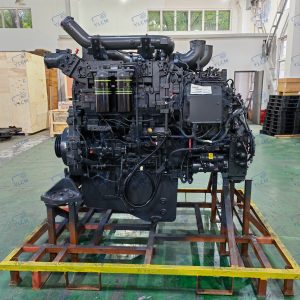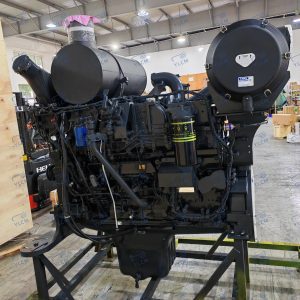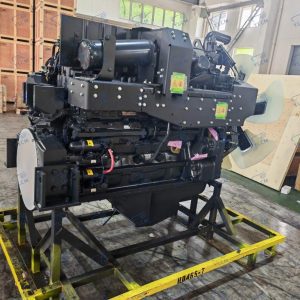

Sourcing obsolete Volvo excavator parts can stop a job site cold if you rely only on the local dealer. Over the last twenty-two years, first at Komatsu and now running a global supply company, I have learned that the parts you can no longer order through normal channels are often still available — if you know where to look and how to qualify what you find. The key is moving beyond the standard parts counter and into a supplier network that reaches directly into aftermarket manufacturers and regional stockpiles. This article walks through a systematic approach that reduces the time from “part unavailable” to “part in hand” by combining global sourcing channels with rigorous compatibility verification.
Why Obsolete Volvo Excavator Parts Are So Hard to Find
Volvo Construction Equipment updates its parts catalog continuously, and components that were standard on models like the EC210, EC290, or EC460 often get superseded or discontinued outright once the machine falls out of active production support. The dealer network typically carries inventory only for the most recent model years, and once a part number moves to “obsolescence” status, the lead time from the factory becomes unpredictable — sometimes months, sometimes indefinite.
What I have seen in practice is that this gap is rarely a technical one. The original tooling may still exist, or a qualified aftermarket manufacturer may already be producing an equivalent component. The bottleneck is information: the buyer knows the part number but not who else can supply it, and the alternative supplier does not know who needs it. Bridging that gap is a supply chain problem, not a manufacturing problem.

Where to Look Beyond Your Local Volvo Dealer
The fastest way to locate an obsolete part is to expand your search radius in three directions simultaneously. First, industrial auction platforms and dealer closeout inventories can yield new-old-stock parts, but the selection is unpredictable. Second, specialized aftermarket manufacturers, especially those in China and South Korea, often retain production capability for high-demand legacy parts. Third, independent heavy equipment parts distributors with direct factory relationships can tap into multiple manufacturing sources without requiring you to manage the factory audit yourself.
In our daily work at Shanghai Yanli, we maintain direct cooperation with over twenty OEM and aftermarket manufacturers across China, Japan, Russia, and the USA. That means when a fleet operator in Central Asia or a mining contractor in Africa sends us a hard-to-find Volvo part number, we can run it against multiple factory databases simultaneously, not just the nearest regional warehouse. This kind of networked sourcing cuts the search time dramatically.
How to Verify an Obsolete Part Number Before You Order
Before committing to a purchase, the single most important step is confirming that the part number you are using is the correct one for your machine’s exact configuration. I have seen cases where a part number was valid for the early years of the EC290 only, because a mid-series update changed the mounting dimensions. Volvo parts catalogs sometimes show full serial-number-range applicability, and aftermarket cross-references are not always accurate.
Start by pulling the original Volvo parts catalog for your machine serial number. Many Volvo parts manuals list predecessor and successor part numbers, and that chain of supersessions often reveals that a later-standardized part is backward-compatible. If the obsolete number is the original fitment, confirm key specifications: physical dimensions, material grade, and any hydraulic pressure ratings if the part is a pump or motor component. Cross-check those against the alternative supplier’s datasheet, not just their part-number match claim.
| Verification Step | Why It Matters | Common Pitfall |
|---|---|---|
| Check serial-number-range data | Ensures the part fits your production batch | Using a part number from a later series engine |
| Trace supersession chain | Finds backward-compatible newer numbers | Assuming a supercession always fits everything |
| Request a dimensioned drawing | Confirms physical match before shipping | Relying on catalog images without measurements |
| Ask for material or test reports | Validates quality for load-bearing parts | Accepting verbal quality claims |
If your program covers multiple Volvo models with overlapping component families, confirming interchangeability upfront saves both money and field failures. Send your part numbers and machine serials to [email protected], and we can verify across the databases we maintain.
What to Check When Evaluating an Overseas Obsolete Parts Supplier
A supplier who can deliver an obscure Volvo part at a competitive price still needs to pass a short qualification checklist. I have walked through factory audits and supplier interviews on three continents, and the differences between a reliable source and a risky one are usually visible in a handful of operational details.
First, ask for a recent manufacturing batch record or test certificate for a similar part number. This shows whether the supplier has active production capability, not just trading capability. Second, request a reference customer in your region — a real one, not a generic testimonial. Third, confirm who bears the cost if a part arrives and does not fit, even when the part number matches. Fourth, understand the packaging and shipping documentation: for customs clearance and warranty tracking, you need a proper packing list, certificate of origin, and a commercial invoice that matches the product description exactly.
A supplier who hesitates on the after-sales recourse terms or cannot show a traceable quality record is not saving you money — they are saving you an upfront cost at the risk of a much larger downtime expense later.
Cost-Effective Ways to Order Obsolete Volvo Parts Without Cutting Corners
Price is always a factor, and sourcing directly from aftermarket manufacturers can offer significant savings versus dealer-ordered legacy parts. But the largest cost avoidances come from two less obvious practices. First, consolidate orders for multiple obsolete part numbers into one shipment. Freight and customs charges scale far better when you ship several components together than when each part is expedited separately. Second, identify parts that can be ran in a small batch production. For high-wear items like cylinder seal kits or track adjuster seals, a minimum order quantity of twenty or thirty units can bring the unit price down to a fraction of the cost of hunting for one-off units.
We have supplied mining and construction fleets across Russia, Africa, and Southeast Asia with such consolidated orders. The savings in logistics alone often cover the cost of two or three of the parts in the shipment. If you have a list of Volvo part numbers that are becoming difficult to source, sending the full list to [email protected] or calling +86-21-55800172 lets us map which items can be combined and which might justify a small production run — typically with a concrete cost estimate within two working days.
Common Questions About Obsolete Volvo Excavator Parts
What is the difference between a Volvo part that is “discontinued” and one that is truly “obsolete”?
A discontinued part is one that Volvo no longer stocks centrally but that may still be available through dealer stock, aftermarket producers, or as new-old-stock. A truly obsolete part means no active manufacturer is producing it under the original design. In practice we treat both situations the same way: we search for existing inventory first, and if none exists, we check whether an aftermarket manufacturer can produce the part to the original specifications from the engineering drawing or a sample. I have seen parts that Volvo labeled obsolete more than ten years ago still being manufactured today by specialized factories.
Can an aftermarket part really match the original Volvo specification?
Yes, when the manufacturer uses the same material grade, heat treatment, and dimensional tolerances as the original design, the part can be functionally identical. The critical factor is the manufacturer’s quality control process, not whether the Volvo logo is on the box. We require material certifications and, for structural or hydraulic components, a first-article inspection report before shipping. If your application involves high-cycle fatigue or safety-critical functions, request a documented test plan rather than a simple conformance statement.
How do I find out if a Volvo part number has been updated?
Volvo’s parts catalog system includes a “replaced by” or “superseded by” field for many part numbers. If you do not have access to the online catalog, a dealer can look it up by serial number. I recommend always checking with at least one heavy equipment parts distributor as well, because they often track supersession chains across multiple OEM brands and can spot an equivalent part that the single-brand catalog will never show.
How long does it take to get an obsolete Volvo part after I place the order?
It depends on whether the part exists in stock somewhere or needs to be manufactured. New-old-stock or aftermarket inventory can ship within days. If a production run is necessary, the minimum I have managed is three to four weeks for simple parts; for complex assemblies like a final drive or a pump, expect six to ten weeks including quality inspection and sea freight. If you need a part urgently, send the part number and serial to [email protected] — we can check real-time availability and give you an accurate lead time, often within the same day.
If you’re interested, check out these related articles:
Locating an Excavator Hydraulic Pump: A Sourcing Guide
How to Replace Nissan Excavator Parts Effectively
How to Choose Excavator Undercarriage Parts for Your Machine
Hyundai Excavator Spare Parts: Choose the Best Fit