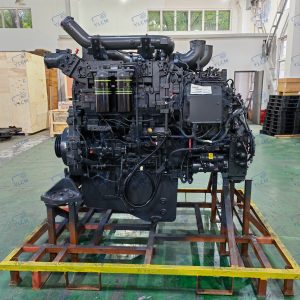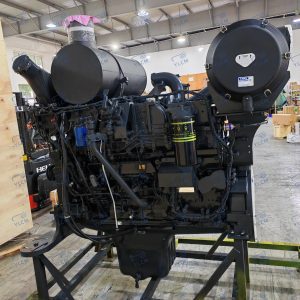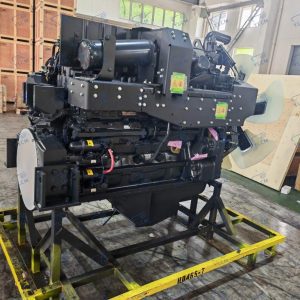

Keeping an older Hitachi EX60 excavator productive doesn’t have to mean chasing discontinued dealer stock or accepting unnecessary downtime. In my years in the construction equipment supply chain, I’ve seen too many operators overpay for OEM parts when well-matched aftermarket alternatives could deliver the same reliability at a fraction of the cost. The real advantage comes from knowing which Hitachi EX60 excavator parts are most vulnerable to wear, and sourcing them from channels that understand the difference between a generic copy and a properly engineered replacement. This article walks through the components I’ve seen cause the most headaches on EX60s still working in the field, and explains how to source them without gambling on quality.
Why Your EX60’s Undercarriage Parts Deserve Priority
Undercarriage wear is the single biggest operating cost on any tracked machine, and the EX60 is no exception. Track chains stretch, rollers seize, and idler bearings fail—often in predictable patterns once the machine passes a certain hour threshold. The parts that tend to need replacement first are the track rollers, front idlers, and sprockets. On an EX60 that works in abrasive soil or demolition debris, the bottom rollers can wear beyond spec in under a thousand hours.
We’ve supplied replacement undercarriage parts to operators running these machines in Central Asia and Africa, where dealer support is thin, and the consistent feedback is that keeping at least two spare bottom rollers and one front idler on the shelf prevents multi-day downtime. The challenge with EX60 undercarriage is that many of the original part numbers are no longer in active production from Hitachi. That forces a choice between hunting for new old stock at premium prices or moving to a proven aftermarket supplier who reverse-engineers the components to the original dimensions. I’ve found that the aftermarket route works well when the supplier provides hardness test reports and dimensional inspection data—not just a catalog page. For a deeper look at balancing these two paths, the comparison between aftermarket and OEM Hitachi undercarriage options is worth a review.

Hydraulic System Components That Signal Replacement First
Hydraulic issues on the EX60 usually show up first as slower cycle times or a cylinder that drifts under load. The most common service items I encounter are the main pump seal kit, boom cylinder seal kit, and the pressure control valves on the main valve block. The Hitachi EX60’s hydraulic pump is an axial piston unit that, when it starts to lose internal sealing, will deliver reduced flow before it fails outright. Replacing the seal kit early is far cheaper than a full pump rebuild.
Valve block components are trickier because contamination in the oil—often from past neglect—will cause spool sticking or pilot pressure instability. Changing the hydraulic oil and all filters on schedule is the cheapest insurance, but once wear particles have circulated, replacement of the relief valve cartridge and sometimes the spool itself is the only reliable fix. In our experience, aftermarket seal kits for these pumps can perform just as well as OEM if—and this is a big if—the material grade matches the original spec. NBR seals won’t cut it if the system runs hot; you need the original HNBR or FKM compound. That’s the kind of detail a supplier with real technical knowledge will confirm without being asked.
If your machine’s hydraulic pump shows signs of reduced performance after the seal kit replacement, it might be time to consider a complete remanufactured unit. We’ve guided several contractors through that decision, and in many cases the cost of a quality reman pump from a specialist is lower than the combined labour and parts for multiple in-field repairs.
Engine and Powertrain Parts for Consistent Performance
The EX60 came with an Isuzu engine, typically a 4-cylinder naturally aspirated diesel, which is durable if basic maintenance is followed. The parts I see most often on orders for this model are the water pump, alternator, starter motor, and the engine mounting rubbers. The water pump is a weak point after several thousand hours—the seal eventually leaks, and if ignored, the engine will overheat. I always recommend replacing the water pump assembly rather than just the seal, because the shaft bearing usually has play by the time the seal fails.
Engine mounting rubbers are easy to overlook but cause secondary damage when they collapse. A worn mount allows the engine to shift under load, which can stress the radiator hoses and even crack the fan shroud. Aftermarket mounts are widely available for the EX60 and cost very little relative to the parts they protect.
Transmission and swing motor components are generally robust on this model, but the swing motor seal kit tends to weep after long hours. A slow leak may not stop the machine, but it contaminates the undercarriage and risks running the swing drive low on oil. Checking the swing drive oil level at every service interval catches this before it becomes a gear failure.
Deciding Between OEM and Aftermarket EX60 Parts
This decision isn’t as binary as some sales brochures suggest. For an older machine like the EX60, the aftermarket offers more than just cost savings—it often provides the only available source for perfectly functional parts that Hitachi stopped making years ago. The table below summarizes how the choice typically plays out in practice.
| Criteria | OEM Hitachi EX60 Parts | Quality Aftermarket EX60 Parts |
|---|---|---|
| Availability | Declining; many numbers discontinued | Widely available from specialized suppliers |
| Cost | 2x–3x above aftermarket | Competitive, with volume discounts common |
| Lead time | Often 4–8 weeks for non-stock items | 2–5 days from well-stocked distributors |
| Technical support | Dealer parts lookup, limited engineering detail | Varies; best suppliers provide material certs and dimensional data |
| Warranty | Manufacture warranty through dealer | Typically 6–12 months from quality-focused suppliers |
For wear parts like bucket teeth, track pads, and hydraulic hoses, I don’t see a performance gap between OEM and a properly spec’d aftermarket replacement. The gap narrows further when the aftermarket supplier has direct cooperation with multiple manufacturers—which is a reality in our sourcing network across China, Japan, and the USA. For critical sealing surfaces inside the pump or final drive, I’d lean toward a supplier who can provide elastomer grade documentation, not just a “fitment guarantee.” That’s the line between a part that works for one season and one that works for three.
How to Source Quality Aftermarket EX60 Parts from Reliable Suppliers
The difference between a successful aftermarket purchase and a box of wasted money often comes down to the questions you ask before ordering. When I evaluate a new supplier for Hitachi EX60 parts, I look for three things: transparency about where the part was manufactured, a willingness to provide material specifications or test reports, and a consistent shipping track record to my region.
Start by sending a clear inquiry with your part number, the machine’s full model designation (EX60, not just “Hitachi excavator”), and the quantity you need. I’ve found that suppliers who reply with a simple price within minutes without clarifying compatibility or asking about your application are often drop-shipping generic catalog items. A partner worth working with will ask whether your machine has any prior modifications, confirm the serial number range where applicable, and offer options if an exact replacement is backordered.
Shipping is another practical filter. A supplier who defaults to the cheapest ocean freight without asking about your timeline isn’t managing the total cost of downtime. We routinely advise customers to use air freight for under 50 kg of urgent parts like seal kits or sensors, and sea freight for heavier items like rollers and tracks once the machine is still operational. This kind of guidance only comes from experience shipping to Central Asia, Russia, Africa, and Southeast Asia—routes where customs clearance can be as big a variable as the transit time itself.
Reading a comprehensive breakdown of critical excavator components across all machine types can also sharpen your understanding before placing an order.
Sourcing Parts Without the Guesswork
A Hitachi EX60 that’s still working in 2026 is a testament to good maintenance, and keeping it running doesn’t require a dealer parts counter. The most important investment you can make is in your supplier relationship—not just the price per part. When you find a source that provides consistent quality, material transparency, and realistic lead times, the parts procurement side of your operation becomes predictable rather than panic-driven.
We supply Hitachi EX60 excavator parts to contractors and mining companies across multiple continents, and the most successful partnerships start with a simple conversation about what the machine needs and when it needs it. Send your part number and required quantity to [email protected] or call +86-21-55800172, and we’ll confirm availability and shipping options within one business day.
Common Questions After Sourcing EX60 Parts
How do I verify that an aftermarket part matches the original EX60 specification?
Ask the supplier for the dimensional drawing or a photograph of the part with a measuring reference. For hydraulic seals, request the elastomer material grade (NBR, HNBR, FKM) and the temperature rating. If the supplier can’t provide this within a day, the part is likely a commodity-level copy with unknown tolerances. A quality aftermarket part should match the original dimensions within the manufacturer’s stated tolerance—typically ±0.1 mm on machined surfaces—and the supplier should be able to tell you that outright.
Are aftermarket undercarriage parts for the EX60 safe to use on steep slopes?
Yes, provided the track chain pitch and link height match the OEM specification. The risk isn’t the slope itself but the side thrust on the rollers and idlers. We’ve seen aftermarket bottom rollers fail early on steep worksites when the roller hardness was below 50 HRC. A proper aftermarket roller will be induction-hardened to at least 55 HRC on the tread surface. It’s worth confirming the hardness specification before ordering, especially if your machine works in quarry or forestry conditions with sharp lateral loading.
Can I mix OEM and aftermarket parts on the same hydraulic circuit?
You can, but it requires attention to the pressure settings. If you replace a worn OEM pump with an aftermarket unit, the relief valve settings should be verified with a pressure gauge before the machine goes back to work. Mismatched pressure cutoffs can cause the new pump to deadhead against a valve still set for a higher flow, generating heat and potential damage. In a mixed circuit, I recommend replacing the main relief valve cartridge with a new unit calibrated to the nominal system pressure—this avoids most compatibility headaches.
What’s the fastest way to get EX60 parts if the machine is down and the job is at a standstill?
For critical path items like a hydraulic hose or a failed starter, air freight from a supplier with stock on hand is the quickest route. We’ve shipped urgent Hitachi EX60 parts to job sites in Central Asia in under 72 hours using air cargo, though the freight cost is proportional to weight. Always keep a set of common seal kits, a spare water pump, and a starter motor on the shelf so that you’re not paying air freight for an item that could have been ordered by sea two weeks earlier. If you’re in a true emergency, share your exact timeline and we’ll confirm what stock is available for immediate dispatch.
If you’re interested, check out these related articles:
Locating an Excavator Hydraulic Pump: A Sourcing Guide
Excavator Seal Kits: Fast 3-Day Delivery for Repairs
JCB Excavator Parts: Functions, Sourcing, and Compatibility
Link-Belt Excavator Parts Lookup: Your 2026 Sourcing Guide
Sourcing Quality Kubota Mini Excavator Parts Step by Step