
Every hour an excavator sits idle because of a failed undercarriage, money leaves the operation. The undercarriage is not a set of passive steel loops; it is the structural backbone that carries the entire machine weight, transmits drive torque, and absorbs ground impact. If you understand the components before a failure occurs, you can control downtime instead of letting downtime control you. We have spent over two decades in construction machinery parts supply, first inside Komatsu China and now running Shanghai Yanli, and the most expensive mistake we see repeatedly is operators treating the undercarriage as a black box. This article breaks down each part, explains what to look for when sourcing replacements, and gives you a framework for evaluating suppliers so you do not end up with parts that fit the bolt pattern but fail where it counts.
What Are the Main Excavator Undercarriage Parts and Their Functions
The undercarriage system comprises a linked assembly of track chains, shoes, rollers, idlers, sprockets, and tensioning components. Every part wears differently depending on ground conditions, operating technique, and maintenance discipline.
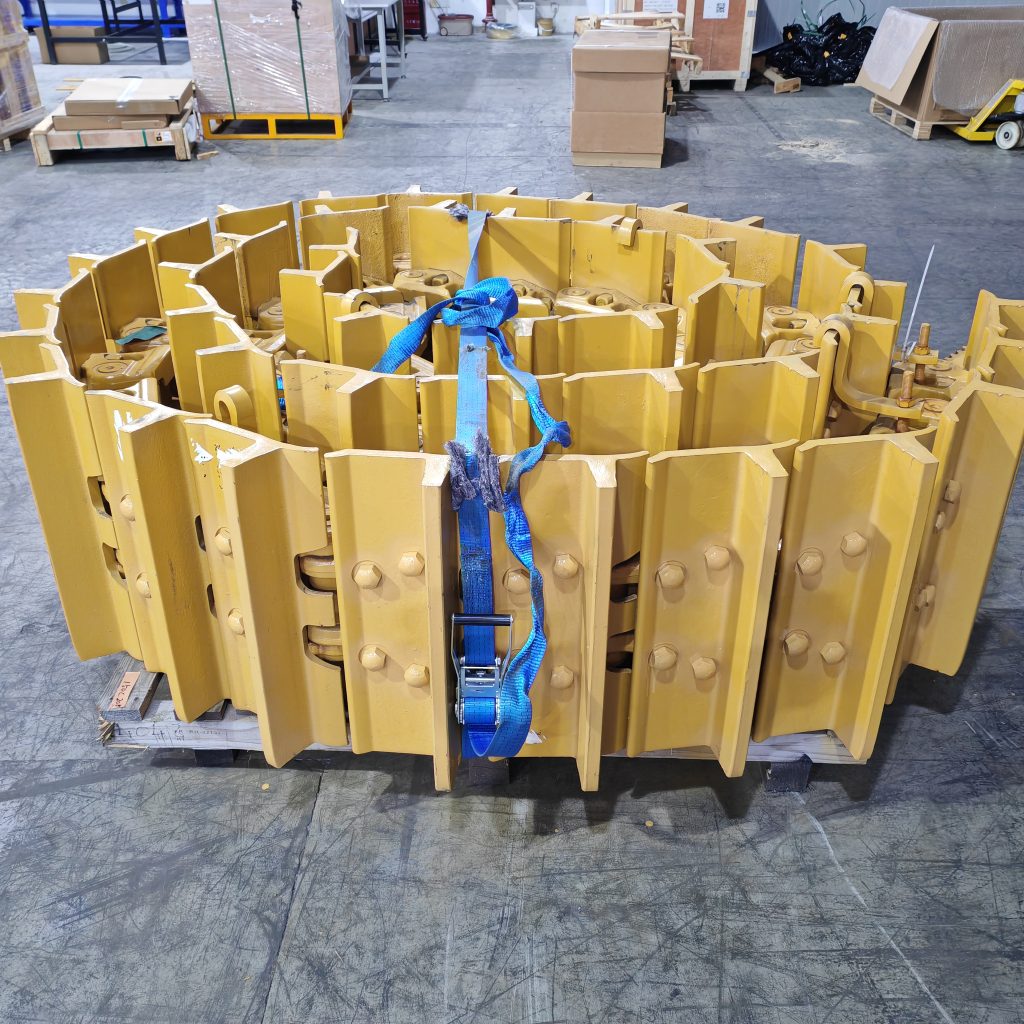
Track Chain and Track Shoes
The track chain is a series of hardened steel links connected by pins and bushings, carrying the shoes that contact the ground. The chain transmits the driving force from the sprocket to the ground, so any internal pin‑to‑bushing clearance that exceeds the manufacturer’s wear limit starts a chain reaction of accelerated wear across adjacent components. Track shoes come in single‑grouser designs for traction in soft ground and triple‑grouser designs for stability on hard surfaces. We find that mining and quarry operations in Central Asia and Africa frequently request heavy‑duty shoes with thicker base plates and deeper grouser profiles because the abrasive rock compounds the wear rate.
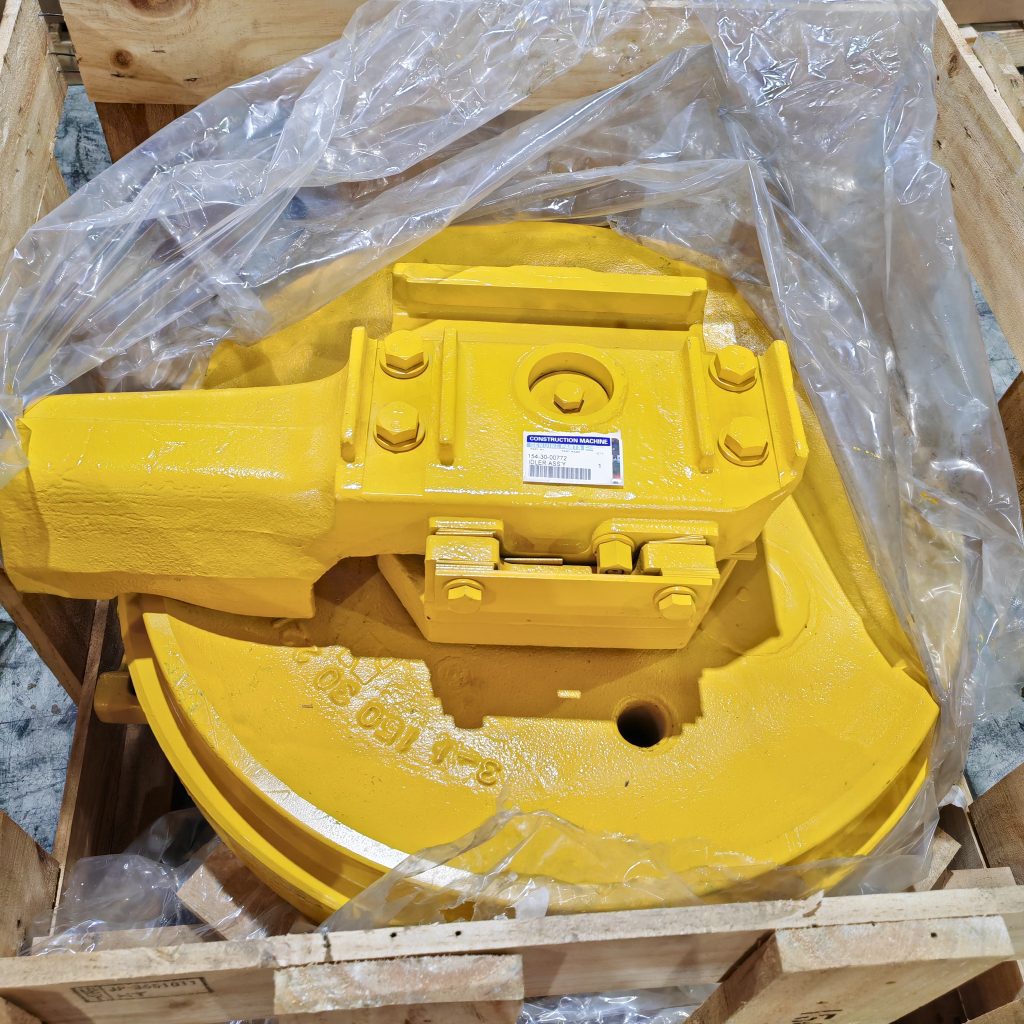
Idlers and Track Tensioners
The front idler guides the track chain and, together with the tensioner, maintains proper track tension. An undertensioned track whips and derails under load; overtensioning forces excessive loads into the final drive bearings and the idler shaft. Tensioners are typically grease‑adjustable cylinders, and when operators skip the daily tension check, the resulting slack shortens chain life faster than any other single factor. In our supplier assessments, we look at idler weld integrity and the hardness of the running surface. An idler that wears into a convex crown instead of a flat tread changes the load distribution across the chain links.
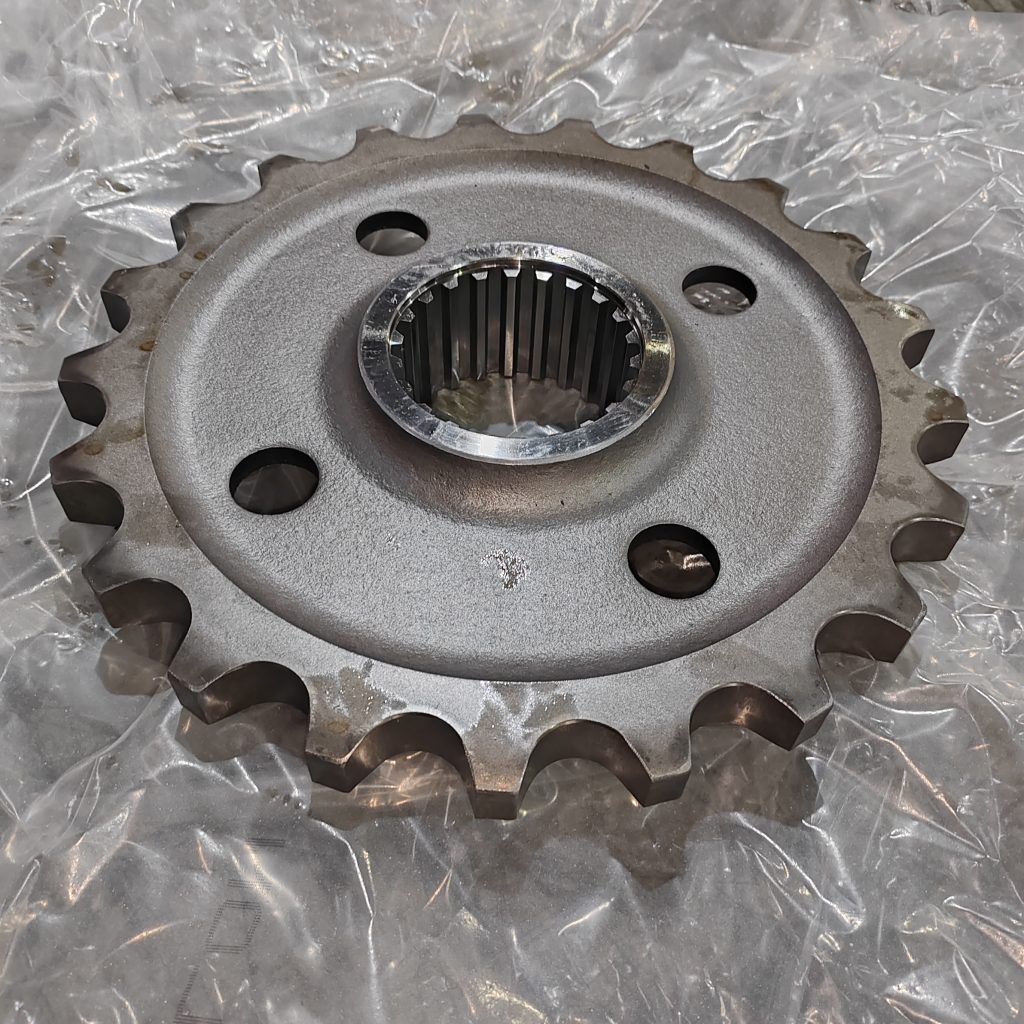
Track Rollers and Sprockets
The bottom rollers support the machine’s weight and guide the chain along the track frame. The sprocket engages the chain bushings and drives the track. Wear occurs on the roller tread surface and on the sprocket tooth profile. When teeth become pointed, they no longer match the bushing pitch exactly, and the mismatch cuts into the chain links. We recommend visual inspection of the sprocket tooth valley every 250 operating hours. If the profile has worn into a hook shape, the sprocket must be replaced together with the chain; installing a new sprocket against a worn chain will destroy both within a few hundred hours.
How to Choose the Right Undercarriage Parts for Your Machine
Part selection goes beyond matching the bolt pattern and pitch. The metallurgy, heat treatment depth, and seal design differentiate a part that lasts 2,000 hours from one that lasts 5,000 hours under the same conditions.
Material and Heat Treatment
Undercarriage components are typically manufactured from medium‑carbon alloy steel. The rolling contact surfaces must be induction‑hardened to a depth of at least 4–6 mm. Some low‑cost aftermarket parts reduce this depth to control cost, and the result is a soft core that spalls under impact. Ask the supplier for a hardness profile specification. If they cannot produce it, you are buying blind.
OEM versus Aftermarket
Original equipment manufacturer parts guarantee compatibility and are backed by the machine builder’s engineering. Aftermarket parts, when sourced from a quality‑focused manufacturer, can deliver equivalent or even superior wear life at a lower price, because the producer designs specifically for those wear‑prone areas rather than replicating a decades‑old drawing. The risk is that aftermarket quality is inconsistent. We solve this by auditing the factory’s heat‑treating capacity, checking case depth on sample cross‑sections, and requiring batch traceability. For a procurement manager, the decision is not “OEM good, aftermarket bad”; it is “can the supplier prove process control?”
Fit and Cross‑Compatibility
Always verify the part number against your machine’s serial number range. A track chain for a Komatsu PC200‑8 may differ in pin diameter from the PC200‑8M0, even though both look identical in a catalogue. Suppliers who do not ask for your serial number are guessing.
Why Aftermarket Undercarriage Parts Can Be a Smarter Investment
A common but flawed assumption is that only genuine parts keep the machine reliable. In practice, aftermarket parts from manufacturers who specialize in undercarriage components often outperform OEM parts on cost per hour, because their entire engineering focus is wear resistance. OEMs design integrated machines; specialist aftermarket companies design only rails, rollers, and idlers, and they compete on metallurgical innovation.
The economics work like this: genuine track chains for a 20‑ton excavator can run $8,000–$12,000, while comparable aftermarket chains from a reputable factory typically land between $5,000 and $8,000. If both last the same number of hours, the saving is immediate. With the right supplier, the aftermarket chain may last longer. We have seen cold‑weather programs in Russia where aftermarket rollers with a proprietary seal design outlasted OEM rollers by 15%, because the seal prevented mud intrusion more effectively.
The condition is supplier integrity. A factory selling aftermarket parts by competing on price alone will cut corners. The ones worth your time compete on material and process documentation. When you evaluate a supplier, ask for a wear‑life reference from a site with similar soil conditions to yours. If they cannot name one, move on.
If you are currently comparing quotes that differ by more than 30% for the same nominal spec, the gap usually comes from differences in heat treatment depth, seal quality, or bushing hardness. It is worth having an experienced parts specialist review the specifications before you commit to a volume order. You can send your machine model and expected ground conditions to [email protected] and we will confirm which undercarriage spec matches your operating environment.
Common Undercarriage Problems and How to Prevent Them
Most undercarriage failures follow predictable patterns that daily inspections catch early. The problems below account for the majority of unplanned downtime we see across mining and construction fleets.
Pin and Bushing Wear
Internal pin‑to‑bushing wear allows the chain to stretch, which increases pitch length and misaligns the sprocket engagement. Once the chain has stretched 2–3% beyond its original length, it will destroy the sprocket and the idler. Check track sag every day. If the sag measurement on a tight track falls at the upper limit of the specification, plan a bushing turn or chain replacement.
Roller Frame Damage
Rollers seize when seals fail and contaminants enter the bearing cavity. A seized roller slides against the chain instead of rolling, wearing a flat spot that pounds the link. Inspect rollers by checking for oil leaks around the seal and spinning the roller by hand when the track is lifted. If it does not spin freely, it will fail soon.
Track Shoe Bolt Loosening
Loose shoe bolts cause the track shoe to shift, which increases the stress on adjacent bolts and can crack the shoe around the bolt hole. Torque the bolts to specification with calibrated tools, and mark them with a paint stripe so the operator can see at a glance whether any have moved.
Tips for Sourcing Reliable Undercarriage Parts
The distance between a catalogue picture and the part that arrives on site can be measured in lost production days. Here is how we recommend procurement managers narrow the field.
Verify Factory Credentials
A supplier who is also a manufacturer should be willing to show you the heat‑treatment line, the hardness testing equipment, and the material certifications. If the supplier is a trading company, ask which factory they source from and whether they perform incoming quality control. We source directly from more than twenty OEM and aftermarket manufacturers across China, Japan, Russia, and the USA, and we inspect every batch before shipment, because we have learned that even a factory with good overall quality can produce a bad batch if the shift manager changed.
Match the Part to the Soil
A roller that works perfectly in the sandy loam of Southeast Asia may fail early in the abrasive quartzite of Sub‑Saharan Africa. Tell the supplier what you are digging. The best suppliers will recommend a different shoe profile, a harder bushing material, or a different seal type for abrasive or high‑moisture ground.
Logistics and Documentation
Undercarriage parts are heavy and dimensional. Shipping a complete undercarriage kit from China to Kazakhstan, for instance, requires careful packing to prevent chain tangling and shoe damage. Confirm the supplier can handle export documentation, including the correct HS code classification (under 8431.49), and has experience shipping to your destination. Our shipments to Central Asia, Russia, and Africa are packed in steel‑framed crates, and we include a packing list with each item’s heat number linked to the material certificate.
After two decades of watching what separates parts that perform from parts that fail, I can say the single most reliable signal of a supplier’s quality is their willingness to provide a detailed wear‑life reference under your conditions. A supplier who hesitates is protecting a gap in their process. If the undercarriage for your excavators runs in abrasive, corrosive, or high‑load conditions, the specification must be materially different from the standard catalogue offering. Send your machine model, operating hours per year, and soil description to [email protected] or call +86-21-55800172, and we will give you a wear‑life estimate and a quote for parts matched to your site. There is no cost for the assessment.
Questions We Hear from Equipment Owners About Undercarriage Parts
How often should I measure track sag?
Check track sag daily as part of the walk‑around inspection. Most manufacturers specify a sag distance between the track roller and the shoe surface, measured on a flat hard surface with the idler compressed. For a 20‑ton excavator, typical sag tolerance is 10–15 mm below the straight line across the top rollers. If you measure outside this range, adjust the tensioner immediately.
Can I mix OEM and aftermarket undercarriage components?
You can, but you must match the material hardness across the wear interfaces. For example, if you install an OEM sprocket with a Rockwell C hardness of 52, the aftermarket chain bushings should be within a 3‑point range. A difference larger than that will cause one component to wear into the other. We match components from different manufacturers by controlling the hardness specification and verifying it with a portable hardness tester at the shipment point.
What causes a track to keep derailing even after adjusting tension?
Persistent derailing usually signals worn sprocket teeth, a bent track frame, or misaligned idler guides. Check the sprocket tooth profile first. If the teeth are hooked and the chain is worn, replace both as a set. If the sprocket is good, measure the track frame for straightness. A bent track frame will push the chain off regardless of tension.
How do I know if a used undercarriage part is worth buying?
Ask for the remaining wear percentage based on the original profile dimension, not on a visual guess. For a roller, measure the tread thickness with a caliper and compare it to the manufacturer’s new dimension and the scrap dimension. If the seller cannot produce these numbers, the risk is too high. On a chain, measure the pitch over four links and compare to the original specification.
Is it safe to import undercarriage parts from China?
Yes, provided the supplier has export experience and can provide material certificates, origin documentation, and proper packing for sea freight. The HS code for undercarriage parts is 8431.49, and duties vary by country. We ship complete undercarriage assemblies regularly to mining operations in Africa and Central Asia, and the process is straightforward when the documentation is complete. If you are importing for the first time, share your port and volume requirements with a supplier that handles logistics end‑to‑end; this avoids container delays and clearance issues.
If you’re interested, check out these related articles:
DAEWOO Throttle Motor 523-00006: Function, Faults, and Replacement
How to Choose Aftermarket Engine Parts for Bobcat Excavators