
An excavator’s ability to rotate its upper structure is not a convenience; it is the core of its productivity. The components that make this rotation possible, the swing parts, take constant load and dynamic stress every cycle. When a swing motor fails or a swing bearing develops excessive play, work stops. Most operator and parts buyer guides stop at naming the components. This article goes further, covering how each swing sub‑system actually functions, what fails and why, and what matters when sourcing replacements, drawn from over twenty years of hands‑on experience with Komatsu equipment and global parts supply.
What Makes Up the Excavator Swing System
The swing system on a hydraulic excavator converts hydraulic pressure into controlled rotation. It allows the cab, boom, and arm to turn independently of the undercarriage. Power comes from the main hydraulic pumps, feeding the swing motor and speed‑reducing gearbox, which drive a pinion against the large internal‑tooth swing bearing.
The primary components are the swing motor, the swing gearbox or reducer, the swing bearing (slewing ring), and the pinion shaft and its seals. On many machines, a swing brake or parking mechanism is integrated into the motor assembly, providing holding torque when the control is in neutral. In larger excavators, a separate swing brake valve holds pressure to lock the upper frame during digging.
How the Swing Mechanism Transfers Power
Hydraulic oil, controlled by the main control valve and swing‑priority circuits, flows to the swing motor. The motor converts flow into rotary motion, and the integrated planetary gear train multiplies torque before the pinion engages the swing bearing. This design, used across Komatsu, Cat, Hitachi, and others, keeps the motor compact while generating the high output torque required to accelerate the upper structure.
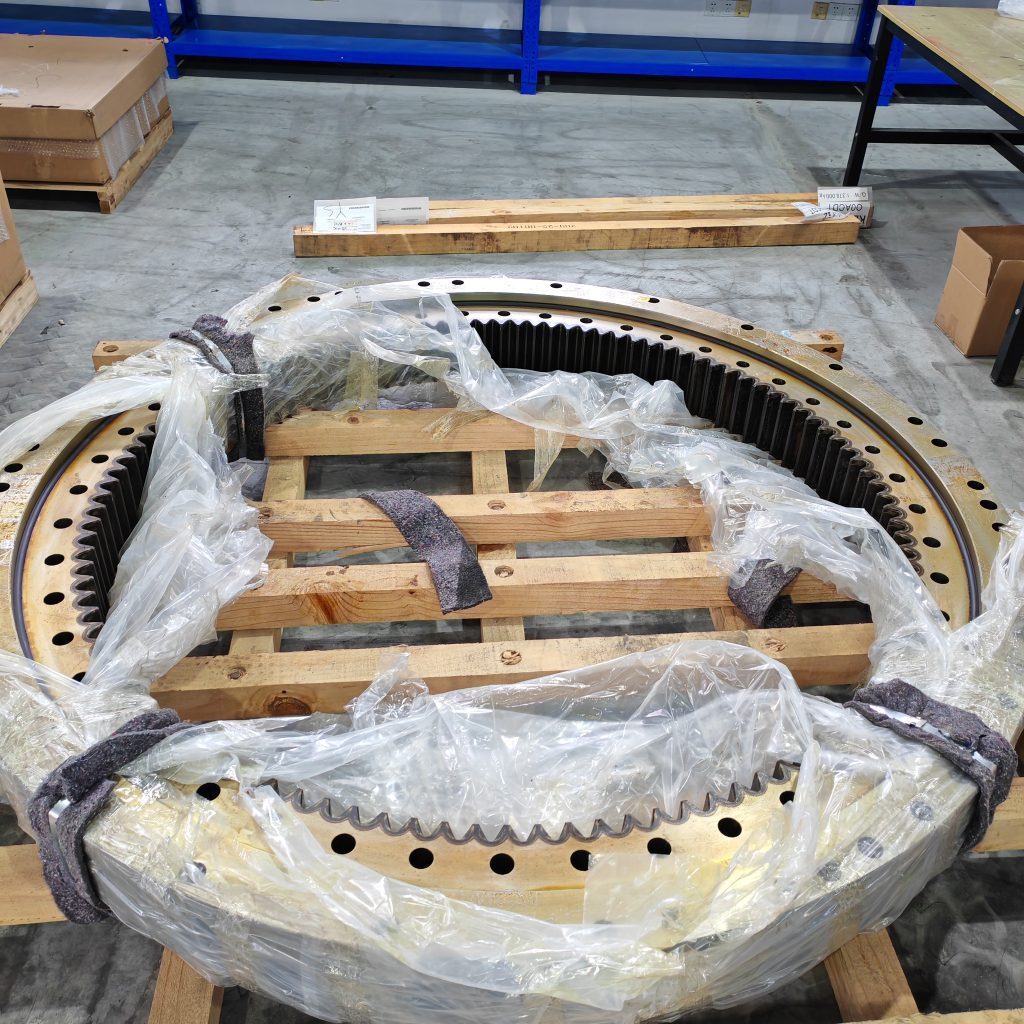
The swing bearing is a single‑row or double‑row ball or roller bearing with an internal ring gear. The outer ring bolts to the undercarriage frame; the inner ring, carrying the gear teeth, bolts to the upper frame. As the pinion turns, it walks around the fixed gear ring, rotating the upper structure. The bearing races handle both the rotational load and the overturning moment from the boom and load.
In my years supporting Komatsu excavator fleets, I saw swing motors that ran 15,000 hours without failure, and others that leaked internally after 6,000 because the hydraulic oil cleanliness was outside specification. The mechanism is robust, but it relies on clean oil and proper installation torque on the mounting bolts.
Critical Swing Components and Their Functions
A clear understanding of each part helps with both troubleshooting and sourcing. The table below summarizes the roles and common configurations.
| Component | Function | Typical Configuration |
|---|---|---|
| Swing motor | Converts hydraulic flow into rotary output | Piston or vane motor, often with integrated brake and anti‑cavitation valves |
| Swing gearbox | Reduces motor speed and increases torque | Planetary gear set, usually two‑ or three‑stage |
| Swing pinion | Transfers torque from gearbox to swing bearing | Hardened steel with splined coupling to gearbox output shaft |
| Swing bearing | Supports upper structure weight and resists overturning moment | Single‑row ball, double‑row ball, or three‑row roller with internal gear |
| Swing brake | Holds static position when controls are neutral | Spring‑applied, hydraulically released multi‑disc pack |
| Seals and O‑rings | Retain lubrication and exclude contamination | Dust seals, lip seals, and O‑rings selected for high‑pressure and temperature range |
When I inspect a machine that has developed looseness in the upper frame, the swing bearing internal clearance is the first measurement I check. A bearing running with 2 mm axial play, common in machines past 8,000 hours, can generate impact loading that damages the pinion and accelerates gearbox wear. Replacing the bearing early can save the entire gear train.
When Swing Parts Start to Fail
Swing parts give warning signs well before a complete breakdown. Recognizing these early can prevent a multi‑thousand‑dollar repair and days of downtime.
Unusual noise during swing, especially a grinding or clunking sound, often points to worn pinion teeth or broken bearing race surfaces. If the noise occurs only in one direction, the bearing inner ring may have shifted, causing uneven mesh.
Excessive drift occurs when the swing brake cannot hold position on a slope. The problem can be in the brake piston seals, the brake disc pack, or the counterbalance valve. I once traced a drift issue on a Komatsu PC200‑8 to a worn spool in the swing motor’s crossover relief valve; the motor was leaking oil internally, allowing slow rotation without any control input visible.
External oil leaks around the swing motor mounting flange or the gearbox drain plug typically mean shaft lip seals have hardened or been damaged by abrasive contamination. These leaks start small but can quickly escalate, starving the gearbox of lubricant.
Swing hesitation or jerky movement points to air in the hydraulic circuit, a sticking control valve, or uneven wear in the gearbox planet gears. A stall test on the motor, measuring case drain flow, can separate a motor problem from a gearbox or bearing issue.
For buyers responsible for fleet uptime, knowing these failure patterns matters because it guides which parts should be sourced on a preventive basis, and which can be purchased when symptoms appear.
Sourcing Professional Swing Parts That Match Your Machine’s Duty Cycle
The decision between OEM, genuine aftermarket, and alternative aftermarket swing parts is one I have navigated for customers in mining, construction, and repair shops across multiple continents. There is no single right answer, but there is a clear process.
First, match the part specification to the machine’s work conditions. A swing motor for an excavator used in dust‑heavy mining needs shaft seals with higher temperature rating and better exclusion lips than a motor used in light‑duty trenching. Quality differences in materials like sealing compounds, bearing steel grade, and heat treatment show up in these extreme conditions, not in the first 500 hours.
Second, check the supplier’s traceability. A reliable aftermarket supplier can provide the manufacturer’s batch records, material certifications for gears and bearings, and quality control test reports. I require these documents from our manufacturing partners, and I pass them on to customers who need to qualify parts for their maintenance programs. If a supplier cannot produce documentation, the price advantage is not worth the risk.
Third, evaluate lead time and technical support. Swing parts, especially the swing bearing, are heavy and require precise logistics. A supplier with experience handling export packaging and customs clearance for oversize items can save weeks of delay. We regularly ship swing bearings and complete motor‑reducer assemblies to Central Asia and Africa with a 3‑to‑7‑day delivery window because we pre‑check packaging and documentation.
For programs where genuine OEM parts are cost‑prohibitive, a well‑engineered aftermarket component from a manufacturer that supplies tier‑one OEMs can offer equivalent service life at a significant price reduction. I have seen this work well for swing seals, brake disc kits, and complete swing motors on popular Komatsu and Hitachi models. The key is knowing which manufacturers are genuinely supplying OEM quality, not just labeling their products as such.
If you are unsure about the compatibility or quality grade of a swing part for your specific machine serial number, share the model, part number, and working conditions with us at sales@sh-yshuo.com or call +86‑21‑55800172. We will confirm the correct specification and provide a competitive quote, often within the same business day.
Common Questions About Excavator Swing Parts
What is the difference between a swing motor and a swing gearbox?
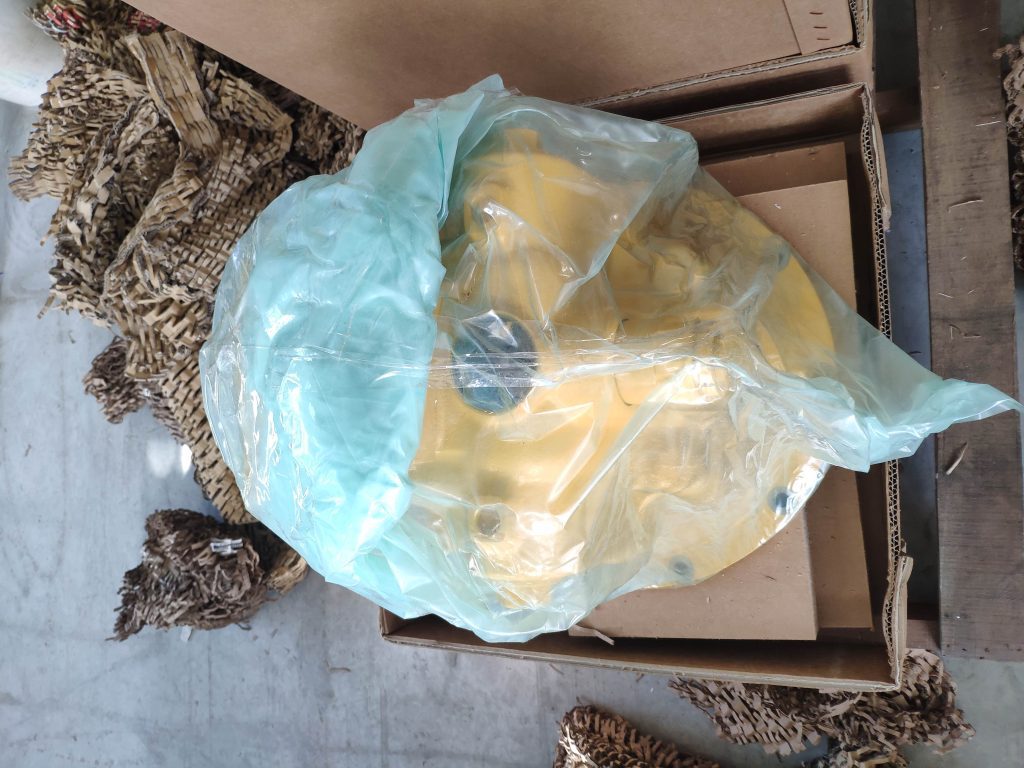
The swing motor generates rotary motion from hydraulic pressure. The swing gearbox, bolted to the motor, uses a planetary reduction to increase torque and reduce speed before the pinion drives the swing bearing. Most machines today have the motor and gearbox as a single assembly. When rebuilding, however, the motor and gearbox are serviced separately because they wear at different rates.
How can I tell if my swing bearing needs replacement before it fails completely?
Measure the bearing axial clearance with a dial indicator while the upper structure is rotated to different positions. If clearance exceeds the manufacturer’s limit (often 1.5 mm to 2.5 mm, depending on diameter), replacement is overdue. Also inspect for broken grease seals and rust marks on the raceway; these indicate contamination has already entered.
Is it safe to use aftermarket swing parts on a machine still under warranty?
In many cases, yes, provided the parts meet the performance specifications of the OEM component and local warranty laws allow for non‑genuine parts. The legal principle in many jurisdictions is that using equivalent‑quality replacement parts does not void warranty on unrelated components. Still, check the terms of your warranty and inform your dealer if you run a large fleet. We supply aftermarket parts that satisfy these technical equivalence requirements, and we can furnish the documentation your maintenance team needs.
What causes a swing motor to overheat?
The most common cause is internal leakage across the piston‑cylinder bore clearances or across the valve plate, which converts hydraulic energy directly into heat instead of rotation. Running with high‑viscosity oil in cold weather without proper warm‑up can also overwork the motor, as can a partially blocked case drain line. I have used an infrared thermometer on the motor case to detect a 20°C difference between motors on the same machine, which flagged an internal leakage issue before any performance loss was noticed.
How do I choose between a full swing motor replacement and a seal‑rebuild kit?
If a motor has only external leaks and its case drain flow is within specification, a seal kit rebuild is often enough. However, if the motor has internal damage, scored piston bores, or worn valve plates, rebuilding only the seals will not restore performance. In those situations, a remanufactured or new aftermarket swing motor is more cost‑effective in the long run. When you send us a failure description and the machine’s working hours, we can help you decide based on the failure pattern we have seen across the same model line.
If you’re interested, check out these related articles:
Link-Belt Excavator Parts Lookup: Your 2026 Sourcing Guide
Safe Shipping Excavator Parts: Protecting Your Heavy Machinery Investment