
Finding a reliable engine fan blade provider isn’t about checking a box on a supplier survey. After two decades in heavy equipment parts supply, I’ve learned that the real difference between a blade that lasts and one that fails comes down to three technical variables: material consistency, dynamic balance, and dimensional accuracy. Without verifiable test data for each, even a supplier with glowing references is a gamble. This article walks you through a practical verification framework, something any maintenance manager or procurement engineer can use, whether you’re sourcing one replacement blade or setting up a new supply line.
Engine Fan Blade Quality Directly Affects Heavy Equipment Reliability
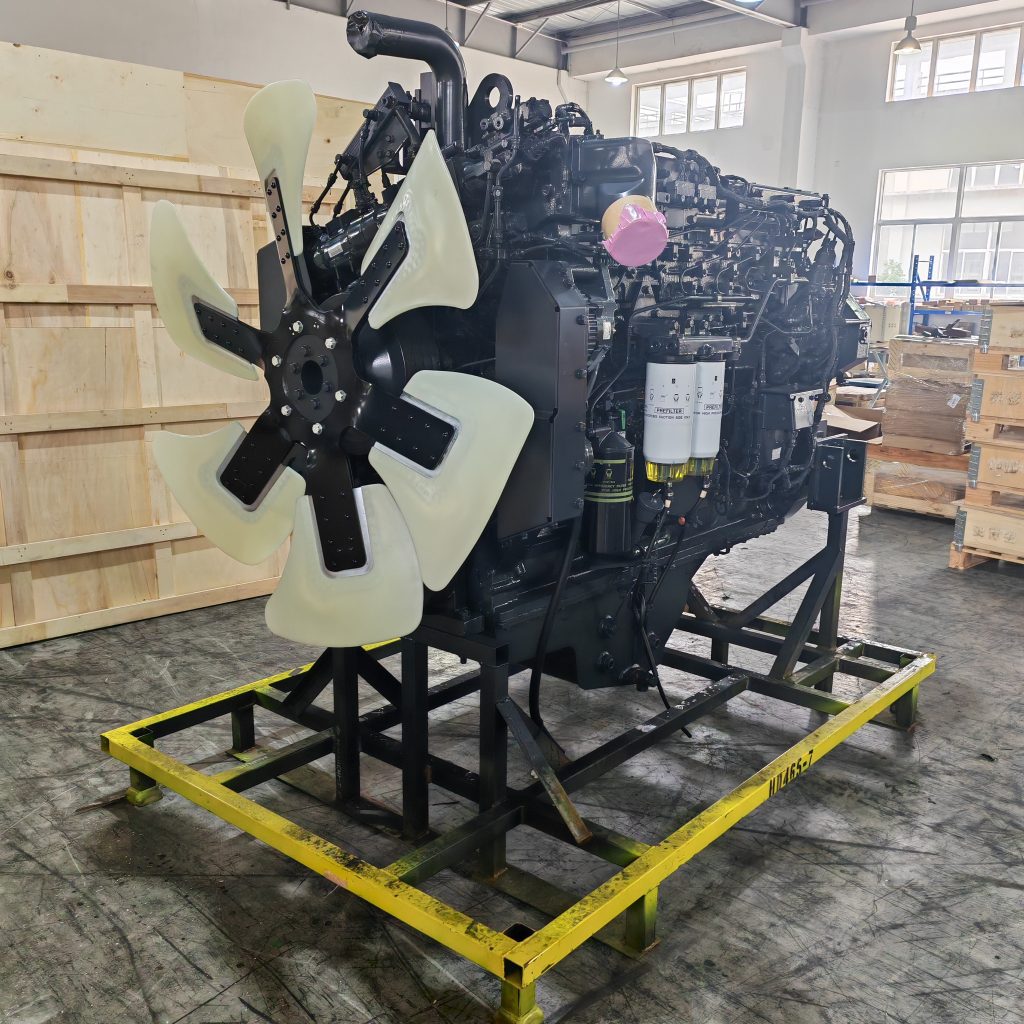
A fan blade might seem like a simple plastic or metal component, but in a heavy‑duty engine bay it absorbs vibration, heat cycles, and dust. A blade with poor balance accelerates bearing wear on the fan clutch or water pump. Over time, that leads to overheating, belt slippage, and eventually engine derating on a jobsite.
During my years at Komatsu, I investigated field failures where cooling system problems traced back to aftermarket fan blades that had warped or lost material because of inconsistent manufacturing quality. The fix often meant more than swapping the blade; it involved replacing damaged pulleys, belts, and even radiator shrouds. The cost of an unreliable blade extends far beyond the part itself.
Technical Verification Methods for Engine Fan Blade Quality
If a supplier cannot show you a blade‑level balance test certificate, you are taking a risk. Dynamic balancing for engine fans should comply with ISO 1940 grade G6.3 or better. A meaningful report lists the actual residual unbalance, not just a “passed” stamp. Many factories do only batch sampling. For critical cooling components, we ask for 100‑percent test data.
How Balance Testing Ensures Fan Blade Reliability
When a fan blade is out of balance, it generates vibration that loads the water pump bearing and the fan clutch. That vibration may not be obvious until the bearing starts to fail, but a simple dynamic balance test reveals it before the blade ever leaves the factory. Ask for the allowable unbalance limit printed on the report and compare it with the blade’s mass. If the supplier hesitates to provide that number, treat it as a red flag.
Material Properties That Determine Blade Performance
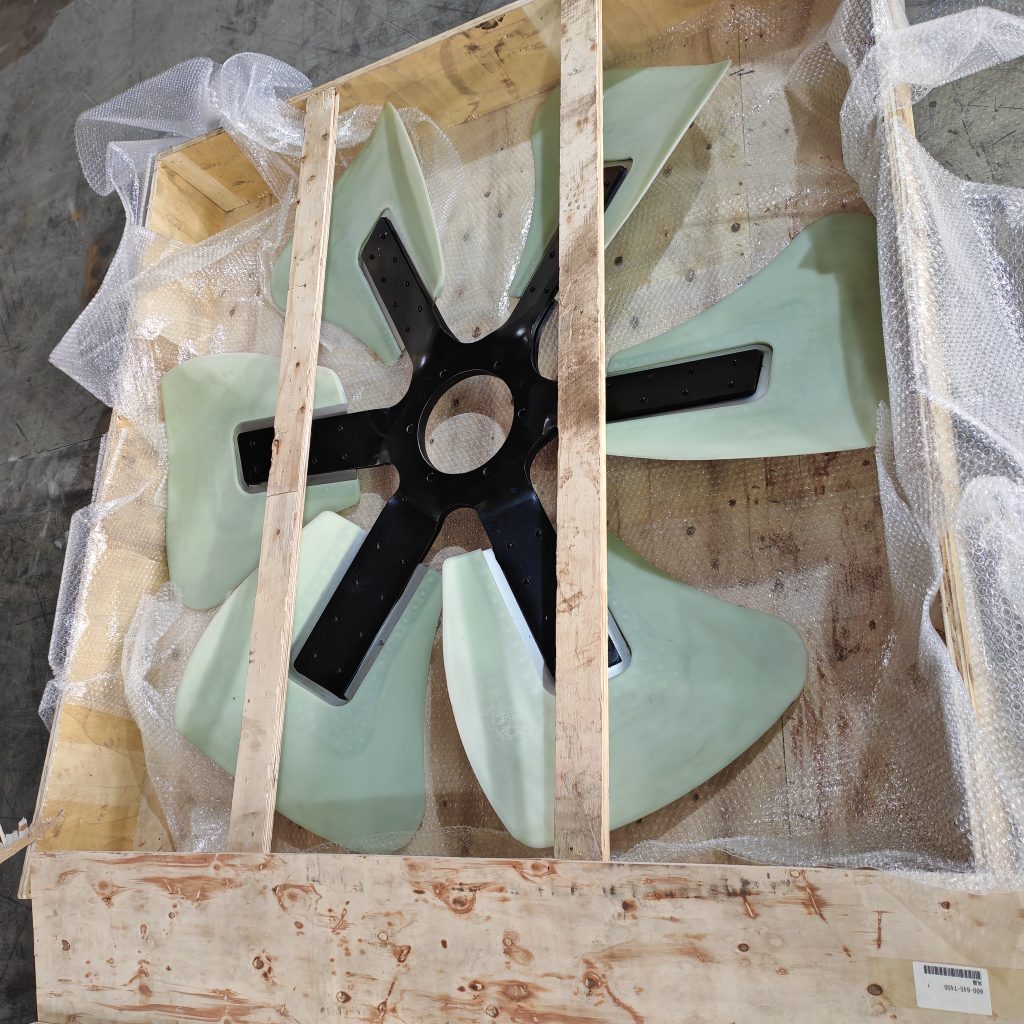
Fan blades are commonly made from injection‑molded nylon (often glass‑fiber reinforced), stamped steel, or cast aluminum. Each material behaves differently under heat and stress. A nylon blade that looks fine on a shelf can soften and lose its pitch after a few hundred hours in a high‑temperature engine bay. We insist on material certifications that include heat deflection temperature and tensile strength.
| Material | Tensile Strength (Typical) | Max Operating Temp | Typical Use Case |
|---|---|---|---|
| Glass‑filled nylon | 150–200 MPa | ~140 °C | General‑duty cooling fans |
| Stamped steel | 350–500 MPa | 250+ °C | Heavy‑duty and high‑heat engines |
| Cast aluminum | 200–300 MPa | 200+ °C | Performance or aftermarket upgrades |
Evaluating Supplier Claims and Certifications
An ISO 9001 certificate is a starting point, not a guarantee. The question most buyers skip: what process controls are in place specifically for fan blade production? We focus on line inspection records, not just the final QC checklist. A factory that uses a coordinate measuring machine to check every hub bore is very different from one that spot‑checks with a go/no‑go gauge.
What Genuine Quality Control Looks Like Beyond ISO 9001
Look for process documentation that includes dimensional check results per batch, material lot traceability, and balance test data for every blade. If a supplier can show you a six‑month trend chart for bore diameter variation, you are talking to a serious manufacturer. If they cannot, you are working with a trader who may not have visibility into the actual production floor.
If your current supplier cannot provide process metrics and individual blade test reports, it is worth confirming their measurement capabilities before placing a large order. Reach out to us at sales@sh-yshuo.com for a checklist of what to ask during a supplier audit.
Engine Compatibility Verification Before Ordering Fan Blades
A fan blade must match the engine model exactly—not just the overall diameter but the hub bolt pattern, pilot bore, blade pitch, and rotation direction. We have seen cases where the same part number from different aftermarket catalogs referred to blades with a pitch angle difference of two degrees, which was enough to cause airflow mismatch and elevated engine temperatures. I always advise procurement teams to verify the OEM part number and request a dimensional drawing before confirming an order. Even a one‑millimeter difference in the hub bore can make installation impossible.
OEM Versus Aftermarket Engine Fan Blade Sourcing Strategies
OEM blades give you an exact match, typically with a warranty, but lead times can stretch to weeks and prices are often two to three times higher than aftermarket. Quality aftermarket blades, when sourced from an audited manufacturer, can deliver equivalent service life at a lower cost. For older equipment where OEM parts are no longer available, aftermarket is often the only practical path.
| Factor | OEM | Aftermarket |
|---|---|---|
| Cost | Higher | 30–50% lower |
| Lead time | 4–12 weeks possible | 1–4 weeks typical |
| Quality consistency | Very high | Varies; requires supplier audit |
| Compatibility guarantee | Absolute | Must be verified with drawings |
| Availability for legacy machines | Discontinued | Often available |
When Aftermarket Engine Fan Blades Make Sense
Aftermarket blades are a power choice when you are managing a mixed fleet with a tight budget, or when OEM supply lines run dry. The key is to apply the same technical checks—balance, material, dimensional accuracy—that you would use for an OEM part. If the aftermarket blade passes those tests, there is no reason it should not perform.
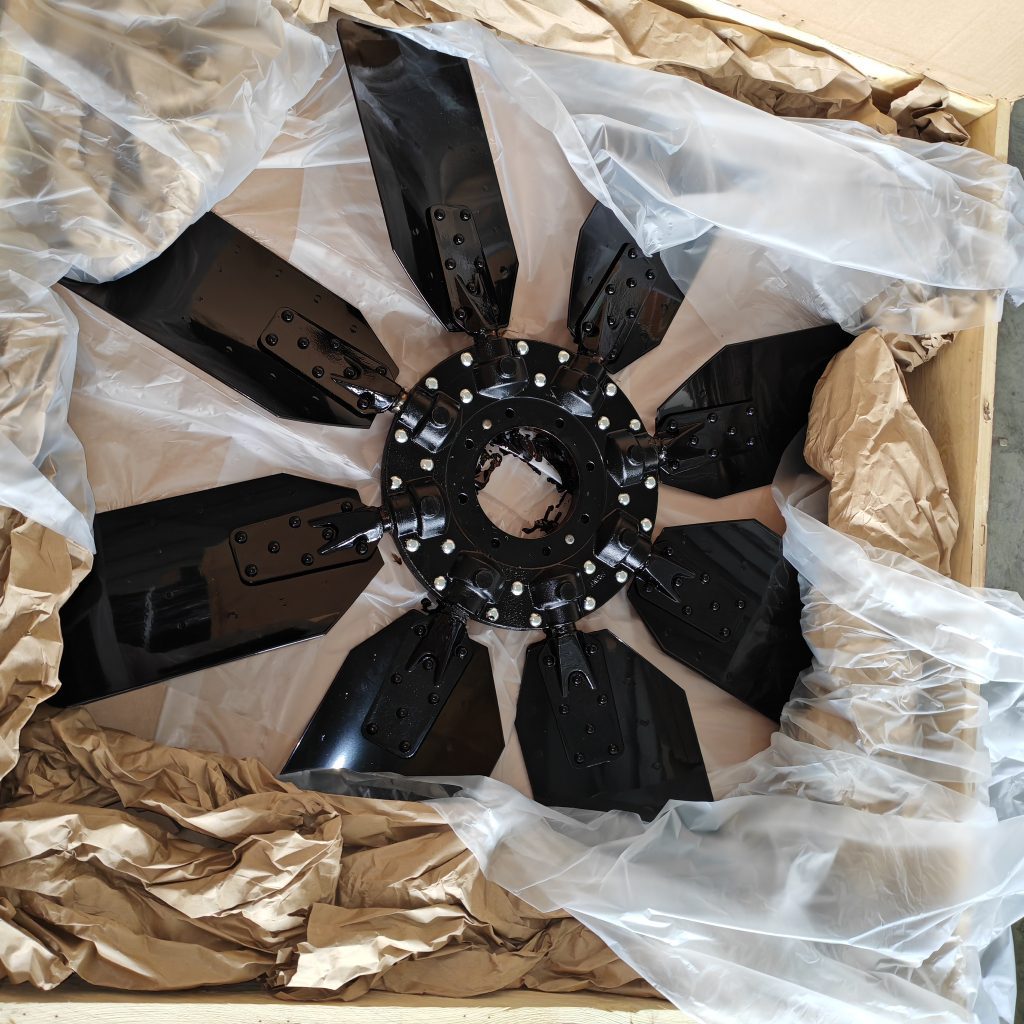
Finding a reliable engine fan blade provider means moving past price comparisons and into verified technical performance. At Shanghai Yanli Construction Machinery, we source fan blades from an audited manufacturing network and can provide balance test reports and material certificates with every shipment. If you need engine fan blades for Komatsu, CAT, or other heavy equipment, send your part numbers and quantity to sales@sh-yshuo.com or call +86-21-55800172. We will confirm compatibility and provide a detailed quotation.
Common Questions About Sourcing Engine Fan Blades
How do I know if a fan blade is properly balanced?
A properly balanced fan blade will come with a dynamic balance test report showing vibration amplitude within ISO 1940 G6.3 limits. The report should state the actual residual unbalance in g·mm or g·mm/kg and the allowable limit for that blade. If a supplier cannot produce an individual blade report, assume the blade has not been balanced.
Can I use an aftermarket engine fan blade without risking engine damage?
Yes, provided you verify material specifications, balance, and dimensional fit against the OEM part. The risk is not the “aftermarket” label but incomplete testing. Always request a drawn comparison, material certificate, and balance report before release. When those documents align with the OEM design, an aftermarket blade can perform just as reliably.
What is the difference between nylon and metal fan blades?
The choice depends on your engine’s operating temperature and vibration environment. Nylon blades are lighter and quieter but can soften above 130–140 °C, leading to pitch deformation. Steel and aluminum blades handle higher heat and are more durable in heavy‑duty cycles, though they are heavier and can transmit more vibration. For mining or desert operations, metal is usually the safer long‑term option.
How can I verify a Chinese supplier’s fan blade quality without an on‑site visit?
In our experience, the most effective remote verification is a sample order with full test documentation: balance report, material certificate, and dimensional inspection record. Look for process‑control evidence beyond the final QC sign‑off, such as batch traceability and in‑line measurement logs. If you need help interpreting those documents, share your engine specifications with us at sales@sh-yshuo.com. We can review the data and let you know if the blade matches your application.
If you’re interested, check out these related articles:
Understanding Excavator Undercarriage Parts and Their Roles
Choosing Genuine Cat Excavator Parts Online: Smart Sourcing