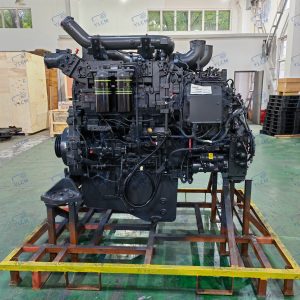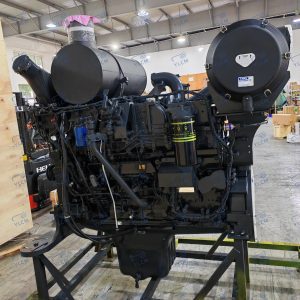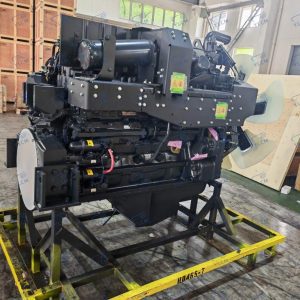

The main structural components of a Chinese excavator follow the same general architecture as any crawler excavator: a track-carrying undercarriage structure, a revolving frame and main house, a boom and arm linkage, a bucket, counterweight, and the cab and covers that protect the operator and powertrain. The sourcing difference is not usually in those part names. It is in the steel grade, welding, machining, and inspection that determine how long the structure stays straight and crack-free. Buyers should separate primary load parts from bolt-on covers, because a part number match alone does not confirm that a replacement frame or boom will perform the same job under the same site conditions.
What Counts as the Structural System
The structural system is the load-carrying steelwork of the machine. It does not include most filters, seals, hoses, or bolt-on wear parts, although those components still depend on the structure for support and alignment.
| Structural group | Main role | Inspection focus |
|---|---|---|
| Undercarriage frame and track carrying structure | Carries the upper structure and track loads | Weld cracks, bracket distortion, mounting bolt wear |
| Revolving frame and main house | Supports the swing bearing, boom foot, cab, and powertrain | Machined surface condition, deck distortion, corrosion |
| Boom, arm, and bucket linkage | Transfers digging loads from cylinders to the bucket | Pin-bore wear, plate distortion, weld profiles |
| Counterweight, cab, and covers | Balances the front load and protects the operator and components | Mount cracks, corrosion, panel alignment |
This separation matters during sourcing. A worn track roller is a replaceable wear part, but the track frame bracket that holds it is structural. Replacing the roller without checking the bracket can hide the real problem.
How the Undercarriage Frame Carries the Whole Machine
The undercarriage structure is more than the track chain. It includes the welded track frame, side frame plates, idler brackets, roller mounts, sprocket supports, and the interface that connects the undercarriage to the swing bearing and upper house. The structure must keep all track components aligned and absorb side loads when the excavator rotates, travels on a slope, or lifts over the side.
The common failure points are weld terminations, bolt holes that have elongated, and brackets that have bent or cracked after an impact. Buyers should not evaluate a used or replacement track frame by paint condition alone. The weld areas near the idler and sprocket mounts usually tell more about fatigue and repair history than the center of the frame.
Why the Revolving Frame and Main House Matter
The revolving frame is the central structural platform that ties the boom, cab, engine, hydraulic components, and counterweight to the undercarriage. Its upper deck must stay flat and stable while the machine swings and digs. The swing bearing seat and boom foot mounting area are especially sensitive because they concentrate both digging loads and swinging forces.
For Chinese excavators, this is an area where factory quality shows up clearly. A well-built revolving frame should have clean weld profiles, consistent plate alignment, and evidence that critical surfaces were machined after welding. A poorly prepared deck can create uneven bearing contact, which may show up later as swing noise, seal failure, or cracks around the bearing mount.
How the Boom, Arm, and Bucket Linkage Works
The boom, arm, and bucket form the main digging structure. Most are welded box sections made from formed steel plates with internal baffles or reinforcing plates at high-load zones. The pin bosses at the boom foot, arm joint, and bucket link are the points where cylinder force and digging reaction meet.
This part of the machine is not loaded evenly. A standard digging bucket creates one load pattern, while a hydraulic breaker, ripper, or heavy-duty thumb creates another. A boom or arm designed for general excavation may fatigue earlier if it is used continuously with a breaker. The most important sourcing question is therefore not just the physical dimension, but the intended application and any builder option for reinforced or heavy-duty structure.
Boom and arm failures often appear at weld terminations and pin bosses when the operating load exceeds the original design condition. <Finding Quality 220 Excavator Parts: A Sourcing Strategy> covers a sourcing strategy for matching replacement parts to the machine’s actual working conditions.
Counterweight, Cab, and Protective Covers
The counterweight is a structural installation even though it looks like a simple cast or fabricated mass. Its mounting system must hold the weight securely under vibration, side loads, and repeated swinging. Loose or cracked counterweight mounts can affect stability and put additional stress on the revolving frame.
The cab structure protects the operator, but buyers should confirm whether a cab is actually certified to a protective structure standard instead of assuming it from the shape. Engine hoods, side covers, and belly guards are usually fabricated panels that protect cooling, fuel, hydraulic, and electrical components from debris and impact. They are not primary load parts, but damaged panels can lead to overheating, contamination, or worn wiring if they are left unrepaired.
How to Check Material and Welding Quality
The same structural component name can hide very different steel and weld quality. For replacement booms, arms, track frames, and revolving frames, buyers should request more than dimensions. The useful documents include the material specification, the weld procedure, and the inspection record for critical joints.
A practical inspection sequence is:
- Confirm the part number and serial range against the machine builder’s parts book.
- Check the material specification and whether it matches the original design intent.
- Review weld profiles for cracks, undercut, overlap, or grinding repairs.
- Ask for inspection records for high-stress areas such as pin bosses and bearing seats.
- Check machined surfaces for flatness, drilling alignment, and protective coating condition.
This does not require the buyer to become a welding engineer. It requires asking for records that a serious supplier should already have.
The same structural component name can hide different steel, welding, and inspection choices depending on the factory that produced it. <What Really Matters When Sourcing Excavator Parts: A Breakdown of Critical Components> covers the critical component categories that deserve extra verification before purchase.
How to Source Structural Components Without Guessing
The biggest avoidable mistake is treating structural parts as if they were standard commodity items. A track frame, boom, or revolving frame is usually tied to a model, a serial range, and sometimes a particular build option. Before ordering, the buyer should confirm the machine model, serial number, part number, and application. Photos of the damaged area with a scale reference help identify the correct variant and avoid shipping the wrong side or revision.
For Chinese excavator supply, the advantage is not that every part is interchangeable. The advantage is that a competent supplier can coordinate with the factory and provide the documentation needed to verify material and weld quality. Buyers should choose the supplier who can answer technical questions rather than the one who only quotes the lowest price.
When buyers compare Chinese excavator makers and aftermarket suppliers, they are comparing different combinations of steel, weld process, and inspection, not just part numbers. <Choosing Reliable Excavator Parts Suppliers: A China Guide> covers the supplier checks that help separate documented quality from sales language.
Source Structural Components With the Right Documentation
Before ordering a replacement track frame, revolving frame, boom, arm, or counterweight, send the machine model, serial number, part number, and photos of the failed area with a scale reference. That information lets the supplier check the correct variant, mounting dimensions, and expected material and weld condition. Contact Shanghai Yanli Construction Machinery Co., Ltd. at sales@sh-yshuo.com or +86-21-55800172.
FAQ
Do Chinese excavators use the same structural components as Japanese or European machines?
The general architecture is similar, but the part numbers, mounting dimensions, material specifications, and build options are not automatically interchangeable. Even machines that look similar may use different boom foot pin sizes, track frame bolt patterns, or counterweight mounting designs. The safest approach is to work from the machine serial number and the correct parts book rather than assuming a cross-brand match.
Which structural components fail most often?
The highest-risk zones are usually around welded joints and concentrated load points. Common locations include the boom foot, arm cylinder mounts, bucket pin bosses, swing bearing seat, and track frame corners near the idler and sprocket mounts. Failure often begins as a crack or pin-bore wear and becomes visible only after a detailed inspection.
Can a cracked boom or arm be welded safely?
Sometimes, but not always. A short crack in a noncritical plate area may be repairable with a qualified weld procedure and proper preheat. A crack near a pin boss or through a high-stress section is more serious and may require replacement. The repair should include material identification, a written procedure, and inspection after welding. Without those records, the repair is difficult to trust.
What should I ask before buying a replacement structural component from China?
Request the machine model, serial range, part number, material specification, weld procedure, and inspection records for critical areas. Ask for photos showing overall dimensions, mounting holes, and any damage or repair marks. Confirm the packaging and shipping method before purchase, because large structural parts are easily damaged if they are not braced or protected during transit.
If you’re interested, check out these related articles:
Excavator Seal Kits: Fast 3-Day Delivery for Repairs
How to Choose Aftermarket Engine Parts for Bobcat Excavators