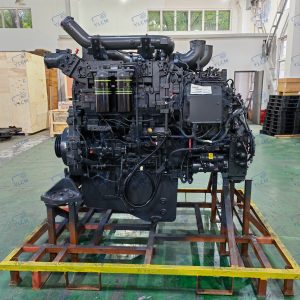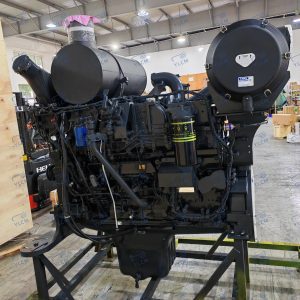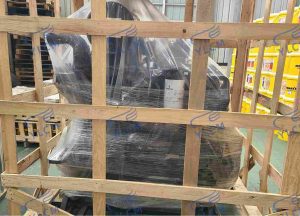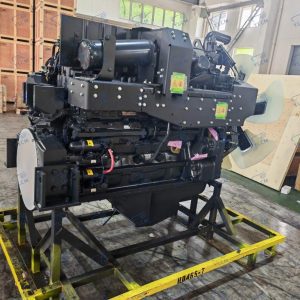


Assessing engine spare parts quality means looking past the outer box and into the manufacturing and supply chain specifics that determine whether a part will survive heavy-duty cycles. Having spent over twenty-two years in this industry — from managing procurement at Komatsu China to now running an independent sourcing operation — I’ve learned that genuine quality is built into traceable processes, not marketing claims. A crankshaft or piston that fails early can cost thousands in repairs and lost productivity. This article breaks down the checks that professional buyers use to separate dependable engine components from costly risks, long before the first wrench turns.

Inspect Machining, Markings, and Material Feel
Most people begin with the packaging, but the part itself carries the most honest signals. Pick up the component: a well-made camshaft or connecting rod should feel dense and consistent. Run a fingernail over machined surfaces. Quality tools leave fine, even feed marks; chatter or tear-out points to poor process control. Markings are also telling. OEM and high-tier aftermarket suppliers typically engrave part numbers deeply with sharp, aligned characters, while cheap copies often show shallow, wavy etching. Under bright light, the surface grain tells another story. Good cast‑iron blocks or flywheel housings have uniform texture; porous patches or rough parting lines mean inferior casting. For items like pistons, inspect the ring grooves for burrs and the skirt coating for evenness. These visual details reflect the manufacturer’s discipline — or the lack of it — long before any test stand runs.
What are common signs of counterfeit engine spare parts?
Counterfeit parts often announce themselves through inconsistent weight, blurry part numbers, and paint overspray on sealing surfaces. The packaging may mimic an OEM box but show misspelled brand names or missing holograms. Inside, the metalwork betrays the fraud: rough thread cutting, missing chamfers, and incorrect bolt‑head stamps. In some cases, the material itself is visibly different — a grey‑iron bracket where a ductile‑iron part should be. None of these clues requires a laboratory; a careful walkaround with a reference photo of a genuine part is enough to raise the alarm.
Validate Documentation and Material Certifications
Quality that cannot be seen must be read. For any critical engine component — a turbocharger, fuel injection nozzle, or bearing — ask for a material test certificate (mill test report) that lists chemical composition and mechanical properties. Factories that operate spectrometers and tensile testers seldom hesitate to share this data. If a supplier balks, treat the silence as a warning. Next, confirm the part number exactly matches your equipment’s parts book, revision codes included. A single digit off can change the interference fit just enough to cause a seizure. For heavy‑duty applications, also request proof of standards compliance — ISO 9001 for the plant, or pressure‑test logs for assemblies like cylinder heads. Documentation is not a formality; it is the only evidence you have that the metal inside the box is what it claims to be.
If your current supplier cannot produce material certifications for safety‑critical engine components, the relationship deserves a second look. Our sourcing process at Shanghai Yanli includes factory audits and full documentation packages for every order. Share your part numbers with us at sales@sh-yshuo.com, and we’ll demonstrate what a transparent supply chain delivers.
Audit the Supplier’s Capability and Track Record
An engine part’s quality begins in the factory’s production environment. During my years at Komatsu, supplier audits examined everything from raw‑material storage to final inspection, and I’ve applied the same rigor when vetting the factories we work with today. A credible supplier should be able to show you a clean, organized workshop with CNC machining centers — not just manual lathes. Ask about in‑process inspection: do they measure critical dimensions after each operation, or only at the end? How do they trace a batch of material from the foundry to the finished part? A factory that can walk you through its traceability system, and that holds long‑term contracts with OEMs or large aftermarket distributors, is far more likely to deliver consistent quality than one that sells only to walk‑in buyers. Requesting a video tour or a recent third‑party audit report is not rude; it is basic due diligence that separates professional suppliers from middlemen.
Understand the Aftermarket Quality Spectrum
Many buyers talk about “aftermarket” as if it were a single grade of parts, but the reality is a ladder. At the top sit genuine‑aftermarket components made by factories that also manufacture for OEMs or that use identical specifications and materials — they simply lack the brand stamp. The middle rung holds independent manufacturers with good equipment and a serious approach to quality, though often a shorter history. At the bottom are low‑cost copies, mass‑produced with substandard alloys, minimal dimensional control, and no testing. Price alone rarely reveals the tier; a high‑grade aftermarket cylinder liner might cost 40% less than OEM but 60% more than a cheap copy. The difference lies in the supplier’s ability to provide the documentation and audit evidence already described. The same tier logic applies when sourcing engine parts for specific equipment models. For example, our article on How to Choose Aftermarket Engine Parts for Bobcat Excavators explains how part complexity and brand requirements influence which tier makes sense.
Validate Through Sampling and Dimension Checks
Before committing to a volume order, order a sample and break out the calipers. Measure shaft diameters, bore dimensions, and bolt‑hole spacing against the OEM specifications down to the hundredth of a millimeter. Even a small deviation can accelerate bearing wear or cause oil leaks. For rubber components, check durometer hardness and cure consistency. I have seen aftermarket oil seals that looked flawless yet failed a simple bend test because the rubber was under‑cured. Complex assemblies like oil [pump](https://www.ylcmparts.com/product-category/hydraulic-components/pump/)s deserve the same sampling discipline. Install the part on one machine and monitor oil pressure, temperature, and vibration for the first 50 operating hours. If the readings hold steady, the part is likely sound. This front‑end investment in a few samples is cheap insurance against the field failures that can crater a maintenance budget.
Engine downtime costs more than the part itself. At Shanghai Yanli, consistent quality comes from verified sources, not guesswork. Send your engine part numbers, desired quantities, and any special requirements to sales@sh-yshuo.com, and we’ll respond with a proposal that includes full traceability and quality documentation. You can also call +86-21-55800172 to discuss your fleet specifics directly.
Common Questions About Engine Parts Procurement
Can aftermarket engine parts match OEM durability?
They can, but the answer depends on the manufacturer. High‑tier aftermarket parts produced by specialized factories using equivalent materials and processes often reach 80 % to 100 % of OEM lifespan — at a significant cost reduction. The difference is in heat treatment, machining precision, and quality control. A factory that routinely supplies sub‑components to OEMs has already proven its capability. The key is verifying that the part you are buying comes from that factory, not a lower‑grade copy.
What is the most reliable way to source engine parts for a mixed fleet?
Consolidating orders with a single supplier who has access to multiple factory networks simplifies procurement. Provide your machine list and common part numbers, and a capable partner can manage cross‑matching across brands. This approach reduces freight complexity, inventory overlap, and the risk of ordering from an unknown source for a one‑off part.
How do I know if an aftermarket supplier from China is trustworthy?
Trust is built on verification, not geography. Some Chinese factories produce OEM‑level components for global brands; others do not. Look for ISO‑certified facilities, production videos, and the willingness to supply material test reports before payment. At Shanghai Yanli, we inspect our partner factories for production equipment, process controls, and raw‑material sourcing, and we share that evidence with buyers.
Is a low price always a warning sign?
Not always, but an abnormally low price usually means corners have been cut in material or processing. Compare quotes from multiple suppliers while demanding the same documentation set from each. If one quote is far below the rest and the supplier cannot explain the cost gap through production efficiency or volume, the savings are almost certainly hidden inside the metal. For any part you are unsure about, email us the details and we’ll confirm the availability of a quality alternative with full traceability.
If you’re interested, check out these related articles:
Safe Shipping Excavator Parts: Protecting Your Heavy Machinery Investment
Hyundai Excavator Spare Parts: Choose the Best Fit
Common Mini Excavator Bucket Parts and Replacement Choices
Fluid Coupling: Principles and Industrial Applications in 2026
Universal Excavator Keys: How They Work & Sourcing Tips