
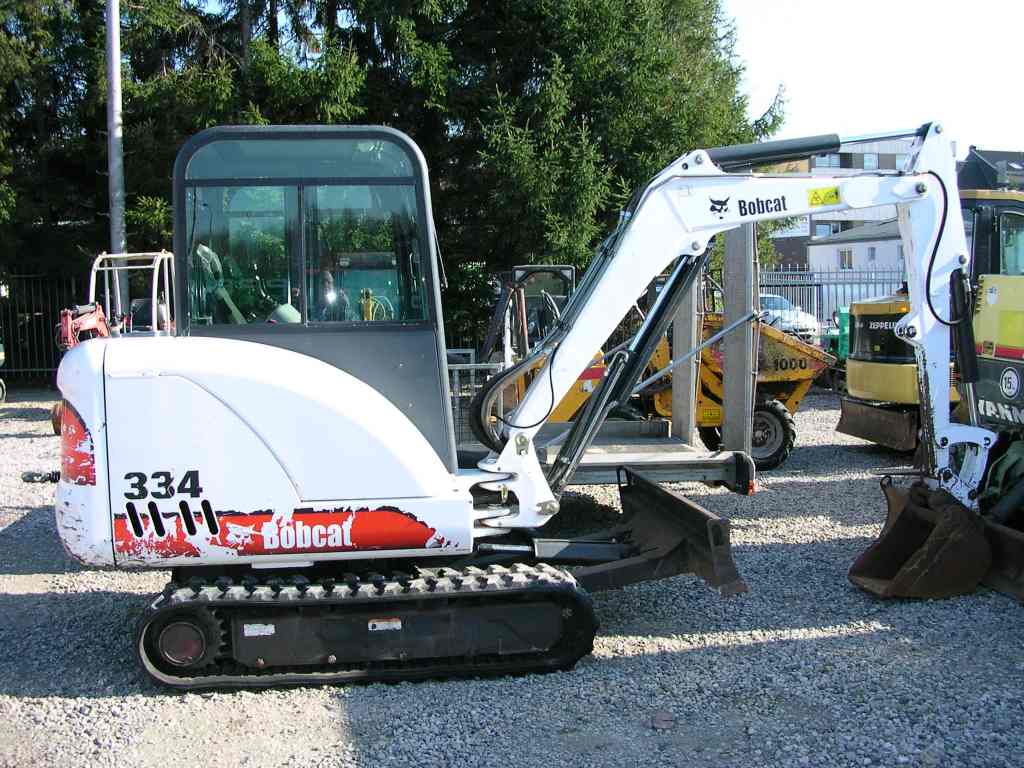
Bobcat 334 Mini Excavator maintenance is often treated as a repair list instead of a daily operating habit. In parts sourcing, I see the same pattern from contractors and repair shops: a dry pin turns into a scored bushing, a loose track throws a roller, and a small hydraulic leak becomes a cylinder rebuild. The machine rarely fails without warning. It fails after the warning was ignored. These seven practical tips cover the checks and replacement parts that keep a Bobcat 334 from turning routine work into an emergency.
Start With the Bobcat 334 Undercarriage and Grease Points
Tip 1. Check the undercarriage at the start of every shift. Track tension is not a one-time adjustment. On this mini excavator working in mud, sand, or demolition debris, a loose track can jump a sprocket or chew the idler and roller faces before lunch. I have watched a track that measured correct in the yard become too slack by midday because material packed into the chain. Look for missing track bolts, cracked pads, uneven wear on the idler, and movement in the undercarriage parts before the machine moves. If you can rock the machine against a worn roller, order the replacement before the track rails start cutting into the frame.
Tip 2. Grease the pivot points by the hour meter, not by ear. Pins and bushings wear fastest at the boom foot, swing cylinder, and bucket linkage. When the machine starts squeaking, damage is already happening. Use the grease specified for the ambient temperature and pump it slowly until fresh grease appears. Wipe the zerk before greasing, and do not skip a fitting just because it is hard to reach. Dry joints load the pin unevenly and turn a low-cost bushing into a line-boring job.
Maintain the Bobcat 334 Hydraulic System and Filters as a Set
Tip 3. Check the machine’s hydraulic components daily: oil level, color, cylinder rods, hose fittings, and the underside of the pump. Milky oil means water entry. Burnt-smelling oil means the system has been running hot. A wet fitting on a Monday morning is a warning; the same leak turns into a cylinder repair by Friday if the machine stays on the job.
Tip 4. Change hydraulic oil and return filters together, and do not open the system in a dust cloud. The hydraulic system tolerates many jobs, but it does not tolerate contamination. Use the oil grade and filtration the manual calls for. When a customer has a repeated pump or valve failure, contamination is usually the root cause. Cap open ports, clean the tank cap before removal, and use a clean transfer pump. Changing oil without changing the return filter is half a job.
| Service point | Interval | What to inspect |
|---|---|---|
| Track tension, pads, and bolts | Daily before operation | Sag, missing bolts, cracked pads |
| Grease points | Every 50 hours or after water work | Dry joints, blocked zerks, displaced grease |
| Hydraulic oil level and leaks | Daily | Oil level, wet fittings, cylinder scoring |
| Hydraulic return filter | Per manual or oil analysis | Pressure drop, metal particles, water |
| Cooling stack and coolant | Weekly in dusty work | Clogged fins, hose swelling, low coolant |
| Air cleaner element | Daily check, replace when restricted | Dust load, cracks, loose seal |
A cylinder drip is not always a pump problem. In most cases the leak comes from a worn seal or a scored rod. Excavator Seal Kits: Fast 3-Day Delivery for Repairs separates the quick seal replacement from the jobs that require a cylinder teardown.
Protect the Cooling System and Air Intake Before It Costs You
Tip 5. Keep the cooling system and air intake clean enough to breathe and reject heat. A clogged radiator will put the engine into a high-temperature condition before the gauge moves, and an air cleaner past its restriction limit lets fine dust into the cylinders. Blow the radiator fins from the back toward the front at low pressure, check fan belt tension, and replace a swollen coolant hose before it splits. Coolant should be mixed to the machine’s specification, not topped off with tap water on a hot afternoon. On a machine that works in tight, dusty spaces, cooling stack neglect is one of the most avoidable failures.
If the machine runs in high dust or high ambient heat, confirm that the radiator core, air cleaner element, and fan belt match the serial number before ordering. Email sales@sh-yshuo.com with the model and engine details, and our team can verify the correct part numbers.
Stock Bobcat 334 Wear Parts and Close Each Shift Properly
Tip 6. Stock the parts that stop the machine. The 334 wears out a short list faster than the rest: hydraulic hoses, seal kits, bucket pins, track rollers, idlers, drive sprockets, filters, and grease fittings. When these parts sit on the shelf, a 30-minute repair stays a 30-minute repair. When they are missing, the same failure becomes a multi-day wait. Compare your working conditions against the parts shelf. If the work is in rock, track parts go first. If the work is in demolition dust, seals and filters go first.
Tip 7. End each shift with a five-minute shutdown sequence. Let the engine idle for a few minutes to pull heat out of the turbo and hydraulic oil, especially after hard digging. Shut off the engine, then cycle the hydraulic controls with the engine off to release stored pressure before leaving the machine. Remove debris from the undercarriage, bucket linkage, and cooling area. Park on level ground, lower the bucket to the ground, and record the hour meter. If the next operator sees a clean, grounded machine with current hours, small problems are more likely to get reported before they grow.
Get Bobcat 334 Parts Support Without the Guesswork
Most compact excavator downtime does not start with a broken casting. It starts with a part number guessed online, a wrong-fit hose, or a backordered item that was supposed to ship two weeks earlier. Shanghai Yanli Construction Machinery Co., Ltd. was built around that sourcing problem. We work with more than 20 OEM and aftermarket manufacturers in China, Japan, Russia, and the USA to keep compact excavator parts available with fewer surprises.
When you have the part number, quantity, and serial number, send them to sales@sh-yshuo.com. If you are not sure which variant fits, call +86-21-55800172 and our team will check stock and compatibility before you commit the order.
Review Common Maintenance Questions
How often should I grease the 334?
Grease the pivot points every 50 hours, and more often after water work, mud, or demolition dust. The manual interval is a useful baseline, but the condition of the joint matters more than the hour count. If the machine sits in rain or works in dusty conditions, water and fine grit move past the seals faster. Pump grease until fresh grease appears at the joint, wipe the zerk before starting, and do not rely on a squeak as the indicator. A squeak is already metal-to-metal contact.
Can I use any ISO 46 hydraulic oil in the 334?
The common mistake is assuming any ISO 46 hydraulic oil is automatically safe. Bobcat specifies a fluid with the right viscosity, wear protection, and water separation for the pump and motor. Oils that meet the ISO grade but not the full specification can shorten pump life and change how the machine behaves in cold starts. Use the fluid listed in the operator’s manual, or match the specification to your operating temperature range. When in doubt, changing the oil and filter together is better than running an unknown blend.
Should I replace 334 undercarriage parts one at a time or as a set?
It depends on how evenly the parts have worn. If one roller or idler has failed early from impact damage, replace that part and inspect the rails and sprocket. If the chain is stretched and the rollers, idler, and sprocket all show advanced wear, replacing a single part will not restore the system. The new component will carry the load while worn neighbors accelerate its wear. Take measurements of chain pitch and roller wear. When the wear is near the replacement limit across the system, a matched set costs less than a second round of labor.
How do I know if an aftermarket 334 part is acceptable?
In supplier screening, I look at dimensional control, material specification, and packaging more than the word OEM. A seal kit with unknown compound or a roller with no heat-treat record can look identical on a shelf and fail early in the field. Ask for the part number cross-reference, the material or hardness data where relevant, and photos of the actual part. A supplier that cannot explain what the part is made from usually cannot stand behind it. Share your part number and photos of the existing component, and our team will confirm fitment before you order.
If you’re interested, check out these related articles:
Using Caterpillar Excavator Parts Catalogs: Maximize Uptime
Locating an Excavator Hydraulic Pump: A Sourcing Guide
Hyundai Excavator Spare Parts: Choose the Best Fit
China Excavator Parts Canada: Your Practical Import Guide
JCB Excavator Parts: Functions, Sourcing, and Compatibility


