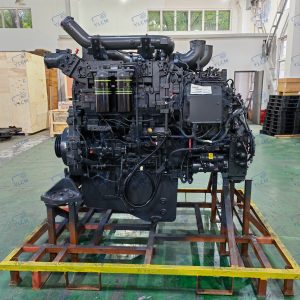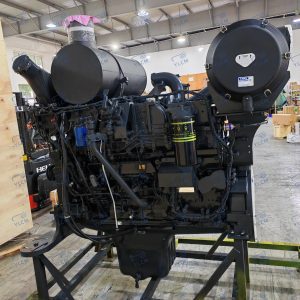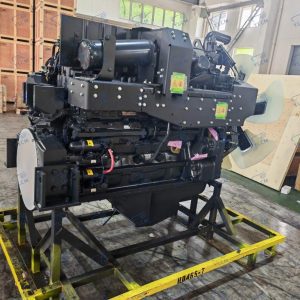

Finding reliable excavator parts suppliers in China is not about chasing the lowest quote. It is about verifying whether a supplier can control part numbers, material specifications, inspection records, and logistics before your machine sits idle. After 22 years in the heavy equipment supply chain, I would rather work with a supplier that admits a compatibility limit than one that promises everything. This article sets out the verification checks, trial order structure, and decision rules that separate a dependable China sourcing partner from a transactional seller.
What Makes a Reliable Excavator Parts Supplier in China?
A supplier becomes reliable when the sales conversation moves beyond price to part number history, material grade, and inspection evidence. I want to know which brands the supplier has actually held in inventory, not which logos it can place on a quotation. A credible supplier of Heavy Equipment Parts should be able to identify the original equipment manufacturer for a specific part number and explain what alternative source it uses when OEM stock is not available.
Three signals matter before any order. First, the supplier must confirm part number compatibility against your machine serial number, not just the model name. Second, it must name the manufacturer or aftermarket producer behind the component. Third, it must show a documented inspection or test result when the part is safety or performance critical, such as a hydraulic component. A supplier that cannot answer these questions before payment will be harder to hold accountable after delivery.

Which Excavator Parts Supplier Checks in China Do Buyers Overlook?
In many supplier evaluations, the buyer checks price, delivery time, and website quality. Those are the easy checks. The expensive misses happen when nobody confirms export history, factory scope, and the actual manufacturer behind a mixed quotation.
| Check | What it confirms |
|---|---|
| Business license and export records | Whether the supplier is legally registered and has shipped to your region |
| Factory ownership or audited partner list | Whether it produces parts or only resells them |
| Part number cross-reference | Whether the supplier works from your machine serial number |
| Inspection or test documentation | Whether quality is documented instead of promised |
| After sales escalation path | Whether a named person handles defects and warranty claims |
Documentation quality also reveals how the supplier thinks. A quotation that lists part numbers, brand names, and inspection terms without being asked is usually backed by someone who has handled real orders. A quotation that says “OEM quality” and nothing else is a prompt to ask harder questions. For excavator undercarriage parts, I ask for the production source and the material standard before discussing price.
How Do You Verify Reliable Excavator Parts Suppliers in China Before an RFQ?
Verification should happen before the RFQ, not after. The cheapest time to remove a bad supplier is when you are still comparing quotations and no payment has moved.
Start with a structured RFQ that includes machine model, serial number, part number, required quantity, packaging standard, and target destination. The supplier’s response will tell you more than any brochure. A competent supplier asks for the serial number if you forget it. A careless supplier quotes based on the model name alone.
Next, ask for three pieces of evidence: the supplier’s production or partner factory scope, a recent export record to your region, and one inspection document for the part category you are buying. For a radiator or hydraulic pump buy, I want a pressure test or leak test reference. For an undercarriage parts buy, I want material grade and heat treatment information.
I also check how the supplier handles a wrong part. Before the order, ask what happens if a part arrives damaged or does not match the serial number. If the answer is a vague promise, the supplier has not had to manage a real returns process. If the answer names a replacement method, a timeframe, and the responsible contact, that is a stronger signal than a perfect catalogue.
If your fleet includes multiple brands and you are consolidating a bill of materials, do not guess on cross-reference compatibility. Send your part numbers and machine serial numbers to sales@sh-yshuo.com and we will confirm the sourcing path and inspection documentation before you commit.
What Should a Trial Order From an Excavator Parts Supplier Cover?
Trial orders are not about getting a small discount. They are about testing the supplier’s systems under real commercial conditions. I use a trial order to test five things: part number accuracy, packaging, documentation, lead time, and problem resolution. If any one fails, the supplier is disqualified from larger volume even when the price is attractive.
- Order a small group of high turnover parts rather than one unusual item. This tests stock depth and picking accuracy.
- Include at least one part with a known compatibility history so you can verify whether the supplier catches a serial number mismatch.
- Ask for photos taken before shipment, packing list, and inspection records. Compare them against what arrives.
- Set a written lead time and record the date the supplier confirms the order against the date it actually ships.
- Decide in advance what defect handling you will accept. This prevents a minor issue from becoming an argument that harms the relationship.
Many buyers treat the trial order as a single test, but the better approach is to document the results so they can be compared with another supplier later. Choosing Reliable Excavator Parts Suppliers: A China Guide covers the same comparison framework in more detail.
When Should You Stop Searching and Lock In a China Supplier?
Searching for suppliers is useful until it turns into endless quotation chasing. The right time to lock in a supplier is when you have completed the verification checks above, placed a trial order that met your written terms, and confirmed the supplier can repeat performance across different part categories. Continuing to search after that point costs more in management time than it saves in unit price.
If you are still comparing suppliers, the most practical next step is to consolidate one machine model or one part category and test it. At Shanghai Yanli Construction Machinery Co., Ltd., we expect buyers to test us with a written acceptance baseline rather than trust a company description. Send your part numbers, quantities, and machine serial numbers to sales@sh-yshuo.com or call +86-21-55800172, and ask us to confirm compatibility, production source, inspection evidence, and a realistic lead time before you commit. We will tell you which items can be sourced with documented quality and which ones carry more risk. That transparency is the decision point.
Which Questions Do Buyers Ask About Vetting Excavator Parts Suppliers in China?
What is the difference between an OEM and an aftermarket supplier in China?
An OEM supplier is tied to a specific manufacturer’s part number system and production standards, while an aftermarket supplier produces compatible parts through its own factory or a partner network. In practice, many Chinese suppliers offer both access. The distinction that matters for a buyer is not the label but the traceability behind the part. Ask which producer made the component, which standard it follows, and whether the supplier can supply inspection documentation. A direct answer to those questions is a more reliable predictor of performance than the term OEM written on a quotation. If a supplier cannot name the producer, treat the part as an unknown source.
Do I need to visit the factory before placing a first order?
You do not need to visit every factory before a trial order. Many sourcing programs start with remote verification and a small purchase. A factory visit can be useful for large order volumes or parts with higher risk, but it is not a substitute for document checks and a test order. A supplier can give a good factory tour and still ship the wrong part. What protects you is written acceptance criteria, photos taken before shipment, and an inspection document tied to the actual order. If your volume is large enough to justify travel, visit after the supplier has passed a trial order, not before.
Is a lower quote always a sign of a stronger supplier?
It depends on how the lower price is achieved. If a supplier reduces price because it produces parts directly or holds stronger factory relationships, that can be legitimate. If it reduces price by substituting material, skipping inspection, or mixing used parts into the shipment, the lower quote becomes a future cost. The safest way to compare quotes is to ask each supplier to state the producer, material standard, and inspection scope behind the part number. A quote that cannot answer those questions should not be compared as equivalent. In our sourcing work, we would rather lose a quote on transparency than win it on an unstated downgrade.
How do we start with Shanghai Yanli without overcommitting?
In our sourcing work with repair workshops and mining contractors, the first step is usually a short RFQ rather than a large contract. Share your part numbers, machine serial numbers, quantities, and target delivery location. We confirm what can be sourced with documented compatibility, what lead time is realistic, and what inspection evidence applies. The first order becomes a controlled test rather than an open commitment. If your part list includes parts with higher risk, sharing your requirements at sales@sh-yshuo.com lets us confirm whether we can meet them before you spend time building a full bill of materials.
If you’re interested, check out these related articles:
How to Choose the Right Hydraulic Pump Coupling for Your System
Safe Shipping Excavator Parts: Protecting Your Heavy Machinery Investment
Using Caterpillar Excavator Parts Catalogs: Maximize Uptime