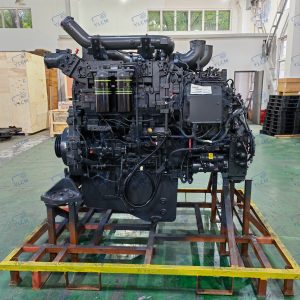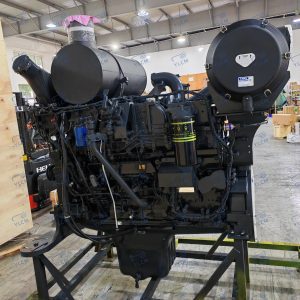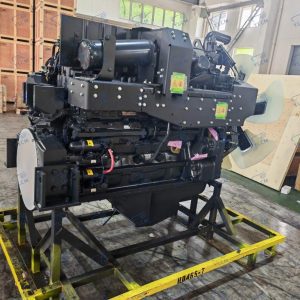

A failed floating seal in a Komatsu HD605 dump truck final drive can destroy a gearbox in hours. The 425‑33‑00111 Durocone floating seal assembly is the barrier that keeps oil in and abrasive slurry out across some of Komatsu’s hardest‑working articulated dump trucks, wheel loaders, and dozers. After leading parts supply for these models for over two decades, I’ve seen the cost of a bad seal far exceed the part price. Getting the right assembly, from a source that knows the difference between a genuine Durocone and a generic copy, is what keeps a machine on the haul road instead of in the workshop.
What the 425‑33‑00111 Floating Seal Does in Komatsu Equipment
A floating seal, sometimes called a duo‑cone seal, is two metal rings and a pair of rubber O‑rings that press together to form a face‑to‑face dynamic seal. The 425‑33‑00111 assembly is specific to Komatsu drivetrains. It is installed where the final drive spindle enters the planetary hub, or where the axle shaft mates to the differential housing. As the machine works, the seal faces rotate against each other at a controlled contact pressure, keeping gear oil inside and water, sand, and fine rock particles outside.
On a 90‑ton HD785 operating in wet muck, the seal sees constant axial movement and temperature fluctuation. The Durocone design tolerates more misalignment than a conventional lip seal, which is why Komatsu engineers specified it for the HD605, HD785, WA500, WA600, and WD600. A generic seal may hold for a few hundred hours, then the face wear allows dirt ingress. Once the oil is contaminated, the planet gears and bearings fail rapidly. I’ve inspected failed final drives where the only root cause was a floating seal that lost its face loading after the rubber O‑ring took a compression set.

Komatsu Models That Use the 425‑33‑00111 Assembly
Several Komatsu workhorses share this seal. The table below summarizes the models and where the seal is found.
| Komatsu Model | Machine Type | Primary Seal Location | Typical Operating Weight |
|---|---|---|---|
| HD605 ‑5/‑7/‑8 | Rigid dump truck | Final drive housing / axle spindle | 40 000 kg |
| HD785 ‑5/‑7/‑8 | Rigid dump truck | Final drive and differential input | 78 000 kg |
| WA500 ‑6/‑8 | Wheel loader | Rear axle pivot / final drive | 30 000 kg |
| WA600 ‑6/‑8 | Wheel loader | Front and rear axle planetary | 55 000 kg |
| WD600 ‑6 | Wheel dozer | Final drive and steering clutch hub | 49 000 kg |
In my experience, the HD785 application is the most punishing. These machines climb steep ramps fully loaded, and the combined side thrust and heat cycles accelerate seal face wear. If your operation runs HD785s at cycle times under three minutes, you will replace these seals more frequently than the 6 000‑hour interval some service manuals suggest.
OEM vs Aftermarket: What Matters in a Floating Seal
Komatsu sources the 425‑33‑00111 from Durocone, a Japanese floating seal specialist. The OEM seal uses a cast iron ring with a lapped face and a specific nitrile O‑ring compound. Aftermarket manufacturers can match those specifications, but the quality range is wide. The difference is in the metallurgy and the lapping process.
A proper aftermarket floating seal must have a face hardness of 58–62 HRC after induction hardening, and the face flatness must stay within two light bands. The O‑ring must maintain its elasticity after heat aging and resist compression set under the full axial load. I’ve sent aftermarket seals to a materials lab that matched OEM tribology, and they performed without incident on WA600 loaders working in granite quarries.
The risk comes from how the seal is stored and handled. Floating seal faces are lapped to a mirror finish. A single fingerprint can cause uneven wear. Reputable suppliers pack each seal in adhesive‑contact protective liner, not loose in a plastic bag. When you open the box and see the seals rattling against each other, return them.
If your program operates in high‑abrasion iron ore or copper mining, it is worth confirming the seal face material specification and the O‑ring’s Shore hardness with your supplier before ordering.
How to Verify a Sealing‑Assembly Supplier
The cost of a failed seal goes beyond the part — you lose the oil, the planet gears, the spindle, and production time. So verifying the supply chain matters as much as the price.
First, ask for the manufacturer’s material certificate that references the seal ring grade and the O‑ring compound. Second, request a photo of the actual seal face under magnification, not a catalog image. Third, check how the supplier manages batch traceability. A supplier that cannot tell you which factory produced the seal ring for your order is a risk.
Our team sources floating seals directly from manufacturers that also supply OEM assembly lines. We maintain lot‑level traceability and inspection records for every shipment. This is not a theoretical advantage; we have caught and rejected batches where the face hardness drifted below 55 HRC before they reached a customer.
Installation Best Practices for the 425‑33‑00111
Even the best seal will fail if installed incorrectly. The most common mistakes are hammering the seal into the bore, mixing old and new O‑rings, and failing to pre‑lubricate the faces.
- Clean the housing bore with a lint‑free cloth until no oil residue remains.
- Inspect the bore for scoring. Any scratch deeper than 0.1 mm should be polished out or the housing replaced.
- Install the first metal ring into the bore using a press tool that applies even pressure on the outer diameter, not the face. Never use a steel hammer directly.
- Seat the O‑ring without twisting it. The O‑ring must sit fully in its groove.
- Lubricate the seal face with a thin film of clean gear oil before joining the two halves.
- Torque the retainer bolts to the factory specification — over‑torquing distorts the seal ring and causes uneven face contact.
I’ve watched service crews in the field skip step 6 and then call three months later about oil leaking past the seal. The retainer bolts are not just fasteners. They control the axial load on the sealing faces. Always use a calibrated torque wrench.

Sourcing the 425‑33‑00111 with Confidence
Floating seal failures on Komatsu HD and WA machines are mostly preventable with the right part, properly stored and installed. What matters is that the seal faces stay flat, the O‑ring holds its resilience, and the assembly fits into a clean bore at the specified torque.
If your next preventative maintenance window includes a final drive or axle reseal, send your machine model, part number, and expected annual hours to sales@sh-yshuo.com. We will confirm a matching 425‑33‑00111 floating seal specification and provide a lead time that fits your schedule.
Common Questions About the 425‑33‑00111 Seal
How do I know the seal needs replacement before the oil turns milky?
Oil analysis is the earliest indicator. A rising silicon count, even before the oil visually changes color, often points to seal face leakage. In some HD785 fleets we support, the maintenance team pulls a final drive oil sample every 250 hours for spectrometric analysis. When iron and silicon both trend upward, it is the floating seal, not normal gear wear.
Can I use a generic duo‑cone seal of the same diameter instead of the Durocone?
Dimensionally, many duo‑cone seals of similar size will fit. The risk is in the face load and O‑ring material. The Durocone design uses a specific ramp angle that generates the correct contact pressure at the Komatsu‑specified installation height. A generic seal with a different ramp can under‑load or over‑load the face. Over‑loading accelerates wear; under‑loading lets dirt in. If you must use an alternative, confirm the supplier has run life‑cycle tests on a Komatsu final drive fixture, not just a bench rig.
What quality control steps should an aftermarket seal include?
At minimum, the manufacturer should perform Rockwell hardness checks on each seal ring, a flatness test under an optical flat, and an O‑ring compression‑set test per ASTM D395. We also inspect the lapped face for scratches and verify the O‑ring durometer. A batch acceptance report should accompany the shipment. If your supplier cannot provide a written report, assume the inspection was not done.
How can I prevent installation damage when the housing is already worn?
If the housing bore shows witness marks or light corrosion, apply a thin coat of a retaining compound designed for cylindrical assemblies. This fills microscopic voids and helps the metal ring seat evenly. The compound should have a service temperature rating above the maximum housing temperature. Always confirm the compound is compatible with gear oil and does not corrode cast iron. Share your housing condition and working environment with us at sales@sh-yshuo.com, and we’ll recommend a seal and installation kit specific to your machine’s condition.
If you’re interested, check out these related articles:
OEM vs Aftermarket Hitachi Undercarriage Parts: A Deep Dive
How to Choose Excavator Undercarriage Parts for Your Machine
Common Mini Excavator Bucket Parts and Replacement Choices
Using Caterpillar Excavator Parts Catalogs: Maximize Uptime
Understanding Excavator Undercarriage Parts and Their Roles