
When you are responsible for keeping a 1998 John Deere 80 excavator working, standard parts catalogs only take you so far. After 28 years, dealer support for this compact machine has contracted, and the part numbers listed in the original manual do not always match what is available through current supply channels. I have spent more than two decades inside the heavy equipment parts supply chain — first at Komatsu and now at Shanghai Yanli — and the JD80 is exactly the kind of machine where knowing the specifications saves you from ordering parts that look right in a listing but will not mount up. This article lays out the key specs that determine part compatibility and walks through which components wear predictably, so you can source what you need without the trial and error.
1998 John Deere 80 Excavator Key Specifications
The JD80 sits in the 8-ton class and was built during the period when John Deere was deepening its collaboration with Hitachi on compact excavator platforms. Several of its core dimensions and interface patterns overlap with equivalent Hitachi EX models from the same era, which matters when you are hunting for parts from a supplier who knows one platform better than the other.
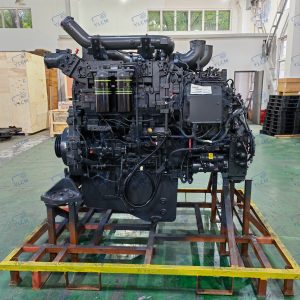
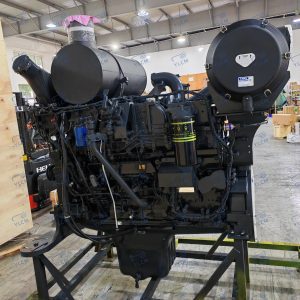
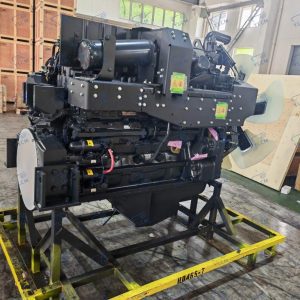
The machine shipped with a John Deere 4045D four-cylinder diesel producing roughly 58 net horsepower. Operating weight sits around 7,800 to 8,200 kg depending on counterweight and stick configuration. The standard arm reaches a dig depth of roughly 4.3 meters, and the bucket breakout force is in the 5,600 kgf range. These numbers are not just reference data — they anchor the sizing of every pin, bushing, and cylinder seal you will eventually replace.

| Specification | Value |
|---|---|
| Engine model | John Deere 4045D |
| Net horsepower | ~58 hp (43 kW) |
| Operating weight | 7,800–8,200 kg |
| Max dig depth (standard arm) | ~4.3 m |
| Bucket breakout force | ~5,600 kgf |
| Hydraulic pump type | Variable-displacement axial piston |
| Travel speed (high) | ~5.0 km/h |
| Tail swing radius | ~1,750 mm |
Two things about this spec sheet matter for parts sourcing. First, the 4045D engine shared its basic architecture with a wide range of Deere industrial power units, which means engine internals — pistons, liners, bearings, gasket sets — remain available through aftermarket channels even though the excavator-specific installation parts have become harder to find. Second, the hydraulic pump is a variable-displacement axial piston unit with flow characteristics tuned for the JD80’s mid-size excavator profile; replacing it with a generic pump that matches only the displacement number creates pressure-matching problems downstream.
Undercarriage Parts That Wear First on the JD80
On a machine this age, the undercarriage has typically been through at least one full rebuild cycle, and what you find when you inspect it depends on whether the previous owner invested in quality components or ran it on whatever was cheapest.
Track chains on the JD80 use a pitch of 154 mm with 39 to 41 links per side, depending on whether the machine was built early or late in the 1998 production run. That small variation — 39 versus 41 links — catches buyers who order by model year alone. Measure the link count on the existing chain before you place an order. The track rollers are flange-type with a diameter of approximately 180 mm, and they run on induction-hardened surfaces that wear into a stepped profile after 3,000 to 4,000 hours in abrasive conditions. Once the step becomes visible, the roller is transferring shock loads into the track frame instead of rolling smoothly, and replacement should not be deferred.
The idler and sprocket wear patterns on the JD80 follow a predictable sequence. The sprocket teeth develop a hooked profile first because the compact radius loads fewer teeth at any given moment than a larger excavator. A hooked sprocket accelerates chain stretch, which then accelerates idler tread wear. I tell our customers to inspect sprocket tooth condition at every 500-hour service interval on these older machines — it takes less time than replacing a chain that failed because nobody caught the sprocket in time.
The track adjuster seals on the JD80 are another age-related failure point. The cylinder body itself rarely corrodes through, but the lip seal at the rod entry point hardens over 25-plus years and begins bypassing grease. If your track tension will not hold for more than a shift, test the adjuster before assuming the problem is in the track spring or the chain.
Hydraulic Components and Common Replacement Intervals
The JD80’s hydraulic system operates at a main relief pressure of roughly 28 MPa (4,060 psi), which is standard for excavators in this weight class from the late 1990s. That pressure number is the first thing to verify when sourcing a replacement main pump or relief valve — suppliers sometimes cross-reference to later Deere models that run at higher system pressures, and the resulting flow mismatch overheats the oil and shortens seal life throughout the system.
The main hydraulic pump is a variable-displacement axial piston design, and by this age, the rotating group — the cylinder block, pistons, and swash plate interface — is the most common wear point. Symptoms include slow cycle times that get worse as the oil warms up and a whining sound that tracks engine RPM. A full pump rebuild kit for this vintage of Deere pump costs roughly a third of a replacement pump, but the rebuild only makes sense if the swash plate bearing surfaces are still within spec. If the pump has been run with contaminated oil, the swash plate itself may be scored, and at that point the core is not rebuildable.
The control valve bank on the JD80 is a monoblock design with individual spools for boom, arm, bucket, swing, and auxiliary circuits. Spool-to-bore clearance wears gradually, and the first symptom is usually boom drift — the boom settles noticeably over 10 to 15 minutes of idling. A small amount of drift is normal on a 28-year-old machine, but if it drops more than 50 mm per minute with the engine at idle, the spool clearances in the boom section are beyond what seal replacement alone can fix.
Swing motor and final drive hydraulic motors share the same basic piston-motor architecture. The case drain filters on these units are small and easily overlooked during routine service. When they clog, case pressure builds and blows the shaft seal, which then fills the ring gear housing with hydraulic oil instead of gear lube. Checking case drain flow annually catches the problem before the seal fails.
Finding Engine Parts When OEM Support Has Ended
If your machine has spent its working life in a temperate climate, the structural components probably have more life left than the engine peripherals. The 4045D itself is durable, but the parts around it — the water pump, alternator, starter, and injection pump — have finite service lives that almost always expire before the short block does.
The water pump on the 4045D uses a cast-iron housing with a bearing-and-seal cartridge that is not separately serviceable. When the weep hole shows coolant, you replace the entire pump assembly. The good news is that the 4045D water pump cross-references to industrial engine applications that Deere supported until much more recently, so aftermarket availability is better than for many other JD80-specific components.
The injection pump is a rotary-distributor type, and on a 1998 engine it has likely been rebuilt at least once. When it fails, the engine either will not start or runs with uneven power across the cylinders. Rebuilding the pump requires a calibration stand, and not every diesel shop still has the setup data for a 4045D pump from this era. Before sending the pump out, confirm that the shop can test to the original Deere calibration curve — a generic calibration to a similar engine specification will produce an injection timing that does not match the JD80’s torque curve.
Starter and alternator are both 24-volt units, and the mounting patterns stayed consistent across Deere’s 4045 engine series for more than a decade. This means new aftermarket replacements exist. The starter draws substantial current on a cold morning, and the battery cable connections on a machine this old develop resistance that drops voltage at the starter solenoid. Clean the cable ends and measure voltage drop under load before concluding the starter has failed.
The radiator on the JD80 is a downflow copper-brass core design, which is repairable in ways that modern aluminum-core radiators are not. If the core is leaking at tube-to-header joints, a radiator shop can re-solder them. If the tubes themselves are thinned from internal corrosion — common on machines that ran water instead of coolant mix — the core needs replacement, and aftermarket cores are available that match the original mounting dimensions.
What to Verify Before Ordering 1998 JD80 Parts
The single most expensive mistake I see on machines of this vintage is ordering parts using only the model designation without checking the serial number break. John Deere ran mid-year production changes on the JD80, and some components — particularly hydraulic hoses, wiring harness connectors, and track frame mounting brackets — differ between early and late 1998 builds. The serial number plate is on the right-front corner of the cab exterior. Photograph it and send it with your inquiry. It costs you 30 seconds and can prevent a $400 bracket from arriving with the wrong bolt spacing.
Second, measure the existing part dimensions even when you are confident the part number is correct. On a machine that may have passed through three or four owners and an unknown number of repair events, previous mechanics may have substituted components from a different Deere model or even from a competitor’s machine. A track roller that measures correctly for diameter, width, and bolt pattern will fit regardless of what part number it replaced.
Third, if the machine is still in daily service, consider ordering the longer-lead-time items before they fail. Hydraulic pump rotating groups, control valve spool kits, and final drive planetary gear sets are not sitting on a shelf in most warehouses for a 1998 model. Lead times of four to six weeks are common, and that timeline does not matter if you are ordering proactively — but it matters a great deal if the machine is down and your project is waiting.
If your program involves operating multiple older Deere machines across different model years, consolidating your parts sourcing through a supplier who knows the cross-model compatibility patterns saves more money than shopping each part number individually. The JD80 shares undercarriage components with several Hitachi compact models from the same period, shares engine parts with Deere industrial power units, and shares hydraulic architecture with a generation of 8-ton excavators that went through similar design constraints. A supplier who understands these overlaps can often offer a functionally identical part at a lower price than the JD80-specific listing.
Sourcing parts for a 28-year-old excavator is about matching specifications rather than matching part numbers. When you know the key dimensions, pressure ratings, and mounting interfaces, you stop being limited to what is listed under one model number and start seeing the broader availability that still exists for these machines. Send your serial number, your measured dimensions, and your timeline to [email protected] or call +86-21-55800172. We confirm stock and lead times against the specifications that actually determine fitment, not just against the part number in the book.
Common Questions About 1998 John Deere 80 Excavator Parts
JD80 track chains match 41 links on my machine. A supplier lists 39-link chains for the same model year. Which is correct?
Both can be correct, and this is exactly the kind of serial number break issue that trips up buyers. Measure the link count on your existing chain before ordering. If you have 41 links and order 39, the chain will be too short to close. If you have 39 and order 41, you can remove links, but the chain pitch tolerance will be slightly off from what the sprocket was designed for. Either way, measuring first avoids a return.
Can I use Hitachi EX-series undercarriage parts on a JD80?
In many cases, yes. The JD80 and the Hitachi EX80 shared a platform architecture, and track rollers, idlers, and sprockets with matching dimensions often interchange. The bolt patterns and bearing preloads are the key variables. If the bolt circle diameter and the roller flange width match, the part will physically mount. Always verify these dimensions rather than assuming interchangeability from the model number alone.
The Deere dealer says a main hydraulic pump is no longer available. What are my options?
A discontinued OEM pump leaves two practical paths. The first is a rebuild — if your pump core is not scored, a rotating group kit and seal set can restore flow and pressure to within 5 percent of the original specification. The second is an aftermarket replacement pump built to the JD80’s flow and pressure curve. Both paths require you to confirm the pump’s displacement, mounting flange, and shaft configuration against your machine’s specifications. Share your serial number with your supplier so they can verify which pump variant your machine was built with.
How long should I expect aftermarket engine parts to last on a machine this old?
Assuming the parts are manufactured to the OEM dimensional specifications — not just labeled as compatible — the service life should be comparable to the original components. The factor that determines actual life more than the part itself is the condition of the systems around it. A new water pump installed on an engine with a corroded coolant passage will fail early. A new set of injectors fed by a fuel system with water contamination will not last. If you are replacing a major engine component, address the supporting systems at the same time.
The hydraulic oil turns dark quickly after a change. Is that normal for a JD80 of this vintage?
It is common but not normal, and it points to either internal pump wear or a cooling problem. When the main pump’s rotating group wears, metal particles circulate in the oil and cause it to darken rapidly through oxidation. The first diagnostic step is to pull an oil sample and check the particle count and viscosity. If the particle count is high but viscosity is within range, the pump has internal wear. If viscosity is dropping, the oil is overheating — check the hydraulic oil cooler for external clogging or internal restriction. Share your oil analysis results and we can help identify whether the problem is in the pump or the cooling circuit before you commit to a major repair.
If you’re interested, check out these related articles:
How to Choose Cat 320 Excavator Parts for Peak Performance
Using Caterpillar Excavator Parts Catalogs: Maximize Uptime
469334 Excavator Part: Function and Application Explained
How to Replace Nissan Excavator Parts Effectively
Excavator Seal Kits: Fast 3-Day Delivery for Repairs