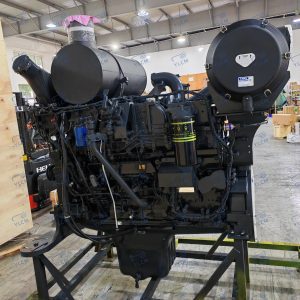

Reading an excavator engine parts diagram is not about memorizing every label. A beginner gets more value from seeing how each callout points to a physical location, a component group, and a part number that must be verified before ordering. In my years on the supply side with Komatsu China and now with Shanghai Yanli Construction Machinery, I have watched too many quotes stall because the buyer treated the diagram as a catalog. The practical path is to read the drawing, identify the labels that matter first, and turn the diagram page into a correct parts inquiry.
What Do Excavator Engine Parts Diagrams Actually Show?
A parts diagram is a location map first and a purchase document second. Each callout line points to a component position, but the number beside it is usually a reference index, not the full OEM part number. On many excavator engine diagrams, the same engine components appear in breakout views, so the drawing shows assembly order rather than ordering data. The block, cylinder head, rotating assembly, fuel system, cooling circuit, and turbocharger route are separated so a mechanic can find the failure path without disassembling the whole engine.
One mistake beginners make is reading the drawing from left to right as if it were a regular schematic. It is better to start from the engine serial number block in the title panel, then follow the section that matches the repair symptom.
Why Are Callout Numbers Not Part Numbers?
Callout numbers identify a position on that page only. The same component can carry a different callout number in another manual revision. Part numbers are longer, tied to a specific model, and often include factory codes that a diagram will not carry. When a buyer sends only callout 17, a supplier cannot confirm fitment without the engine model, serial range, and original part number from the nameplate.
Which Engine Parts Should Beginners Learn First?
Start with the parts that create most repeat inquiries: the piston set, cylinder head, injection pump, water pump, and crankshaft. A piston set is not just a diameter. It is matched to a bore grade and ring configuration, and ordering the wrong set can damage a fresh cylinder liner.
| Diagram group | Common label on drawing | Information to confirm before ordering |
|---|---|---|
| Cylinder head | Head assembly | Engine model, valve arrangement, part number |
| Rotating assembly | Crankshaft | Standard or undersized journal, serial range |
| Fuel system | Injection pump | OEM number, timing calibration, engine series |
| Air system | Turbocharger | Engine serial range, flange pattern, wastegate type |
| Cooling | Water pump | Rotation direction, pilot bore, impeller height |
What Causes the Most Sourcing Errors?
Most errors come from reusing a similar model’s part number. I often see a buyer order a piston set from an older engine series because the photo looked nearly the same. The result is a low compression or oil consumption issue after assembly. A diagram is useful only after the serial range is matched.
How Do You Match a Diagram Label to a Part Number?
First find the engine nameplate data: model, serial number, and arrangement number. Then use the diagram only to locate the failed component group. Copy the part number from the parts list or parts page, not from the diagram alone. If the part number is missing or worn, photograph the component and its mounting position, then send both to a supplier for cross checking.
When the label shows a general group instead of a single number, the next step is selecting an aftermarket replacement that matches the engine family. How to Choose Aftermarket Engine Parts for Bobcat Excavators explains how that selection works for one common compact platform. If your diagram shows duplicate labels or a missing serial range, confirm the original number before finalizing your order. Send the label photo to sales@sh-yshuo.com.
What Do Buyers Miss When Reading Excavator Engine Diagrams?
The biggest miss is subassembly detail. A turbocharger appears on the drawing as one assembly, but the parts list may separate the actuator, gasket set, mounting studs, and oil return pipe. Novices order the main unit and forget the installation parts that must be replaced at the same time.
Cooling diagrams hide the same problem. The water pump and thermostat sit on one sheet, the fan drive on another, and the belt path may not show the tensioner wear limit. We have seen customers buy the correct water pump and then face a service delay because the gasket and O-ring were not included in the requisition. Another miss is engine arrangement. The same base engine often has different front gear trains, flywheel housings, and mounting brackets depending on the excavator model, so a diagram page that looks close may be from an industrial application rather than the excavator installation.
How Should a First Time Buyer Prepare an Engine Parts Inquiry?
When a first purchase goes wrong, it is usually because the part number came from memory or a similar photo, not from a nameplate. Our team at Shanghai Yanli Construction Machinery checks the OEM part numbers, engine series, and aftermarket interchange options before quoting. Send your engine serial number, diagram page, and part number or photo to sales@sh-yshuo.com, or call +86-21-55800172. We will confirm stock, compatibility, and lead time before you order.
What Else Should Beginners Ask About Excavator Engine Parts?
Do I need a high resolution diagram to get a quote?
No. A readable nameplate and the parts list page matter more than a high resolution drawing. Suppliers can work from a clear photo of the engine data plate plus one photo of the damaged part. A blurry diagram is less useful than a sharp image of the part as installed, because the mounting position confirms whether the component belongs to the engine, cooling, intake, or exhaust circuit.
Can I use the same part number across different excavator models?
Many drawings look similar, but a part number is valid only within the serial range shown in the parts catalog. A piston set or water pump from an earlier engine series may appear identical and still fail after installation. Check the factory parts list for the serial break before reusing a number from another machine.
Is it safe to buy aftermarket engine parts for an excavator?
It depends on the component and the supplier. For wear parts such as filters, fan belts, and water pumps, a reputable aftermarket source can match OEM quality when the manufacturer and material source are verified. For injectors, turbochargers, and electronic actuators, insist on the exact part number revision, calibration details, and a supplier that can trace the product. If the supplier cannot explain the serial range, keep looking.
What information do you ask for before quoting an engine part?
In our inquiry review, we first check the engine model and serial number because the same excavator model can carry different engine arrangements by year and region. Next we ask for the OEM part number if visible. If the part number is missing, we use the component location and a photo to narrow the options. This sequence prevents quotes from being sent for the wrong range. Share your engine serial number and diagram page, and we will confirm the part number and stock availability.
If you’re interested, check out these related articles:
JCB Excavator Parts: Functions, Sourcing, and Compatibility
DAEWOO Throttle Motor 523-00006: Function, Faults, and Replacement