
Aftermarket parts only reduce operating cost when they fit a 305D Cat Excavator maintenance plan based on actual use. I have watched maintenance budgets fail on a cheap filter or a mislabeled undercarriage part that did not survive the first hard shift. The right approach starts with machine data: hour meter, service history, fault codes, and application type. Once those are documented, aftermarket sourcing becomes a controlled decision instead of a price gamble. This article covers the maintenance points that matter most on a 305D, the parts that fail first, and the supplier checks that protect uptime.
A 305D Maintenance Baseline Prevents Reactive Spending
Before ordering any part, record the machine serial number prefix and the full model arrangement. The wrong serial break can shift hose routing, electrical connectors, and bearing sizes even within the 305D family. We ask for the last fluid sample, the active fault codes, and the attachment profile before quoting alternatives. That baseline turns a vague parts request into a specific cross-reference, and it prevents reactive buying when a machine is already down.
Undercarriage Parts Wear Faster Than Most Fleets Expect
Undercarriage parts on a 305D usually fail from external wear before internal defects appear. The parts that give the earliest warning are track rollers, sprockets, idlers, and pin and bushing sets. On mixed terrain machines, one side wears faster because the operator turns consistently in one direction or the track tension is unequal. Replacing only the failed piece often accelerates wear on the new component when the mating surface is already worn. A better practice is to measure the full chain pitch and compare left and right rail height before buying undercarriage parts.
| Component | Early failure signal | What to check before replacement |
|---|---|---|
| Track rollers | Oil film or lateral play | Bearing clearance and flange wear |
| Idlers | Uneven shoulder wear | Track tension and guard contact |
| Sprockets | Hooked tooth profile | Chain pitch and tooth wear percentage |
| Pin and bushing sets | Pitch extension | Internal wear before external cracks |
Engine Components Need More Than a Matching Photo
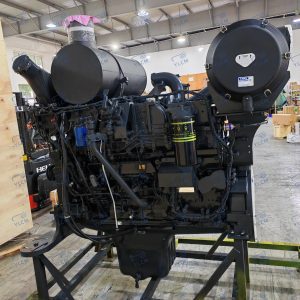
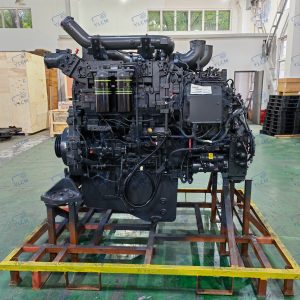
Aftermarket engine components for the 305D often look identical on a screen but differ in material grade, filter media, and seal tolerance. I have handled aftermarket oil filters that physically thread on but collapse internally under cold start pressure. The issue is not brand origin; it is whether the part was built to the same burst rating and bypass setting as the Cat specification. For a 305D running in high dust, a cellulose filter may cost less but loads faster and increases pressure differential across the media. Ask for the cross-reference and the specification sheet, not just a photo.
If your 305D spends long shifts above 85°C or has a mixed maintenance history, confirm the thermostat range, hose reinforcement, and belt profile before finalizing the order. Send the engine arrangement and part numbers to sales@sh-yshuo.com and we will cross-check the aftermarket fit against the serial number.
Hydraulic Components Fail Quietly Without Oil Checks
Most hydraulic component failures on a 305D start with contaminated oil, not sudden breakage. When the filter bypasses or the breather leaks, particles reach the piston pump and control valves before the operator notices any change. Hydraulic components replaced after a pump failure often fail again because the system was not flushed and the suction screen was not changed. Oil analysis is the cheapest early warning system on a 305D. A particle count that doubles between samples indicates a failing pump, cylinder seal, or valve, even if the machine still cycles normally. Replace the return filter and pilot filter at the interval required for the oil cleanliness target, not just the machine hour.
A Sourcing Checklist Reduces Aftermarket Parts Risk
Aftermarket parts become a maintenance risk only when buying decisions are made without part numbers, application data, and supplier checks. The catalog method in Using Caterpillar Excavator Parts Catalogs: Maximize Uptime shows why a serial number search pulls a different result than a model name search. We use the same check before quoting aftermarket replacements. Then confirm the material specifications on wear parts, request packaging labels with batch dates, and agree on the warranty scope before payment. A supplier that cannot answer those questions quickly will not be easier to deal with after a failure.
If you maintain a 305D and want to check aftermarket options without trial and error, send the machine serial number, part numbers, and quantities to sales@sh-yshuo.com or call +86-21-55800172. We will confirm cross-references and lead time before you commit.
Buyers Ask Specific Questions About 305D Aftermarket Parts
Do aftermarket parts shorten a 305D’s service life?
No, if you replace like-for-like and match the serial number break. The service life shortens when a part is selected by appearance instead of specification. A track roller with the wrong bearing clearance, or an oil filter with a lower bypass setting, may fail earlier even if it fits. Aftermarket quality ranges widely because the word covers both exact-spec replacement parts and generic low-cost copies. The practical rule is to compare the replacement part against the part number, the material grade, and the duty cycle, not against price alone. If those comparisons line up, aftermarket parts can meet or exceed the machine’s expected part life.
Which aftermarket parts are the safest to buy first?
A common assumption is that critical engine parts are the safest aftermarket choice, but the opposite is usually true for first-time buyers. Filters, seals, gaskets, hose assemblies, and undercarriage wear parts are more predictable because they have clear dimensions, known materials, and established cross-references. Start with components that can be inspected visually and replaced on a known interval. Leave electronic controls, fuel injection components, and remanufactured pumps for suppliers with complete test records. That sequence builds confidence in the supply source before the failure cost of a wrong part becomes high.
How do I know an aftermarket part fits my specific 305D build?
It depends on the serial number break and the machine arrangement. The 305D family can have different hydraulic configurations, emission levels, and undercarriage options within the same model name. A part number from a general lookup is a starting point, not a confirmation. Give the supplier the full machine serial number, the engine arrangement, and the old part number if available. A competent supplier will ask for those details before quoting. Without that information, even a correct box can arrive with the wrong connector or the wrong hose length.
What is the best way to compare an aftermarket quote with an OEM quote?
In our sourcing work, the first comparison is never the total price. We put the two quotes beside the same part number, warranty terms, lead time, and freight cost, then check whether the aftermarket supplier identifies the material grade and batch trace. An OEM quote carries a known supply chain and a simplified warranty process. An aftermarket quote becomes credible only when the supplier answers the same questions without delay. If both options pass that check, the savings are real. If the aftermarket quote cannot produce a clear specification, the lower price is not a saving. If you have two quotes and need a technical comparison, send the machine serial number and both part numbers to sales@sh-yshuo.com and we will confirm the exact fit.
If you’re interested, check out these related articles:
Excavator Implements: Types, Uses, and Sourcing Tips
How to Order John Deere 35D Excavator Parts Online