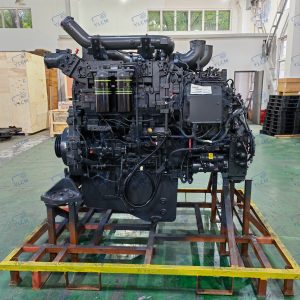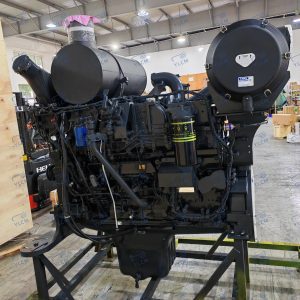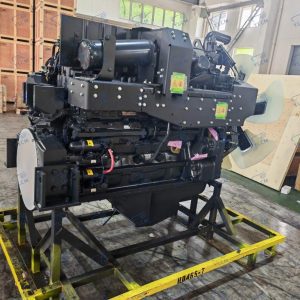

When a Kobelco SK210LC sits idle waiting for a hydraulic pump or a set of undercarriage rollers, the question of OEM versus aftermarket parts stops being theoretical. It becomes a cost-per-hour calculation with a deadline. I have spent over two decades inside the heavy equipment parts supply chain, first at Komatsu China and now running Shanghai Yanli, and I have seen both sides of this decision play out across mining sites in Central Asia, repair shops in Africa, and construction fleets in Southeast Asia. Aftermarket Kobelco parts are not a compromise when you source them correctly, but the path from catalog to delivery requires more scrutiny than most buyers expect.
What OEM and Aftermarket Actually Mean for Kobelco Machines
OEM parts for Kobelco excavators come through the manufacturer’s authorized supply chain. They carry Kobelco part numbers, factory packaging, and a warranty backed by the brand. Aftermarket parts come from independent manufacturers who reverse-engineer or produce to equivalent specifications, often supplying the same foundries and machining centers that feed the OEM pipeline. The distinction that matters is not the label but the manufacturing standard, material grade, and quality control behind the part number you are ordering.
In practice, many aftermarket manufacturers in China, Japan, and Korea operate ISO-certified facilities with metallurgical testing and dimensional inspection that match or approach OEM requirements. The gap is not in capability. It is in transparency. An OEM part arrives with full traceability. An aftermarket part arrives with whatever documentation the supplier chooses to provide. That documentation gap is where sourcing decisions succeed or fail.
Where Quality Differences Actually Show Up
Not all Kobelco parts carry the same risk profile when switching to aftermarket. Structural components like boom pins, bucket linkages, and track shoes are wear items with straightforward metallurgy. A properly spec’d aftermarket pin made from induction-hardened SCM440 steel will perform within the same wear window as the OEM equivalent. I have supplied these to contractors who track part life by the hour, and the feedback confirms it.
Hydraulic components are different. A main relief valve or a swash plate inside a Kawasaki pump operates at micron-level clearances under 35 MPa of pressure. Small deviations in surface finish or heat treatment compound into premature internal leakage that you cannot see until cycle times slow and oil temperatures climb. For these parts, the cost of an aftermarket risk is the cost of a pump rebuild six months early.
Engine components sit somewhere in between. Piston rings, cylinder liners, and bearing shells from established aftermarket suppliers frequently match OEM metallurgy because the material specifications are industry standards, not proprietary secrets. The risk is in assembly tolerances and quality consistency across batches, which is why batch-level inspection data separates professional suppliers from commodity exporters.
The Real Cost Picture Beyond Unit Price
A Kobelco OEM track roller might cost 40% to 60% more than a quality aftermarket equivalent at the invoice level. That comparison is incomplete. The aftermarket part’s true cost includes freight, import duties, your own incoming inspection, and the risk-adjusted downtime if the part underperforms. For a mining operation where an excavator generates revenue by the ton, one unplanned shift loss can wipe out the savings from an entire undercarriage set.
| Cost Factor | OEM Parts | Quality Aftermarket |
|---|---|---|
| Unit price | Higher | 40-60% lower |
| Lead time | 2-8 weeks | 1-4 weeks typical |
| Warranty coverage | Manufacturer-backed | Supplier-dependent |
| Quality variance | Low, consistent | Requires supplier vetting |
| Availability for older models | Limited | Often better coverage |
For older Kobelco models like the SK200-6 or SK330-6E, OEM availability becomes the binding constraint. Kobelco’s discontinued parts program does not cover every legacy model indefinitely. Aftermarket becomes the only practical option, and at that point the question shifts from “should I buy aftermarket” to “which aftermarket supplier can I trust.”
How to Verify an Aftermarket Supplier Before You Buy
If your operation runs multiple Kobelco units or serves a regional customer base with mixed fleets, the conversation about aftermarket parts needs to address supplier qualification directly. I tell procurement teams to ask three questions before placing a first order.
First, request material certification. A legitimate manufacturer can provide mill test reports or equivalent chemical composition and hardness data for structural and wear parts. If the supplier cannot produce these, assume they are trading parts without knowing their own supply chain.
Second, ask for batch-level inspection records. This separates factories that perform in-process quality control from those that rely on final visual inspection. For hydraulic components, ask specifically about cleanliness standards. Contamination from machining residue is the leading cause of early-life hydraulic failures in aftermarket parts, and it is entirely preventable with proper flushing and testing.
Third, evaluate how the supplier handles a quality claim. Every supplier ships a defective part eventually. What matters is whether they replace it, cover freight, and investigate the root cause, or whether they deflect and delay. One test order with deliberate follow-up on documentation tells you more than any catalog or website.
Matching Parts Strategy to Your Operating Context
The right answer depends on what your Kobelco machine does and what a failure costs you. A contractor running an SK75 on urban utility work with a backup machine available can lean more heavily on aftermarket parts across categories and capture significant savings. A mine operator running an SK850 on production loading with contractual tonnage targets should keep hydraulic and engine internals on OEM and use aftermarket for wear parts like bucket teeth, cutting edges, and track pads.
What I have observed across multiple markets is that the most cost-effective approach is rarely all-OEM or all-aftermarket. It is a categorized strategy. Group your parts list by failure consequence: high-risk parts where failure stops the machine or causes cascading damage, medium-risk parts where performance degrades gradually, and low-risk consumables where failure is visible and replacement is simple. Buy accordingly, and document part life so your next order is data-driven rather than assumption-driven.
If your Kobelco fleet includes mixed models or older machines that Kobelco no longer actively supports, building a relationship with a supplier who understands Kobelco’s cross-model compatibility is worth the effort. Part numbers change between series, but the underlying pump or final drive architecture often carries forward. A supplier who knows this can keep your older SK200 running when the OEM channel has already moved on.
Common Questions About Kobelco Parts Sourcing
Do aftermarket Kobelco parts void my machine warranty?
In most jurisdictions, using aftermarket parts does not automatically void an equipment warranty. The burden is on the manufacturer to prove the aftermarket part caused a specific failure. For machines still under Kobelco factory warranty, running OEM for internals is the safer path simply because it removes a potential dispute variable. Once the warranty period ends, aftermarket becomes a commercial decision with fewer contractual constraints.
How can I tell if an aftermarket part is truly equivalent?
Look past the marketing language and ask for dimensional drawings with tolerance ranges and material specifications. Compare these against the OEM part’s known specifications if you have access to a parts manual, or ask the supplier to provide a cross-reference table showing their part against the OEM part number with verification notes. A supplier who cannot describe how their part matches the OEM specification in measurable terms is not a supplier you should trust with a production machine.
Are Japanese aftermarket parts better than Chinese aftermarket parts for Kobelco?
The country of origin matters less than the specific manufacturer’s quality system. Japan has excellent aftermarket manufacturers who supply the domestic construction market, and China has factories producing high-quality aftermarket parts for global brands under ISO and JIS standards. I have also seen poor-quality parts from both countries. Evaluate the factory, not the flag. Request production facility information, quality certifications, and reference customers, and make your decision on that evidence.
How long should aftermarket undercarriage parts last compared to OEM?
For track rollers, idlers, and sprockets from a quality aftermarket source, expect approximately 80% to 90% of OEM service life under similar operating conditions. The difference typically comes from slightly lower surface hardness or case depth on heat-treated components. In abrasive conditions like sand or granite, this gap narrows because the dominant wear mechanism is abrasion rather than contact fatigue. Track chains and shoes from aftermarket suppliers often match OEM life more closely because the manufacturing process and steel grades are well-established and widely available across the supply base.
What is the safest way to start testing an aftermarket supplier?
Begin with low-risk wear parts like bucket teeth, cutting edges, or track pad bolts. These parts fail visibly and non-catastrophically. Run them for a full replacement cycle, compare part life against your OEM baseline, and evaluate the supplier’s communication and documentation quality during the process. If the supplier performs well on consumables, you have a basis for considering them for more critical components. For any supplier evaluation, send your part number and target quantity to [email protected] or call +86-21-55800172 and we will confirm specifications, lead time, and available quality documentation before you commit to an order.
If you’re interested, check out these related articles:
How to Order John Deere 35D Excavator Parts Online
Universal Excavator Keys: How They Work & Sourcing Tips
Excavator Implements: Types, Uses, and Sourcing Tips
How Aftermarket Excavator Parts Factories Operate: A Deep Dive